
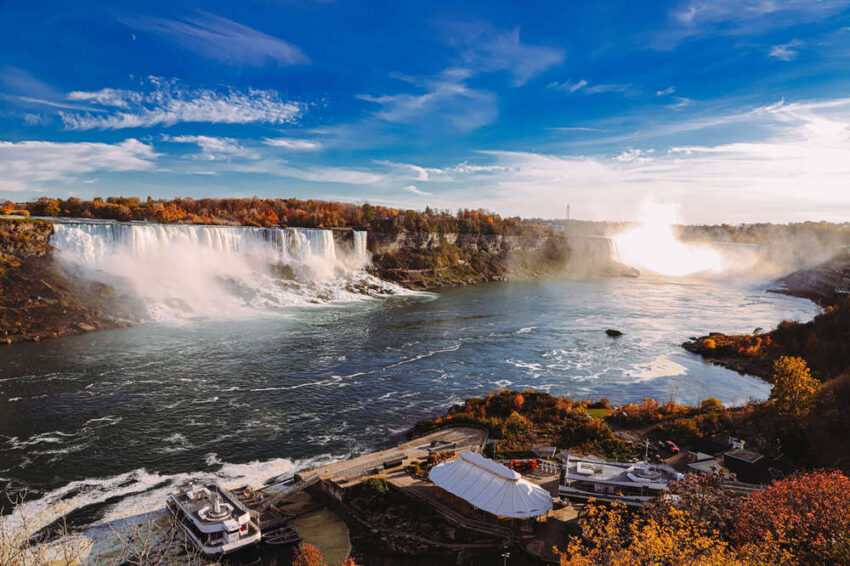
Niagara Falls is a year-round destination, but the weather can change the entire feel of a visit. Summer brings warm days, heavy mist, and busy walking areas. Spring and fall are milder, fresher, and sometimes unpredictable. Winter turns the Falls into a dramatic cold-weather scene with snow, ice, and freezing spray. Before you plan your walk along the Niagara Parkway, your photos at Table Rock, or your time in Queen Victoria Park, it helps to know what each season usually feels like.
Quick Answer: What Is the Weather Like in Niagara Falls?
Niagara Falls has four distinct seasons. Summers are warm and comfortable for outdoor exploring, spring and fall are cooler and more changeable, and winters are cold enough for snow, ice, and freezing mist around the Falls.
The forecast tells only part of the story. Near the Horseshoe Falls, mist can make the air feel cooler and wetter than it does a few blocks away. On windy days, spray can drift across viewing areas even when the sky is clear. In winter, that same mist can freeze on trees, railings, and nearby surfaces, creating the icy scenery visitors often associate with Niagara Falls in cold weather.
For the most accurate planning, check the local forecast close to your visit. For the Canadian side, use Environment Canada’s Niagara Falls, Ontario forecast. For the U.S. side, use the National Weather Service forecast for Niagara Falls, New York. Niagara Falls Tourism also offers a visitor-friendly Niagara Falls weather page for quick trip planning.
Niagara Falls Weather at a Glance
| Season | Typical Weather Feel | What to Wear | Planning Note |
|---|---|---|---|
| Spring | Cool early, milder by late spring; rain is common | Layers, rain jacket, water-resistant shoes | March can still feel wintry, while April and May are more spring-like |
| Summer | Warm, busy, and often comfortable for long outdoor days | Light clothing, sunscreen, sunglasses, comfortable shoes | Mist can feel refreshing but may leave clothing and camera lenses damp |
| Fall | Crisp, scenic, and cooler by evening | Sweater, jacket, scarf, walking shoes | Good for photos, fall colour, and relaxed walks along the park areas |
| Winter | Cold, snowy, icy, and windy at times | Insulated coat, boots, gloves, hat, scarf | Dress for freezing mist and slippery surfaces near exposed viewpoints |
Niagara Falls Weather by Season
Every season gives Niagara Falls a different mood. Summer feels bright and active, winter feels dramatic and quiet, and the shoulder seasons offer a softer pace. The right packing list depends less on a perfect forecast and more on preparing for the way temperature, wind, water, and mist work together near the Falls.
Spring Weather in Niagara Falls
Spring in Niagara Falls can start slowly. March may still feel wintry, while April and May usually bring milder temperatures, blooming gardens, and more comfortable walking weather. By late spring, the park areas become greener, the air feels fresher, and outdoor exploring becomes easier.
Niagara Falls Tourism describes spring as a season that can range from around 5°C / 41°F in early spring to about 22°C / 72°F in late spring. That range explains why packing for only one type of weather can be risky. A mild afternoon may still be followed by a chilly evening, especially near the water.
Rain is common enough that a waterproof layer is worth bringing. A hooded rain jacket is often more practical than an umbrella around the Falls because wind and mist can make umbrellas awkward. Water-resistant shoes are also helpful if you plan to walk through Queen Victoria Park, along the Niagara Parkway, or near mist-heavy viewing areas.
Spring is a good season for visitors who want fewer crowds than summer and do not mind dressing in layers. The scenery feels fresh, gardens begin to wake up, and the overall pace is usually calmer than peak travel months.
Summer Weather in Niagara Falls
Summer is the warmest and busiest season in Niagara Falls. June, July, and August are popular for outdoor sightseeing, long walks, patio meals, evening views, and classic Niagara vacation energy. The days are often warm enough for light clothing, but still comfortable enough for walking if you pace yourself and stay hydrated.
Summer temperatures can reach around 26°C / 79°F on average, with hotter days possible later in the season. Visitors should be ready for sun, clouds, and occasional rain rather than assuming every day will stay dry from morning to night.
Light clothing, sunscreen, sunglasses, a hat, and breathable walking shoes are all useful. A refillable water bottle is also a smart choice, especially if you plan to spend several hours outdoors between viewpoints, Clifton Hill, restaurants, parking areas, and riverside paths.
The mist is part of the summer experience. On a hot afternoon, it can feel refreshing. Near close viewing areas, though, it can also leave your shirt, glasses, phone, or camera lens damp. Quick-dry clothing and a small cloth for lenses can make the day more comfortable.
Even summer evenings can feel cooler beside the river, especially when there is wind. A light layer is useful if you plan to stay for sunset, nighttime views, or a longer walk after dinner.
Fall Weather in Niagara Falls
Fall brings a cooler, calmer feeling to Niagara Falls. September can still feel pleasantly warm, while October and November gradually move toward sharper air, cooler nights, and more jacket-friendly days. For many visitors, this is one of the most comfortable seasons for walking and photography.
Afternoons and evenings can feel very different in fall. A sunny midday walk may be comfortable in a light sweater, while the same area can feel noticeably cooler after sunset. Wind near the river can add to that chill, particularly around open viewing areas.
Layers are the easiest solution. A sweater, medium-weight jacket, scarf, and comfortable shoes will cover most fall visits. If you are planning a full day that includes the Falls, a winery stop, a restaurant visit, or a drive toward Niagara-on-the-Lake, dress in pieces you can add or remove throughout the day.
Fall is also excellent for photos. The changing leaves, cooler air, and mist around the Falls can create a dramatic scene. Cloudy days can still be beautiful because soft light often reduces glare and brings out the colour in the water, trees, and surrounding parkland.
Winter Weather in Niagara Falls
Winter is the coldest and most dramatic season in Niagara Falls. December, January, and February can bring snow, icy paths, sharp wind, and freezing mist. The landscape becomes quieter, the colours turn cooler, and the Falls take on a powerful cold-weather look.
Niagara Falls does not usually freeze solid. Niagara Parks explains that even when the Falls appear frozen, water continues to flow beneath the ice and through the rushing river. The famous frozen look comes from ice, snow, and freezing mist building up on and around the Falls.
That winter scenery can be stunning, but visitors should dress seriously for it. A warm insulated coat, winter boots, gloves, a hat, and a scarf are essential for spending time outdoors. Boots with good traction are especially important because mist, slush, and ice can make surfaces slippery.
The cold often feels stronger near exposed viewpoints. A temperature that seems manageable on the forecast may feel harsher when wind and mist are part of the experience. Plan for short outdoor stretches, warm indoor breaks, and enough time to move carefully if sidewalks or lookout areas are wet or icy.
Winter is rewarding for visitors who enjoy quieter scenery and atmospheric photos. Snow along the gorge, ice on railings, and mist rising into cold air can make Niagara Falls feel completely different from its summer version.
How the Mist Changes the Weather Near the Falls
The mist around Niagara Falls can make nearby conditions feel different from the general forecast. At Table Rock and other close viewing areas, the air may feel cooler, wetter, and windier than it does farther from the river.
On warm days, mist can be pleasant. On cooler days, it can make light clothing feel damp and uncomfortable. When wind pushes spray across walkways, visitors may get wet even without rain.
Moisture-friendly clothing helps in every season. In summer, quick-dry fabrics are useful. In spring and fall, a waterproof jacket makes walking easier. In winter, warm outerwear matters because mist can intensify the cold around exposed areas.
Phones and cameras also need a little protection. Keep electronics in a secure pocket or bag when you are close to the spray, and bring a lens cloth if you plan to take photos near the brink. Glasses can fog or collect droplets quickly, so it helps to have a wipe handy.
In cold weather, pay extra attention to footing. Mist can freeze on nearby surfaces, and wet patches may be harder to see in shaded areas. Good shoes and slower walking are simple but important parts of a winter visit.
What to Pack for Niagara Falls Weather
Packing for Niagara Falls is about flexibility. The same trip can include warm sun, cool wind, mist, rain, and chilly evenings. A few practical layers will usually serve visitors better than one outfit designed for a single temperature.
What to Pack in Spring
Bring layers, a waterproof jacket, water-resistant shoes, and one warm item for mornings or evenings. A hooded jacket is useful around the Falls because it handles both rain and mist. If you are visiting in March or early April, pack with the possibility of late winter conditions in mind.
What to Pack in Summer
Choose light clothing, sunscreen, sunglasses, a hat, and comfortable walking shoes. A refillable water bottle is helpful for longer outdoor days. If you plan to spend time near mist-heavy areas, add quick-dry clothing and a small pouch or zippered pocket for your phone.
What to Pack in Fall
Pack a sweater, jacket, scarf, and shoes suitable for walking. Early fall can still feel mild, but later fall is much cooler, especially in the evening. A camera cloth or phone wipe is useful because mist and cool air can affect lenses.
What to Pack in Winter
Bring an insulated coat, warm boots, gloves, a hat, and a scarf. Thermal layers can make outdoor viewing much more comfortable. Choose footwear that can handle slush, wet pavement, and icy patches.
Year-Round Essentials
Comfortable walking shoes are useful in every season. Niagara Falls is best experienced on foot, and even a simple visit can involve more walking than expected. A phone charger, weather-friendly outer layer, and small lens cloth are also worth carrying.
Niagara Falls Weather Tips for Better Photos
Weather can make Niagara Falls photos more interesting. Mist, clouds, snow, sun, and changing light all shape how the water and surrounding landscape appear.
Morning and evening light is often softer than midday light, which can help with photos of the Falls, skyline, park areas, and river. On sunny days, mist may create rainbows when the angle of the light is right. These moments can appear quickly, so it helps to keep your phone or camera ready.
Cloudy weather can also work well. Overcast skies reduce harsh shadows and glare, which can make waterfall photos look smoother and more balanced. Rain can deepen colours and add atmosphere, especially around paths, railings, and garden areas.
Winter creates a completely different photo style. Ice on trees, snow near the gorge, and mist rising into cold air can produce dramatic images. The main challenge is comfort, so gloves that allow phone use can be helpful if you plan to take photos outdoors for more than a few minutes.
Whatever the season, bring a cloth for your lens. Mist is part of the Niagara Falls experience, and a clean lens can make a big difference.