
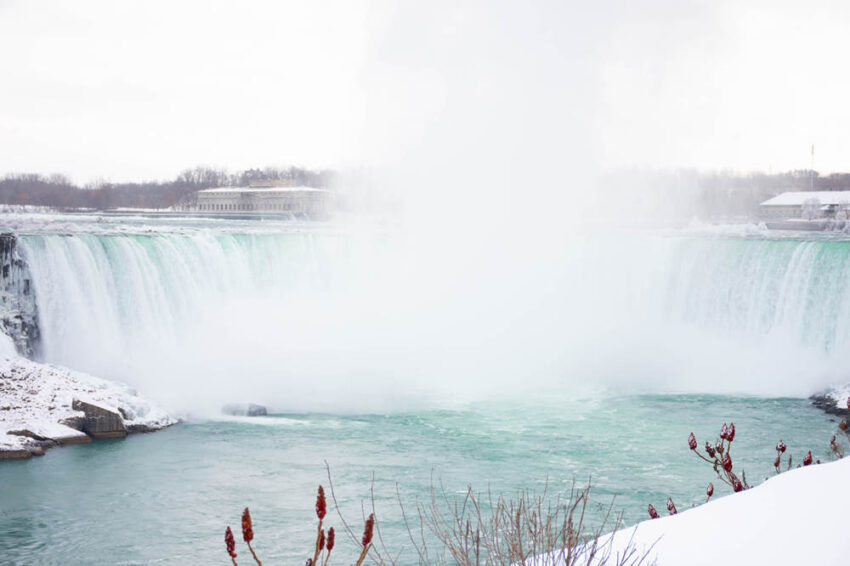
Niagara Falls in winter feels different from the busy summer season. From late November through February, the air is colder, the walkways are quieter, and the mist from the Falls can freeze onto trees, railings, and rocks. The most festive stretch usually arrives from mid-November into early January, when the Winter Festival of Lights brings glowing displays to the tourism district.
It is a beautiful time to visit, especially if you like dramatic scenery, evening lights, quieter viewpoints, and cozy local stops. Winter also requires a little more planning. The Falls themselves are there year-round, but weather, daylight, attraction hours, and icy conditions can shape the experience.
Is Niagara Falls Worth Visiting in Winter?
Yes, Niagara Falls is worth visiting in winter if you understand what kind of trip you are planning. It is not the same experience as a summer visit with long daylight hours, boat tours, patios, and crowded sidewalks. Winter is quieter, colder, and more atmospheric.
For many visitors, that is exactly the appeal. The Falls feel especially powerful when the surrounding landscape is edged with snow and ice. Viewpoints that are packed in peak season can feel calmer. Hotels may be easier to book outside the busiest holiday dates, and the city has enough restaurants, entertainment, and indoor attractions to make a cold-weather trip comfortable.
Winter is especially good for photographers, couples planning a weekend getaway, families who want a mix of outdoor views and indoor activities, and travelers who want to see Niagara Falls from a different angle. The main challenge is comfort. You need warm clothing, sturdy footwear, and a simple plan that can adjust if the weather changes.
What Niagara Falls Looks Like in Winter
Winter gives Niagara Falls one of its most striking seasonal looks. The water keeps moving, but the landscape around it can appear frozen in place. Mist rises from the gorge and settles on nearby surfaces, creating icy layers on branches, fences, viewing areas, and stone walls. Snow softens the parkland, while the river below can look dark and forceful against the white edges of ice.
This is also the season when many people wonder whether Niagara Falls freezes. In most winters, the Falls do not freeze solid. What visitors usually see is frozen mist, ice buildup along the edges, snow around the gorge, and ice formations near the river. The effect can be dramatic enough to make the Falls look partly frozen, but the moving water remains part of the spectacle.
The best winter scenes depend on the weather. After a deep cold spell, the ice can look especially heavy and sculptural. After fresh snow, the park areas feel bright and quiet. On milder winter days, the experience may look less frozen, but walking and sightseeing can be easier.
Best Places to See the Falls in Winter
The best winter viewpoints are the ones that give you strong scenery without requiring too much complicated planning. In cold weather, it helps to choose spots where you can see the Falls clearly, walk safely, and reach sheltered areas when you need a break from the wind and mist.
Table Rock and Horseshoe Falls
Table Rock is one of the classic places to experience Horseshoe Falls on the Canadian side. In winter, the view can be intense: rushing water, clouds of mist, icy railings, and the curved edge of the Falls just steps away. It is also practical because Table Rock Centre gives visitors access to indoor space, washrooms, food options, and nearby attractions.
This is a good first stop for anyone visiting Niagara Falls in winter. It delivers the close-up view most people imagine, and it is easy to pair with Journey Behind the Falls or a walk through the surrounding park area.
Queen Victoria Park
Queen Victoria Park is one of the easiest places to enjoy a winter walk with views of the Falls. The park stretches along the Canadian side near the main viewing areas, giving visitors room to slow down, take photos, and see how the winter light changes the landscape.
It is especially appealing in the evening during seasonal light displays. The combination of the illuminated Falls, crisp air, and winter decorations can make this area feel festive without needing a packed schedule.
Niagara Parkway
The Niagara Parkway is a strong choice for visitors who want a scenic winter drive. Along the route, you can see the river, gorge, parkland, and stretches of the Niagara landscape that feel quieter than the main tourist district.
In good weather, the Parkway can be one of the most enjoyable parts of a winter trip. In poor weather, it is also a reminder to drive carefully and check conditions before setting out. Snow, ice, wind, and reduced visibility can change the feel of a winter drive quickly.
Goat Island and Niagara Falls State Park
On the U.S. side, Goat Island and Niagara Falls State Park offer a more natural-feeling winter experience. The park setting makes the Falls feel less surrounded by hotels and attractions, and the winter scenery can be beautiful after snow or deep cold.
The U.S. side is especially good for visitors who enjoy walking paths, park views, and quieter outdoor scenery. Some areas may be affected by snow, ice, or seasonal access changes, so it is smart to check conditions through Niagara Falls State Park before planning a long outdoor visit.
Best Things to Do in Niagara Falls in Winter
A winter trip to Niagara Falls works best when it mixes outdoor views with comfortable pauses indoors. You may want to spend time at the railings, take photos, and walk through the park, but the cold mist can make long stretches outside feel harsher than expected. Choose a few strong experiences instead of trying to do everything in one day.
See the Winter Festival of Lights
The Winter Festival of Lights is one of Niagara Falls’ biggest seasonal draws. The event typically brings illuminated displays, glowing trees, photo spots, and festive programming to the tourist district and park areas, turning winter evenings into one of the best times to be outside.
Because dates and programming change by season, check the official Winter Festival of Lights schedule before planning a trip around it. This is especially important if you are hoping to catch fireworks, special entertainment, holiday activities, or specific display routes.
For many visitors, the best approach is simple: see the Falls in daylight first, enjoy dinner or an indoor attraction, then return after dark for the lights. Even outside the main festival displays, the illuminated Falls can make an evening winter walk feel completely different from a daytime visit.
Visit Journey Behind the Falls
Journey Behind the Falls is one of the most memorable ways to experience Niagara in winter. Instead of only seeing the Falls from above, visitors descend into tunnels behind Horseshoe Falls and reach viewing areas where the sound and vibration of the water feel much closer.
In warm months, visitors often think of Niagara as an outdoor sightseeing destination. In winter, Journey Behind the Falls gives the trip more depth because it connects the view to the physical power of the water. You still need to dress for cold conditions, and mist can still be part of the experience, but it is a strong option when you want something more immersive than a quick photo stop.
Explore Niagara Parks Power Station
The Niagara Parks Power Station is a smart winter stop because it brings history, engineering, and shelter from the weather into the day. The restored power station tells part of Niagara’s hydroelectric story, showing how the force of the river became tied to innovation, industry, and regional identity.
It is also a good choice for visitors who want a Niagara experience that is not only about looking at the Falls. The exhibits, restored details, and tunnel experience help connect the natural wonder outside with the human history built around it.
Spend Time on Clifton Hill
Clifton Hill can be useful in winter because it gives families and groups an easy place to reset between outdoor stops. The area is bright, busy, and touristy, but that can be part of the fun when the weather is cold. Arcades, restaurants, museums, and view-based attractions give visitors options when walking along the river becomes too chilly.
This section of the city is especially helpful for mixed-age groups. Some people may want another cold-weather photo walk, while others may be ready for food, games, or a lighter indoor attraction. In winter, having that flexibility matters.
Add Food, Wine, or a Cozy Overnight Stay
Winter is a good time to make Niagara Falls feel less rushed. Instead of treating the trip as a quick sightseeing stop, consider adding dinner, a hotel stay, or a short drive into Niagara wine country. A warm restaurant after sunset can make the whole day feel more comfortable, especially if you have spent time outside in the mist.
For couples, a winter overnight stay near the Falls can be especially appealing. You can see the Falls in daylight, return to the hotel for a slower afternoon, and walk back out for the illuminated view at night without needing to drive around in the cold. For families, staying close to the main attractions can reduce the stress of bundling everyone into the car between stops.
Canadian Side or U.S. Side in Winter?
Both sides of Niagara Falls can be worth visiting in winter, but they offer different experiences.
The Canadian side is usually the better choice for broad Falls views, hotels close to the brink, restaurants, major attractions, evening lights, and a more built-up tourist district. If this is your first winter visit and you want the classic panoramic view of Horseshoe Falls, the Canadian side is the easiest place to start.
The U.S. side is better for visitors who want a quieter park experience. Niagara Falls State Park, Goat Island, and nearby paths can feel more natural and less commercial, especially in winter. It is a good fit for travelers who enjoy walking, photography, and seeing the Falls from within a state park setting.
The best choice depends on your trip style. For convenience, hotels, and iconic views, choose the Canadian side. For park scenery and a calmer outdoor feel, spend time on the U.S. side. If you have enough time and the border crossing is practical for your trip, seeing both sides can give you a fuller winter experience.
What Is Open in Niagara Falls During Winter?
The Falls themselves are viewable year-round, but that does not mean every attraction operates on a summer schedule. Some experiences run with reduced hours, some are weather-dependent, and some outdoor attractions may close or change access in winter.
That does not mean Niagara Falls shuts down in winter. Many major viewing areas, hotels, restaurants, indoor attractions, and seasonal events continue to welcome visitors. The important thing is to check the latest hours before you build your day around a specific stop. Niagara Parks keeps an updated hours of operation page for its attractions and restaurants, and individual businesses may post their own winter schedules.
Boat tours, outdoor decks, patios, fireworks, and certain seasonal experiences need extra attention because they can be more affected by weather and seasonal operations. If one attraction is the main reason for your visit, confirm it directly before booking travel.
What to Wear and Pack
Dressing well can make the difference between a beautiful winter visit and a rushed, uncomfortable one. The area around the Falls can feel colder than the forecast suggests because of wind, mist, and open exposure near the gorge.
Wear a warm winter coat, hat, gloves, scarf, and thick socks. Waterproof or water-resistant boots with good grip are especially important because sidewalks, parking areas, stairs, and viewing spots can become wet or icy. Layers are helpful because you may move between cold outdoor viewpoints and heated indoor attractions throughout the day.
Conditions can feel harsher near the Falls than they do in other parts of the city. Even if sidewalks look clear away from the gorge, viewing areas close to the mist may be slick, wet, or icy. Walk slowly, use handrails carefully, and give yourself more time than you would in summer.
It is also smart to protect your phone or camera from cold and moisture. Batteries can drain faster in low temperatures, and mist near the Falls can settle on screens and lenses. Bring a small cloth, keep devices warm when not in use, and be careful when taking photos near icy railings or crowded viewpoints.
Planning Tips Before You Go
The best winter trips to Niagara Falls leave room for weather. Check the forecast before you leave, but also pay attention to wind, snow, and freezing rain. A sunny cold day can be beautiful for sightseeing, while a stormy day may be better suited to indoor attractions, restaurants, and shorter viewpoint stops.
Plan outdoor time in manageable blocks. Instead of spending several straight hours outside, visit one or two viewpoints, step inside for a meal or attraction, then go back out if conditions are comfortable. This works especially well if you want to see the Falls both during the day and after dark.
Location matters more in winter. Staying or parking close to the Falls can make the day easier, especially if sidewalks are icy or temperatures drop after sunset. Give yourself extra time for driving, parking, crossing the border if needed, and walking between stops.
Finally, keep the schedule simple. Winter is not the best season for overpacking a Niagara itinerary. Choose the views and attractions that matter most, confirm the important details, and let the quieter pace of the season be part of the trip.