
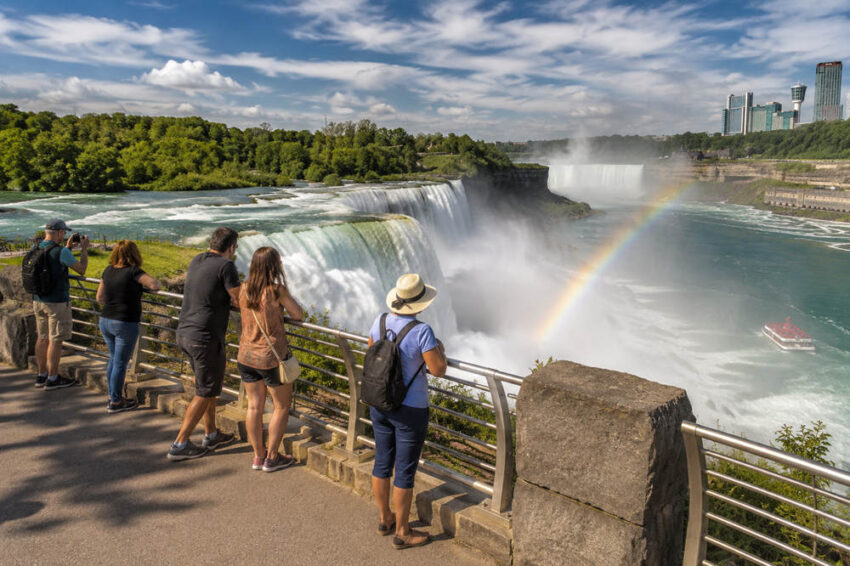
Niagara Falls is beautiful, powerful, and deeply dramatic, which is why questions about safety often come up. One common question is how many people die at Niagara Falls each year. The most honest answer is that there is no single simple number, because different sources count different kinds of incidents.
Public estimates often place Niagara Falls deaths in a broad annual range, sometimes around 20 to 30 per year. That figure should be treated as an estimate, not a precise official total. Some counts focus on people who go over the falls, while others include deaths in the Niagara River, the gorge, nearby park areas, or cases identified as deaths by suicide.
How Many People Die at Niagara Falls Each Year?
Niagara Falls death numbers are usually discussed in ranges because the falls sit on an international border and involve different public agencies on the U.S. and Canadian sides. Incidents may be handled by park police, local police, emergency responders, search-and-rescue teams, coroners, or medical examiners depending on where they happen.
One of the clearest historical sources is a public-health study published in the American Journal of Public Health. The study examined deaths by suicide identified by police on both sides of Niagara Falls from 1978 to 1988. During that 11-year period, it recorded 141 deaths, or an average of 12.8 per year.
More recent local reporting has described roughly 25 deaths by suicide per year as a commonly cited cross-border figure, though that should not be treated as one official combined annual count. The difference between these numbers shows why the wording matters: “Niagara Falls deaths per year” can mean several different things depending on the source.
For readers looking for a simple takeaway, the safest phrasing is this: Niagara Falls deaths are often estimated in a broad yearly range, but exact totals depend on what is being counted, where the incident happened, and how agencies classify the case.
Why the Death Count Is Hard to Pin Down
Niagara Falls is not just one overlook or one waterfall. The area includes Horseshoe Falls, American Falls, Bridal Veil Falls, the Niagara River, the Niagara Gorge, park trails, bridges, observation areas, and downstream recovery zones. A death at the brink of the falls may be counted differently from a death in the gorge or a recovery from the river.
The U.S.-Canada border also complicates the picture. The American side is in New York, while the Canadian side is in Ontario. Each side has its own parks, police, emergency-response systems, and reporting practices. That makes it difficult to point to one public source that neatly combines every incident into a single annual total.
Another issue is that not every incident is reported with the same level of detail. Deaths by suicide are often described cautiously out of respect for families and because responsible reporting avoids unnecessary detail. Historical totals can be even harder to interpret, especially when they include bodies recovered downstream without a clear public explanation of where the person entered the water.
| Count Type | What It May Include |
|---|---|
| Deaths over the falls | People who go over Horseshoe Falls, American Falls, or Bridal Veil Falls |
| Niagara River deaths | Incidents above or below the falls, including dangerous currents and recoveries from the river |
| Gorge or trail deaths | Falls, slips, or other incidents in nearby gorge and trail areas |
| Deaths by suicide | Intentional deaths, often reported with limited public detail |
| Historical recovery totals | Bodies recovered downstream, sometimes with unclear entry points or circumstances |
What Types of Deaths Are Usually Included?
When people hear about Niagara Falls deaths, they may picture someone going directly over the falls. That does happen, but the broader statistics can include several kinds of incidents. Understanding the difference helps make the topic clearer and less sensational.
Accidental Falls and River Incidents
Accidental deaths may involve people entering restricted areas, climbing barriers, slipping near dangerous water, or underestimating the force of the Niagara River. The water above and below the falls is extremely powerful, and areas that look calm from a distance can be dangerous up close.
For ordinary visitors, the risk is much lower when they stay in designated viewing areas. The danger rises when someone tries to get a better photo, steps beyond a barrier, ignores a warning sign, or walks onto closed or unmarked terrain. Mist, wet pavement, winter ice, steep stairs, loose rock, and crowded overlooks can also increase risk.
Deaths by Suicide
Many commonly cited Niagara Falls death estimates include deaths by suicide. This is an important distinction because it changes how the numbers should be understood. These cases are not simply visitor accidents; they are also part of a broader public-health and prevention conversation.
Because of that, this topic should be discussed with care. Safety barriers, patrols, crisis-response work, and restricted-access areas are not just about keeping tourists from slipping. They can also be part of prevention and intervention efforts in places that authorities identify as high risk.
In 2025, local reporting described new barriers at the Niagara Falls State Park Observation Tower after two deaths by suicide within a short period. The added buffer was a reminder that safety planning around Niagara Falls can change in response to specific incidents and ongoing concerns.
Illegal Stunts and Daredevil Attempts
Niagara Falls has a long daredevil history, from barrel attempts to tightrope walks and other risky feats. Those stories are part of Niagara folklore, but they should not be confused with normal visitor safety.
Modern unauthorized stunts are illegal and extremely dangerous. They represent a very different kind of risk from a regular visit to the park, where people are expected to remain in public areas, stay behind barriers, and follow official instructions.
Is Niagara Falls Safe for Visitors?
Yes, Niagara Falls is generally safe for visitors who use the destination as intended. Millions of people visit the falls, walk through the parks, take photos from overlooks, ride official attractions, and enjoy the scenery without incident.
The safest approach is straightforward: stay behind railings, follow posted signs, keep to marked trails, and listen to park staff or police. Viewing areas are designed to give visitors dramatic scenery from protected locations. The risk increases when people treat barriers as optional or assume the river is less powerful than it is.
Families should be especially careful with children near overlooks, stairs, crowded viewing areas, and fast-moving water. The mist can make surfaces slippery, and young visitors may not understand how quickly a risky situation can develop. Keeping children close and choosing safe photo spots can prevent dangerous moments.
Season also matters. In winter, ice and snow can make paths and railings more hazardous. During heavy rain or high-mist conditions, pavement and stairs may be slick. On gorge trails, conditions can be rougher than they appear from the top of the park.
Safety Measures Around Niagara Falls
Safety at Niagara Falls depends on both park design and visitor behavior. Railings, walls, fences, signs, marked trails, lighting, patrols, and restricted areas all help guide people away from danger. These features are not decorative; they are there because the landscape is powerful and unforgiving.
On the Canadian side, Niagara Parks describes the Niagara Glen as an area where trails may include steep cliffs, rough surfaces, slippery rocks, loose rocks overhead, and fast-running water. Its trail safety guidance encourages visitors to use care, respect posted rules, and stay aware of changing trail conditions.
On the American side, Niagara Falls State Park is a major public park with overlooks, attractions, hiking areas, and family-friendly visitor spaces. The park is built for public access, but safe access still depends on respecting barriers, remaining in designated areas, and paying attention near water and heights.
Some safety measures are added or adjusted after specific concerns. After the 2025 Observation Tower incidents, temporary barriers were reported at the deck to keep visitors farther back from the outer railing. Changes like that show how safety planning is not static; authorities may adapt the physical space when a location is considered higher risk.
What Visitors Should Know Before Going
For most visitors, Niagara Falls is not a place to fear. It is a place to respect. The falls, river, gorge, and surrounding parkland are beautiful because they are natural and powerful, and that power is exactly why the rules matter.
Before visiting, keep these safety basics in mind:
- Stay behind all railings, walls, fences, and barriers.
- Do not climb, sit on, lean over, or cross protective fencing.
- Keep children close near overlooks, stairs, trails, and fast-moving water.
- Use marked trails only, especially in gorge areas such as the Niagara Glen.
- Avoid risky photos near edges, wet rocks, walls, or restricted spaces.
- Be extra careful when pavement is wet, icy, crowded, or covered in mist.
- Do not enter the water above or below the falls unless you are part of an official permitted activity.
- Follow instructions from park staff, police, posted signs, and attraction operators.
It is also smart to check current conditions before you go. Weather, construction, seasonal attraction schedules, trail access, crowd levels, and temporary safety changes can affect the visit. Official park and tourism sources are the best places to confirm what is open and where visitors are allowed to go.