
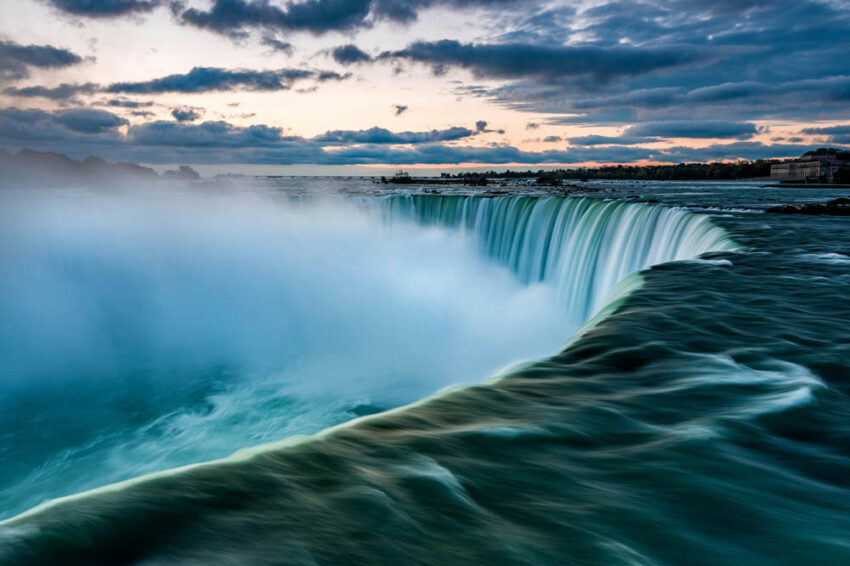
Niagara Falls is not man-made. It is a natural waterfall system shaped by glaciers, river flow, erosion, and the Niagara Escarpment over thousands of years. What makes the question interesting is that the falls are also carefully managed today. People did not build Niagara Falls, but modern engineering affects how much water flows over them at certain times.
Niagara Falls is often spoken of as one landmark, but it is actually made up of three waterfalls: Horseshoe Falls, American Falls, and Bridal Veil Falls. Together, they form one of North America’s most famous natural sights, drawing visitors who come for the mist, the roar, the views, and the sheer scale of the river as it drops between the United States and Canada.
Is Niagara Falls Man Made?
No, Niagara Falls was not built or artificially created by humans. The falls are part of the natural Niagara River system, where water flows from Lake Erie toward Lake Ontario and drops over the Niagara Escarpment. The waterfall exists because of rock layers, glacial meltwater, river movement, and erosion, not because anyone designed or constructed it.
The confusion is understandable. Niagara Falls sits in a highly developed area with hotels, observation decks, boat tours, tunnels, landscaped parks, bridges, lighting systems, power facilities, and international border crossings nearby. These human-made features shape how people experience the falls, but they did not create the natural drop in the river.
A better way to understand Niagara Falls is that people manage parts of the river system around it, not the geological feature itself. The waterfall, gorge, cliffs, river, and mist are natural. The viewing platforms, walkways, lights, docks, tunnels, and power infrastructure are human additions built around a natural landmark.
How Niagara Falls Formed Naturally
The formation of Niagara Falls began about 12,000 years ago, near the end of the last Ice Age. As massive glaciers retreated, meltwater helped shape the Great Lakes drainage system. That water eventually moved through what is now the Niagara River, flowing north from Lake Erie toward Lake Ontario.
At the Niagara Escarpment, the river dropped over a steep natural ridge. Niagara Falls State Park describes this as the beginning of the falls’ long geological story, with water plunging over the escarpment thousands of years ago. Over time, the river wore into layers of rock. Softer layers eroded more quickly beneath harder rock, helping create the steep drop associated with the falls.
The falls have also moved. They did not begin exactly where visitors see them today. The New York State Museum explains that the falls migrated upstream as erosion carved the Niagara Gorge. That gorge is more than a scenic backdrop; it is a record of the falls’ gradual movement through the landscape.
This natural process still matters, even though erosion is now much slower than it once was. Water, rock, ice, freezing, thawing, and gravity all continue to shape the area. Niagara Falls is not a static object. It is a living geological feature, even in a place surrounded by cities, roads, parks, and power systems.
Why Some Visitors Think Niagara Falls Might Be Artificial
Niagara Falls can look almost too dramatic to be natural. The wide curve of Horseshoe Falls, the powerful curtain of water, the clouds of mist, and the constant roar can make the scene feel designed for effect. From certain viewpoints, the water may even appear evenly spread across the crest, adding to the impression that someone is controlling every detail.
The surrounding tourism infrastructure adds to that feeling. Visitors often experience the falls from paved promenades, observation decks, elevators, tunnels, boat tours, illuminated evening displays, and carefully managed park spaces. None of those features make the falls artificial, but they do make the setting feel planned.
Hydroelectric power is another reason the myth persists. Niagara’s moving water has been used for power generation for generations, and major facilities operate on both sides of the border. When people hear about diversion tunnels, control gates, dams, and power plants, it is easy to assume those systems created the waterfall. In reality, they manage water around an existing natural feature.
That distinction is important. Niagara Falls is not a manufactured attraction or a fake waterfall built for tourists. It is a natural wonder with a long history of human use, protection, development, and management around it.
What Human Engineering Controls Today
Although Niagara Falls is natural, the river’s flow is carefully managed. The most important modern issue is the balance between scenery and hydroelectric power. The Niagara River is a major energy resource, but the falls are also a landmark shared by Canada and the United States. Both uses matter, so the river is governed by international agreements and control systems.
The 1950 Niagara Treaty established minimum flows over Niagara Falls for scenic purposes. In simple terms, the river’s full natural flow does not always pass over the brink. Some water can be diverted for power generation, while treaty rules preserve a required scenic flow over the falls.
Canada’s summary of the Niagara River treaty explains that the agreement helps oversee water flow over the falls for display purposes while also determining how much water is available for generating power. This is why Niagara Falls can be both a natural landmark and part of a managed international water system.
One key structure is the International Control Dam, located on the Niagara River in the City of Niagara Falls. Completed in 1954, it helps control water diversion and distributes water between Ontario Power Generation and the New York Power Authority. It does not create the falls; it helps manage how water is directed within the river system.
Engineering also helps with practical concerns such as ice management, infrastructure protection, and erosion control. Without human management, the falls would still exist, but the river would behave differently. The modern system is designed to balance natural scenery, power production, safety, and long-term preservation.
Is the Water Over Niagara Falls Still Natural?
Yes, the water over Niagara Falls is still natural. It comes from the Niagara River, which carries water from the Great Lakes system. The falls are not filled by pumps, and the water is not part of an artificial display.
What can be adjusted is the amount of water flowing over the falls at different times. During major visitor periods, scenic-flow rules help keep the falls looking powerful and impressive. At other times, water above the required scenic flow may be diverted for hydroelectric generation.
The simplest way to describe it is this: the source of the water is natural, while the flow is managed. That management does not make Niagara Falls fake. It means the river is shared, regulated, and used carefully because it has scenic, environmental, public, and energy value.
What Visitors See Today
When visitors stand near Niagara Falls today, they are seeing a mix of ancient geology and modern access. The gorge, cliffs, river, mist, and waterfalls were shaped by natural forces over thousands of years. The parks, railings, tunnels, lights, elevators, boat docks, and pathways were added so people could experience the falls more safely and comfortably.
This mix is part of Niagara’s identity. The falls are not hidden in a remote wilderness. They sit beside cities, hotels, restaurants, gardens, casinos, roads, bridges, and power facilities. For some visitors, that contrast is surprising. For others, it is what makes the place memorable: a powerful natural landmark surrounded by layers of tourism, engineering, conservation, and public planning.
Travelers should also remember that the visitor experience can change with the season, weather, maintenance, attraction schedules, and local conditions. Boat tours, tunnel access, lighting, park hours, and viewing areas may vary throughout the year. Before making plans, it is worth checking current details from official park, attraction, tourism, or border sources.
Final Answer: Natural Wonder, Managed Landmark
Niagara Falls is not man-made. It formed naturally after the Ice Age as meltwater, river flow, erosion, and the Niagara Escarpment shaped the landscape. Over thousands of years, the falls moved upstream and carved the gorge that visitors see today.
Modern engineering has changed how the river is managed, but it did not create the waterfall. International agreements, control structures, and hydroelectric systems help balance scenery, power generation, safety, and preservation.
Niagara Falls is not a manufactured waterfall. It is an ancient natural landmark whose modern flow is managed by people.