
Niagara Falls is famous for its roaring water, drifting spray, and unforgettable views, but the story behind the falls is just as fascinating as the scenery. This natural wonder has been shaped by ancient ice, moving rock, international borders, engineering history, and more than a century of visitor curiosity.
Whether you are planning a trip, writing a school project, or simply love surprising travel facts, these fun facts about Niagara Falls show why the destination continues to capture attention from both sides of the border.
1. Niagara Falls Is Actually Three Waterfalls
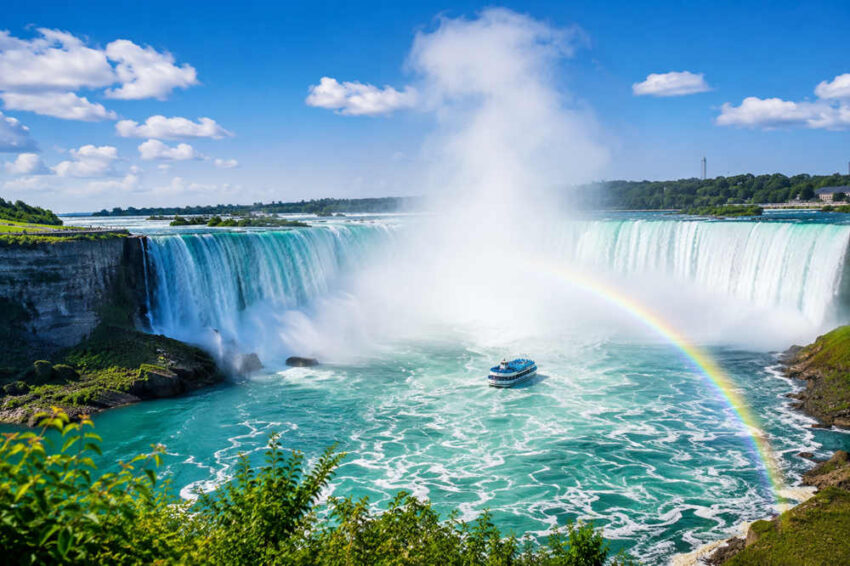
One of the most surprising facts about Niagara Falls is that it is not just one waterfall. The name “Niagara Falls” refers to three separate waterfalls: Horseshoe Falls, American Falls, and Bridal Veil Falls.
Horseshoe Falls is the largest and most famous of the three. It sits mostly on the Canadian side and has the curved shape that gives it its name. American Falls is on the New York side, while the smaller Bridal Veil Falls is separated from American Falls by Luna Island.
That is why the experience can feel different depending on where you stand. From the Canadian side, visitors often get the wide postcard view of Horseshoe Falls. From the American side, the landscape feels closer and more park-like, with islands, walking paths, and viewpoints near the brink.
2. Horseshoe Falls Carries Most of the Water
Horseshoe Falls is not only the largest of the three waterfalls. It also carries most of the Niagara River’s flow over the crest, which helps explain the huge cloud of spray and the deep thunder visitors hear from nearby viewpoints.
The curved shape of Horseshoe Falls adds to the drama. A wide sheet of water drops into the lower Niagara River, sending mist into the air and creating one of the most recognizable scenes in North America.
For many first-time visitors, the most memorable moment is not only seeing the falls. It is feeling the cool spray, hearing the constant rush of water, and realizing how much force is moving through the river.
3. Niagara Falls Was Formed After the Last Ice Age
Niagara Falls has an ancient presence, but geologically speaking, it is relatively young. The falls formed after the last Ice Age, when retreating glaciers shaped the Great Lakes basin and released huge amounts of meltwater through the region.
That water eventually flowed through what became the Niagara River, traveling from Lake Erie toward Lake Ontario. As the river crossed the Niagara Escarpment, it began creating the early version of the waterfall we know today.
This Ice Age origin story is part of what makes Niagara so interesting. The falls are not just a scenic attraction. They are part of a much larger Great Lakes landscape shaped by ice, water, pressure, erosion, and time.
4. Niagara Falls Is About 12,000 to 12,500 Years Old
Niagara Falls is generally described as being about 12,000 years old, with many geology summaries placing its development at roughly 12,000 to 12,500 years ago. That connects the falls to the end of the last Ice Age and the formation of the Niagara River system.
That may sound incredibly old in human terms, but compared with many mountains, canyons, and rock formations, Niagara Falls is young. The rocks around the Niagara Gorge are much older than the waterfall itself.
That contrast makes the site fascinating: the stone layers tell one ancient story, while the waterfall tells a newer story of glacial meltwater and ongoing erosion.
5. Niagara Falls Has Moved Back About Seven Miles
Niagara Falls has not stayed in one place. Over thousands of years, the force of the water has worn away rock and caused the falls to retreat upstream from their original location near the Niagara Escarpment.
In that time, the falls have moved back about seven miles. This slow retreat helped create the Niagara Gorge, the deep river corridor downstream from the falls.
Erosion still happens today, although modern water control and hydroelectric diversion have greatly reduced the rate. When you stand beside Niagara Falls, it may look permanent, but it is part of a landscape that has been changing for thousands of years.
6. Niagara Falls Is Not the Tallest Waterfall in the World
Niagara Falls is world famous, but it is not the tallest waterfall. Many waterfalls are higher, including Angel Falls in Venezuela.
What makes Niagara Falls so impressive is the combination of width, water volume, accessibility, and setting. Visitors can stand close to the river, see the falls from multiple angles, ride boats into the mist, walk through nearby parks, and experience both the Canadian and American sides.
Niagara’s fame comes from more than a single measurement. It is the whole experience: the sound, the spray, the energy of the river, the history, and the way the falls sit between two countries.
7. The Water Comes From the Great Lakes
The water that flows over Niagara Falls is part of the Great Lakes system. It travels from the upper Great Lakes through Lake Erie, enters the Niagara River, drops over the falls, and continues toward Lake Ontario.
From there, the water eventually moves through the St. Lawrence River system toward the Atlantic Ocean. The Niagara River itself is not especially long, but it plays a major role in connecting two of the Great Lakes.
This connection helps explain why Niagara Falls has such a steady, powerful flow. It is not fed by a small mountain stream. It is part of one of the largest freshwater systems on Earth.
8. Niagara Falls Once Fell Strangely Quiet
In March 1848, Niagara Falls became unusually silent after an ice jam formed near the source of the Niagara River at Lake Erie. The blockage severely restricted the flow of water heading toward the falls.
For people living nearby, the change must have felt unsettling. Niagara Falls is known for its constant thunder, so a sudden quiet would have seemed almost impossible.
The water eventually broke through the ice blockage and resumed its normal course. Today, the event remains one of the strangest natural episodes in Niagara history.
9. Engineers Once “Turned Off” the American Falls
Niagara Falls also had a famous human-made pause. In 1969, engineers diverted water away from the American Falls so they could study erosion, rockfall, and the large pile of broken rock at the base.
This did not turn off all of Niagara Falls. Horseshoe Falls continued flowing while the American Falls stood exposed for several months.
The project drew huge public interest because it gave people a rare chance to see the rock face and riverbed usually hidden by rushing water. It also showed how closely Niagara’s natural beauty and modern engineering are connected.
10. Niagara Falls Helped Shape the History of Electricity
Niagara Falls is not only a natural landmark. It is also part of the history of electric power.
In the late 1800s, the force of the falls became central to major hydroelectric development. Nikola Tesla’s alternating current ideas and George Westinghouse’s electrical system helped show that power generated at Niagara could be transmitted to nearby cities.
By the 1890s, Niagara Falls had become an important symbol of modern electricity. For visitors today, this adds another layer to the destination. Niagara is not just beautiful; it helped influence how cities could be powered.
11. Niagara Falls State Park Is America’s Oldest State Park
On the New York side, Niagara Falls State Park is recognized as the oldest state park in the United States. The Niagara Reservation was created in 1885 after years of advocacy from people who wanted to protect the natural beauty of the falls and keep public access open.
This preservation history matters because Niagara Falls could easily have become even more heavily commercialized. The park movement helped protect key viewpoints, green space, trails, and access around the American side.
Today, Niagara Falls State Park gives visitors a more natural way to experience the area, with walking paths, overlooks, Goat Island, Cave of the Winds access, and views of both American Falls and Horseshoe Falls.
12. Daredevils Have Been Drawn to the Falls for More Than a Century
Niagara Falls has a long and unusual daredevil history. One of the most famous figures is Annie Edson Taylor, a schoolteacher who became the first person to survive going over Niagara Falls in a barrel in 1901.
Her story is often remembered as bold and strange, but it is also a reminder of how dangerous the falls are. Niagara’s force has attracted stunt performers, tightrope walkers, and thrill-seekers for generations, but many attempts have ended badly.
For modern visitors, the daredevil stories are best treated as history, not inspiration. The falls are beautiful from safe viewing areas, guided attractions, observation decks, and official trails. Their power deserves respect.
13. The Mist Can Create Rainbows
The spray around Niagara Falls is one of the destination’s most memorable features. Depending on the weather and wind, it can drift across viewpoints, gardens, sidewalks, and attraction areas.
This is especially noticeable near boat tours, Cave of the Winds, Journey Behind the Falls, and close-up observation platforms. Even on a clear day, visitors may find themselves walking through a soft cloud of water droplets near the river.
When sunlight passes through the mist, rainbows can appear above the gorge or near the base of the falls. It is one reason Niagara photos often look so vivid: the scene changes constantly with the light, wind, and moving water.
14. Niagara Falls Sits Between Two Countries
Niagara Falls is shared by Canada and the United States, with Ontario on one side and New York on the other. This international setting is part of its appeal.
The Canadian side is known for sweeping panoramic views, especially of Horseshoe Falls. The American side offers close natural access through Niagara Falls State Park, including Goat Island and viewpoints near American Falls and Bridal Veil Falls.
Many travelers choose to see both sides if they have the proper travel documents. The experience feels different on each side, which makes Niagara Falls more than a single viewpoint. It is a cross-border destination with two distinct perspectives.
15. Niagara Falls Changes With the Seasons
Niagara Falls is worth seeing in more than one season because the whole atmosphere changes throughout the year.
In summer, the area feels lively and full of movement, with boat tours, outdoor attractions, and long sightseeing days. In autumn, cooler air and fall color add a softer mood to the parks and river views. In winter, ice formations, snow, and frozen spray can make the landscape look almost otherworldly, even though the falls continue to flow. In spring, melting snow and fresh greenery bring renewed energy to the river corridor.
This seasonal variety is one reason people return. Niagara Falls may be the same landmark, but it rarely feels exactly the same twice.
Quick Visitor Note
If you are planning a trip to Niagara Falls, check current details before you go. Attraction schedules, boat tour seasons, border-crossing requirements, parking rules, viewing access, and weather-related conditions can change.
For official planning information, start with resources such as Niagara Parks, Niagara Falls State Park, and local tourism or border-service websites. A little planning can make a big difference, especially if you want to visit both sides or include seasonal attractions.