
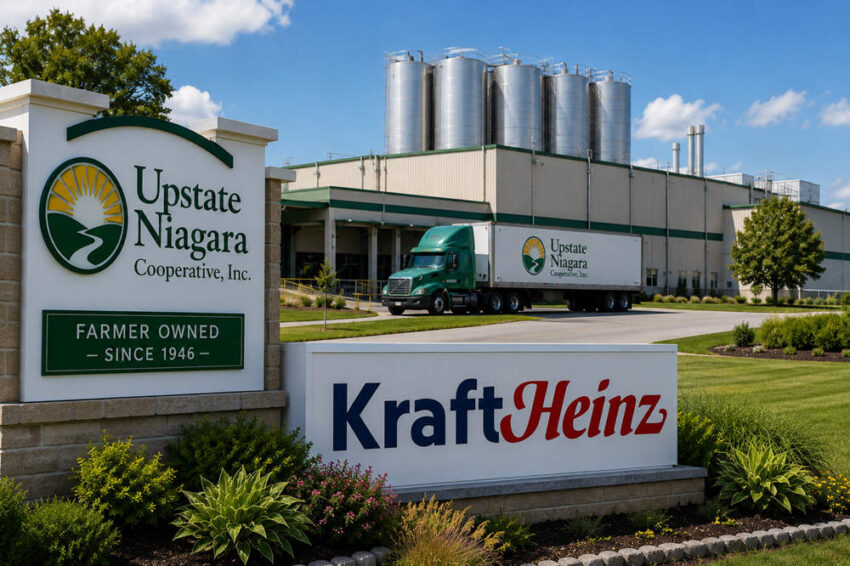
Miguel Patricio’s name does not lead to a classic Niagara Falls story. The more useful connection runs through Kraft Heinz, Upstate Niagara Cooperative, and a 2017 dairy-plant deal in Campbell, New York.
That distinction matters. Upstate Niagara Cooperative is a New York dairy cooperative, and Campbell is in Steuben County, not Niagara Falls. The “Niagara” in this story belongs to the cooperative’s name and Western New York dairy roots, rather than to the waterfall, tourism district, or Ontario’s Niagara Region.
Patricio’s role also needs careful timing. Kraft Heinz signed the Campbell facility agreement with Upstate Niagara before he became chief executive of the company. His connection is therefore corporate and indirect: he later led Kraft Heinz, the same packaged-food giant whose earlier plant decisions had already affected dairy workers, farm families, and regional food manufacturing in Upstate New York.
Who Is Miguel Patricio?
Miguel Patricio is a Portuguese business executive best known for leadership roles at Anheuser-Busch InBev and Kraft Heinz. Before joining Kraft Heinz, he spent about two decades at AB InBev, where he held senior international roles and became closely associated with brand-building, marketing strategy, and global consumer products.
In 2019, Kraft Heinz announced that Patricio would become chief executive officer effective July 1 of that year. He arrived at a challenging moment for the company, as major packaged-food brands were under pressure to adapt to changing consumer habits, tighter competition, and investor scrutiny.
That background explains why his name appears in Kraft Heinz-related topics. But it does not mean every earlier Kraft Heinz deal belongs to his personal record. The Upstate Niagara story began before his time as CEO.
The Real Niagara Link: Kraft Heinz and Upstate Niagara Cooperative
The strongest Niagara connection is Kraft Heinz’s 2017 agreement to sell its cheese plant in Campbell, New York, to Upstate Niagara Cooperative.
At the time of that announcement, Upstate Niagara was described as a farmer-owned cooperative of 360 dairy farms across Western New York. Today, its public website describes the cooperative as a large dairy farm organization with 250-plus family farms and more than 1,800 employees. Its family of brands includes Upstate Farms, Bison, Intense Milk, O-AT-KA, and Valley Farms.
For readers seeing the word “Niagara,” it is easy to imagine a tourism or celebrity angle. This is not that kind of story. It is a food-business story about a dairy facility, a cooperative buyer, and a regional supply chain that reaches from farms to processing plants to grocery and foodservice customers.
What Was the Campbell, New York Facility Deal?
In June 2017, Kraft Heinz and Upstate Niagara Cooperative announced that Upstate Niagara would purchase the Kraft Heinz cheese plant in Campbell, New York. The companies said the deal was expected to close within 30 to 60 days.
The transaction also included a long-term co-packing agreement with Kraft Heinz. In practical terms, that meant the Campbell facility was not simply being sold and separated from its existing business overnight. It would continue producing dairy products connected to Kraft Heinz customers, helping reduce disruption while giving the plant a new operator with deep dairy experience.
Kraft Heinz said the deal would keep at least 125 jobs in Campbell, with anticipated growth to 150 within a year. The company also pledged an ongoing investment of $3 million to $5 million to improve and maintain the facility.
New York State framed the agreement as an important regional jobs story. State officials said the deal would save the at-risk Campbell facility in Steuben County and noted that Upstate Niagara had committed $10 million for new machinery and equipment. For a community built partly around manufacturing employment, those details made the sale more than a quiet corporate transaction.
Why Upstate Niagara Cooperative Was a Natural Buyer
Upstate Niagara Cooperative was a logical buyer because its business already sat at the center of milk production, dairy processing, foodservice, and regional distribution. A cheese plant needs more than equipment and a building. It needs a reliable milk supply, experienced plant workers, quality systems, customer relationships, and a reason to keep production moving.
A farmer-owned cooperative can bring a different perspective to that equation. Its members are dairy farm families, so processing capacity is not just a corporate asset. It is part of how milk gets turned into marketable products and how farms remain connected to buyers.
That is why the Campbell deal carried weight. It gave Upstate Niagara a manufacturing opportunity while helping Kraft Heinz preserve continuity for customers. It also offered workers and local officials a better outcome than a possible plant closure.
Jobs, Investment, and the Regional Food Economy
Food manufacturing plants often play a larger role in small communities than outsiders realize. They support direct jobs inside the facility, but they also affect trucking, maintenance, suppliers, packaging, local services, and farm networks.
The Campbell plant was especially tied to dairy. Milk is perishable, and dairy farmers need dependable processors. Plants need steady supply. Customers need consistent products. When one piece of that system changes hands, the effects can reach beyond a single address.
That is what made the Kraft Heinz-Upstate Niagara agreement important. It connected a global food company with a regional dairy cooperative in a way that preserved manufacturing activity and kept the facility tied to New York’s dairy economy. The public emphasis on jobs and investment shows how closely food production, local employment, and agricultural supply chains can overlap.
Where Miguel Patricio Fits Into the Timeline
The timeline is straightforward. Kraft Heinz announced the Upstate Niagara agreement in 2017. Miguel Patricio became Kraft Heinz CEO in 2019.
Because of that, Patricio should not be presented as the executive who led the Campbell facility sale. A more accurate framing is that he later became the leader of Kraft Heinz, the company involved in the earlier transaction. His name belongs to the wider Kraft Heinz leadership story, while the Upstate Niagara deal belongs to the company’s pre-Patricio restructuring and plant-portfolio history.
This still gives the topic a meaningful business angle. Patricio’s tenure at Kraft Heinz was part of the company’s attempt to stabilize and refocus after a difficult period for legacy packaged-food brands. The Campbell deal, meanwhile, shows the kind of operational decisions that can shape local economies long before a new CEO takes the corner office.
What Happened After the Upstate Niagara Deal?
The Campbell plant story did not end with the 2017 sale. Five years later, the same facility became part of another dairy-industry transaction.
In 2022, Upstate Niagara Cooperative signed an agreement to sell the Upstate Farms Cheese facility in Campbell to BelGioioso Cheese, a Wisconsin-based company known for Italian-style cheeses. According to Dairy Foods, the agreement included continued local milk supply from Upstate Niagara member farms through a long-term milk supply arrangement.
That follow-up matters because it shows how food plants can change ownership while remaining part of a regional farm and manufacturing network. The corporate name on the facility may change, but the underlying needs remain familiar: milk, skilled workers, plant capacity, buyers, and long-term demand for dairy products.
Why This Story Matters for Regional Readers
Niagara and the surrounding cross-border region are often discussed through waterfalls, wineries, hotels, restaurants, and weekend travel. But the broader regional story also includes food production, agriculture, packaged goods, and distribution networks that rarely get the same attention.
The Kraft Heinz-Upstate Niagara connection is a reminder that familiar food brands depend on practical systems behind the scenes. Farms need processors. Processors need customers. Large companies need reliable partners. Communities need employers that can keep plants operating through ownership changes and shifting market conditions.
The Bottom Line
Miguel Patricio’s link to Upstate Niagara is not personal or direct. The Kraft Heinz-Upstate Niagara Cooperative agreement happened in 2017, before he became Kraft Heinz CEO in 2019.
The real connection is through Kraft Heinz. The company sold its Campbell, New York cheese plant to Upstate Niagara Cooperative, helping keep the facility active and tied to the regional dairy economy. Patricio later led Kraft Heinz, placing him within the company’s broader corporate story, but not at the center of that specific transaction.
That makes this topic best understood as a food-industry explainer. It connects a global packaged-food company, a New York dairy cooperative, and a regional manufacturing facility whose story continued beyond the original sale. Cooperative transaction.