
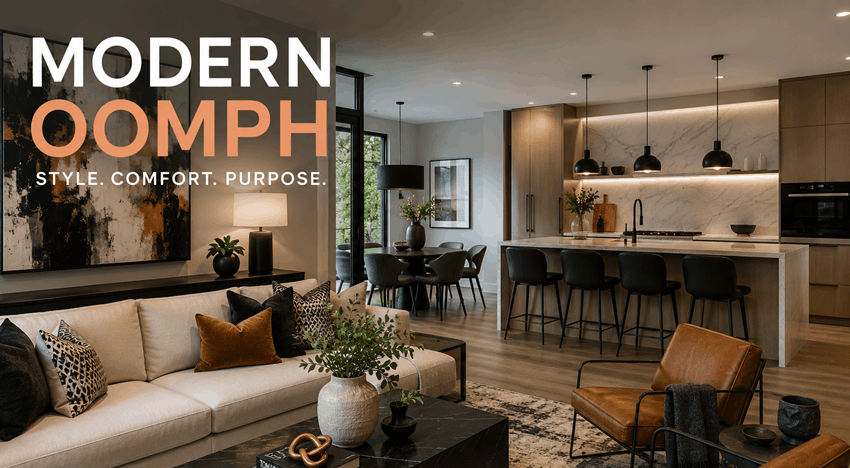
Modern interior design should not feel cold, stiff, or copied from a showroom. The best spaces have personality. They feel polished, but still comfortable. They look current, but not trendy in a way that will feel tired next year. Most of all, they work for the people who actually live, work, shop, dine, or gather there.
That is the real meaning of modern oomph. It is the extra layer that turns a room from “nice” into memorable. It is not about filling a space with expensive furniture or chasing every design trend online. It is about knowing what you want the room to say, how you want it to feel, and how each choice supports that larger vision.
Modern Design Is Not One Fixed Look
When people hear “modern design,” they often picture white walls, sharp edges, black accents, open spaces, and minimal furniture. That can be modern, but it is not the only version.
Modern design can be warm. It can be colourful. It can include vintage pieces, textured fabrics, art, natural wood, soft lighting, and personal objects. A modern room does not need to feel empty to feel clean. It does not need to avoid comfort to look sophisticated.
The strongest modern interiors usually share a few qualities. They are intentional. They avoid clutter. They use materials thoughtfully. They balance form and function. They feel connected from one area to the next. They also leave room for personality.
That last point matters most. A space without personality may look fine in a photo, but it will rarely feel good to live in.
Start With the Feeling You Want
Before choosing tile, paint, furniture, lighting, or fixtures, start with the feeling. How should the room make people feel when they walk in?
A home kitchen may need to feel warm, bright, and easy for family life. A dental office may need to feel calm, clean, and reassuring without looking clinical. A boutique may need to feel memorable and brand-focused. A restaurant may need to feel social, intimate, energetic, or relaxed depending on the concept.
Good design starts with that emotional target. Once you know the feeling, the practical choices become easier.
For example, if you want a living room to feel calm, you may choose softer colours, layered lighting, fewer visual distractions, and comfortable seating. If you want a commercial reception area to feel bold and confident, you may use stronger contrast, custom signage, distinctive furniture, and a clear brand moment near the entrance.
The feeling leads the design. Not the other way around.
Use Inspiration Without Letting It Overwhelm You
Today, design inspiration is everywhere. Pinterest, Instagram, TikTok, Houzz, renovation shows, real estate listings, hotel photos, restaurant interiors, and online shops can all help you figure out what you like.
But too much inspiration can create confusion. One day you love warm minimalism. The next day you want a moody green kitchen. Then you see a colourful tiled bathroom, a Scandinavian living room, a rustic farmhouse table, and a glossy hotel lobby, and suddenly the project has no direction.
The smart approach is to collect inspiration, then edit it hard.
Look for patterns. Are you saving rooms with the same wall colour? The same type of lighting? The same wood tones? The same kind of sofa? The same tile shape? The same mood?
Also pay attention to what you dislike. Knowing what you do not want is just as helpful as knowing what you love. If you hate shiny finishes, say that. If you dislike open shelving, say that. If you do not want your home to feel too formal, make that clear early.
Think Beyond the Obvious
One of the best ways to create a memorable space is to look outside your category for inspiration.
If you are designing a kitchen, do not only look at kitchens. Look at restaurants, cafés, hotels, bakeries, wine bars, and market spaces. If you are designing a dental office, do not only look at other dental offices. Look at spas, lounges, boutique hotels, and wellness clinics. If you are designing a home office, look at libraries, creative studios, and small hospitality spaces.
This is where design gets interesting. A residential kitchen may borrow the warmth of a favourite café. A waiting room may borrow the calm of a spa. A retail space may borrow the lighting drama of a gallery. A basement bar may borrow the atmosphere of a cozy cocktail lounge.
Great interiors are rarely built from one source. They come from smart combinations.
Comfort Is Not the Enemy of Style
Some modern interiors look beautiful but feel uncomfortable. The sofa is too stiff. The chairs are too low. The lighting is too harsh. The room echoes. There is nowhere to put a drink. The space looks complete, but it does not support real life.
That is bad design.
Comfort should be part of the plan from the beginning. In a home, that means choosing furniture people actually want to use. In a business, it means thinking about how clients, customers, staff, and visitors move through the space. In a restaurant, it means balancing atmosphere with seating that works for a full meal.
Modern oomph comes from the blend of beauty and usefulness. A room should look good, but it should also make life easier.
Design for How the Space Is Really Used
Before renovating or redesigning, be honest about how the space functions now and how you want it to function later.
Where do people gather? Where does clutter collect? What feels awkward? What gets used every day? What looks nice but never works? What do guests notice first? What frustrates staff? What slows down daily routines?
These questions are not glamorous, but they matter. A beautiful mudroom that has no storage will fail. A stylish office with poor lighting will be frustrating. A stunning kitchen with bad workflow will annoy everyone who cooks in it. A gorgeous lobby with unclear signage will confuse visitors.
Good design solves problems while improving the look of the space.
Create a Strong Design Package
A design package is one of the best ways to keep a project clear. It can include drawings, measurements, finish selections, paint colours, flooring details, lighting plans, fixtures, furniture, hardware, tile, cabinetry notes, and inspiration images.
This is especially important when contractors are involved. Without a clear package, every person may imagine something different. One contractor may quote one version of the project. Another may quote a different version. Then comparing prices becomes almost impossible.
A clear design package gives everyone the same information. It reduces misunderstandings, helps control costs, and makes the final result more likely to match the original vision.
It may feel like extra work upfront, but it can save time, money, and stress later.
Be Realistic About Budget
Renovations are often more expensive than people expect. Materials, labour, demolition, electrical, plumbing, millwork, permits, delivery, installation, and unexpected issues can all add up quickly.
One common mistake is looking only at the cost of a visible item. A tile may seem affordable per square foot, but the total cost includes preparation, installation, grout, edging, waste, labour, and sometimes removal of the old surface. A light fixture may look reasonable online, but the full cost may include wiring, installation, dimmers, bulbs, shipping, and possible ceiling work.
That does not mean you need an unlimited budget. It means you need an honest one.
Decide where to spend and where to save. Maybe custom millwork matters more than luxury wallpaper. Maybe lighting deserves more of the budget than decorative accessories. Maybe durable flooring matters more than a trendy chair.
The best projects do not spend everywhere. They spend strategically.
Build Flexibility Into the Plan
Even well-planned projects require flexibility. A product may be delayed. A material may be discontinued. A wall may hide an issue. A quote may come in higher than expected. A colour may look different in real light than it did on a screen.
Flexibility does not mean abandoning the vision. It means knowing the difference between the core idea and the details that can shift.
For example, if the main goal is a warm, modern kitchen, there may be several cabinet colours, countertops, and tile choices that can achieve that mood. If one option becomes too expensive or unavailable, the project can still succeed.
A strong design concept gives you direction. Flexibility helps you survive reality.
Hire the Right People
A successful design project depends on the team. Designers, general contractors, tradespeople, millworkers, electricians, plumbers, painters, installers, and suppliers all play a role.
Trying to manage everything yourself can work for small projects, but larger renovations often need professional coordination. A good general contractor keeps the project moving, schedules trades, solves site problems, manages timelines, and helps prevent costly mistakes.
A designer can help translate your ideas into a clear plan. They can also help you avoid choices that look good in isolation but do not work together.
The right team does not remove every challenge, but it makes challenges easier to handle.
Make Commercial Spaces Feel Human
Commercial interiors have to do more than look professional. They need to support brand identity, customer experience, staff workflow, and trust.
A clinic should feel calm and credible. A restaurant should feel connected to its food and service style. A retail shop should guide people naturally through the space. A salon should feel comfortable, polished, and visually memorable. A professional office should feel organized without becoming cold.
This is where branded interiors matter. Colours, signage, materials, lighting, graphics, furniture, and layout all tell people what kind of business they are entering.
A strong commercial space does not need to shout the brand at every corner. It should express the brand through mood, consistency, and thoughtful details.
Give Residential Spaces Personality
Homes should not feel like copies of online inspiration photos. They should reflect the people who live there.
That does not mean every personal item needs to be displayed. It means the space should have some evidence of real life: books, art, travel pieces, family heirlooms, favourite colours, meaningful objects, collected ceramics, plants, music, photographs, or materials that feel connected to the homeowner’s taste.
A modern home can still be deeply personal. In fact, personal details often make modern design warmer.
The trick is editing. Keep what matters. Remove what creates noise. Give important objects breathing room.
Lighting Can Make or Break the Room
Lighting is one of the most powerful parts of interior design, but it is often treated as an afterthought.
A room needs layers of light. Overhead lighting gives general brightness. Task lighting helps with work, reading, cooking, grooming, or service. Accent lighting highlights art, shelving, plants, textures, or architectural features. Decorative lighting adds personality.
Harsh lighting can make even expensive finishes look flat. Warm, layered lighting can make a simple space feel rich and inviting.
For homes, dimmers are often worth it. For businesses, lighting should support both mood and function. A restaurant needs atmosphere, but guests still need to read the menu. A clinic needs brightness, but patients should not feel like they are under interrogation lights.
Texture Adds Depth
Modern spaces can feel bland if everything is smooth, flat, and new. Texture adds depth.
Wood grain, stone, linen, wool, leather, woven materials, matte finishes, plaster, tile, metal, glass, greenery, and soft textiles can all make a room feel richer. Texture is especially important in neutral interiors because it keeps the space from feeling lifeless.
A beige room can be boring, or it can be beautiful. The difference is usually texture, contrast, proportion, and light.
Avoid Trend Overload
Trends can be useful. They introduce fresh ideas and help people see new possibilities. But too many trends in one room can make a space age quickly.
The smarter approach is to use trends lightly. Choose timeless foundations for expensive or difficult-to-change elements, then bring in trendier details through paint, art, accessories, smaller furniture, textiles, or hardware.
That way, the room can evolve without needing a full renovation every few years.
A good test is simple: would you still like this if it were not popular online right now? If the answer is no, be careful.
Let the Space Breathe
Modern oomph does not come from filling every corner. Negative space matters. A room needs places for the eye to rest.
This is especially true in smaller spaces. Too much furniture, too many colours, too many accessories, and too many statement pieces can make a room feel smaller and more stressful.
Choose focal points carefully. Maybe it is a fireplace, a dramatic light fixture, a beautiful piece of art, a custom reception desk, a bold tile wall, or a strong view. Let that moment lead, then support it with quieter choices.
Design Is a Process, Not a Single Purchase
Many people hope one purchase will fix a room. A new sofa, new rug, new paint colour, or new light fixture may help, but design is usually about relationships between pieces.
The sofa has to work with the rug. The rug has to work with the floor. The floor has to work with the walls. The lighting has to work with the colours. The layout has to work with how people move. The details have to support the whole room.
That is why good design takes planning. It is not just shopping. It is decision-making.
What “Oomph” Really Means
Oomph is that extra layer of confidence and clarity. It can come from a bold material, a custom graphic, a clever layout, a surprising colour, a beautiful lighting choice, a strong art piece, or a room that simply feels complete.
But oomph should never feel random. It works best when it supports the purpose of the space.
In a home, oomph might mean a kitchen that feels warm enough for family life but polished enough for entertaining. In a business, it might mean a reception area that tells clients they are in the right place before anyone says a word. In a restaurant, it might mean lighting and seating that make guests want to stay longer.
Oomph is not decoration for decoration’s sake. It is design with energy.
Final Thoughts
Modern interior design is at its best when it feels personal, practical, and alive. A beautiful space should not only look good in photos. It should support daily routines, welcome people in, and express something real about the person or business behind it.
The best way to create that kind of space is to start with a clear vision, communicate it well, build a realistic budget, work with the right team, and make choices that balance style with comfort.
That is how a room gets modern oomph. Not by copying every trend, but by creating a space with purpose, personality, and enough confidence to feel unforgettable.