
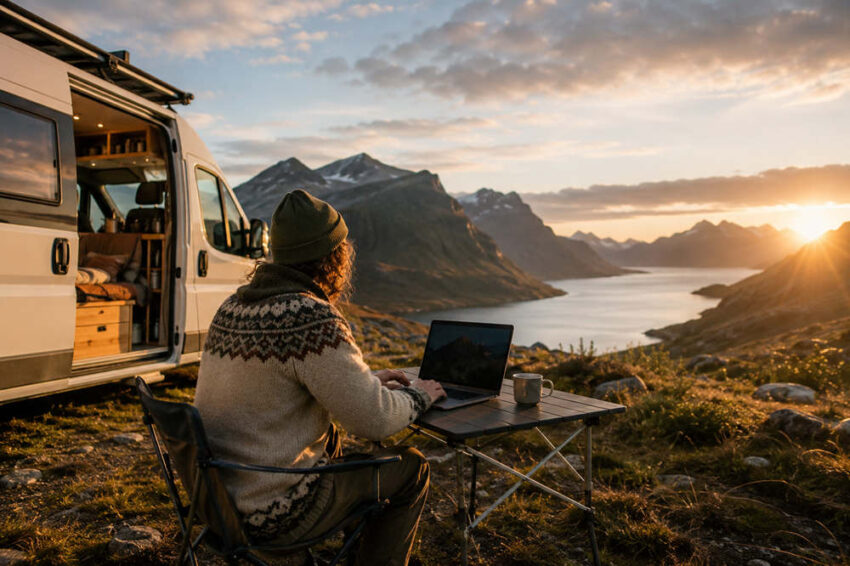
A nomadic lifestyle is a way of living built around movement rather than one permanent home. Some nomads move because of livestock, land, seasons, and family traditions. Others move because remote work, flexible housing, or personal choice allows them to live in different places over time.
Today, the word “nomadic” is used in many ways. It can describe traditional pastoral communities, digital nomads, van-life travelers, seasonal workers, and people who prefer a lighter, more mobile life. The main idea is the same: home is not tied to one fixed address for the long term.
What Does a Nomadic Lifestyle Mean?
A nomadic lifestyle means that movement is part of ordinary life, not just a short vacation. A person or family may stay in one place for days, weeks, months, or seasons, then move again when work, weather, family needs, money, or personal plans change.
This does not always mean constant travel. Some nomads move slowly. Some return to the same places every year. Others keep a home base but spend much of their life on the road. What makes the lifestyle nomadic is the pattern of living across places instead of building life around one permanent location.
There is also an important difference between tourism and nomadic living. A tourist usually travels as a break from daily life. A nomad has to build daily life around movement. Work, sleep, food, transportation, money, health care, relationships, and routines all have to fit a more mobile way of living.
Traditional Nomadic Lifestyles
Traditional nomadic lifestyles have existed for thousands of years. In many communities, movement is not a trend or a personal experiment. It is part of livelihood, culture, and survival.
One well-known form is pastoralism, a livestock-based way of life shaped by animal movement and shared use of natural resources. Pastoral nomads may raise animals such as sheep, goats, cattle, camels, horses, yaks, or reindeer. They move to find grazing land, water, and safer seasonal conditions.
This movement is usually careful and knowledgeable. Families and communities may understand which routes work in dry seasons, where animals can graze without exhausting the land, and how weather patterns affect both people and livestock. Traditional nomadism is not random wandering. It is often based on deep knowledge passed down across generations.
Traditional nomadic life can also include language, food, trade, family roles, spiritual practices, craft traditions, and strong relationships with land. It should not be confused with the modern image of someone traveling with a laptop. For many communities, nomadism is a complete social and economic system.
At the same time, traditional nomadic groups often face pressure from borders, land restrictions, climate stress, urban expansion, conflict, and changing government policies. Some communities remain fully nomadic, while others become semi-nomadic or settle for part of the year.
Modern Nomadic Lifestyles
Modern nomadic living usually looks different. It is often shaped by remote work, flexible income, lower-cost travel, or the desire to live with fewer possessions.
A common example is the digital nomad. Digital nomads use technology to work while moving between places. They may be freelancers, remote employees, consultants, designers, writers, software developers, marketers, online teachers, or business owners.
This kind of nomadic life became more visible as remote work grew. MBO Partners reported that 18.5 million American workers identified as digital nomads in 2025, showing that the lifestyle is no longer limited to a small group of freelancers or long-term backpackers.
Van life and RV living are also modern forms of nomadic life. People may live in a converted van, camper, trailer, or motorhome and move between towns, parks, campgrounds, and rural areas. Some do it full time, while others travel seasonally.
Another version is slow travel. Slow travelers do not try to see as many places as possible. They may stay in one city or region for weeks or months, rent short-term housing, learn local routines, and move at a calmer pace.
Seasonal workers can also live nomadically. They may move for farm work, tourism jobs, outdoor guiding, entertainment, construction, hospitality, or contract-based projects. Their movement is usually tied to work cycles rather than leisure.
Why Do People Choose a Nomadic Lifestyle?
People choose or inherit nomadic life for different reasons. For traditional nomadic communities, movement may be tied to animals, land, climate, family history, and cultural identity. In that context, nomadic life is not mainly about adventure. It is about livelihood and belonging.
For many modern nomads, flexibility is a major reason. Remote work can make it possible to live in different cities or countries without leaving a job. Some people want to experience new cultures. Others want to spend more time in nature, avoid high housing costs, or design a life that feels less tied to one place.
Some people are drawn to the simplicity of owning less. When life has to fit in a backpack, suitcase, van, or small storage space, every item has to earn its place. This can make daily life feel lighter, although it also requires careful planning.
Others move because their work is seasonal or contract-based. A person may spend summer in a tourism town, winter near ski resorts, or several months in a region where temporary work is available. For them, movement may be practical rather than romantic.
What Daily Life Looks Like for Nomads
Daily life depends on the kind of nomadic lifestyle a person has. A pastoral nomad, a digital nomad, a van dweller, and a seasonal worker may all move regularly, but their routines can be very different.
A digital nomad may plan the day around work calls, deadlines, time zones, internet access, and quiet places to focus. A beautiful location does not help much if the Wi-Fi is weak or meetings happen in the middle of the night. Many digital nomads need backup plans for power, phone service, banking, and workspace.
A van or RV nomad may spend more time managing water, fuel, parking, food storage, laundry, repairs, weather, and safe overnight stops. Small tasks can take longer when the home is also a vehicle. Comfort depends on practical systems and good organization.
A traditional pastoral nomad may build the day around animals, land, weather, and family responsibilities. Herding, milking, setting up shelter, preparing food, repairing equipment, and caring for children or elders may all be part of the rhythm of life.
Across different forms of nomadism, routine still matters. Nomads need ways to sleep well, eat regularly, manage money, stay healthy, keep documents safe, and maintain relationships. Movement changes daily life, but it does not remove the need for stability in basic habits.
Benefits of a Nomadic Lifestyle
One benefit of a nomadic lifestyle is adaptability. People who move often learn how to solve problems quickly. They become used to new environments, changing plans, unfamiliar systems, and unexpected delays.
Nomadic life can also broaden a person’s view of the world. Living in different places can expose people to new languages, foods, landscapes, customs, and ways of thinking. Even short stays can teach lessons that are hard to learn from a distance.
Another benefit is simplicity. A mobile lifestyle often makes people more aware of what they own and what they truly use. Many nomads become more careful shoppers because extra belongings can become a burden.
Some people also enjoy the independence that comes with a mobile life. They may like choosing where to spend different seasons, how long to stay in a place, and what kind of environment best supports their work, health, or creativity.
For traditional nomadic communities, the benefits may be different. Movement can help people use land and water more effectively in environments where staying in one place may not work well. It can also preserve cultural knowledge, family roles, and long-standing relationships with animals and landscapes.
Challenges of a Nomadic Lifestyle
Nomadic life can be rewarding, but it is rarely effortless. The most obvious challenge is instability. Housing, transportation, income, weather, internet, legal status, and health care may all require more attention than they would in a settled life.
Loneliness can also become difficult. Moving often may make it harder to build close friendships, maintain romantic relationships, or feel part of a local community. Even people who enjoy independence may eventually miss familiar faces and steady support.
Travel fatigue is another real issue. Planning routes, packing, booking places to stay, finding transportation, and learning new local systems can be exciting at first. Over time, it may become tiring. Some nomads eventually slow down or choose a home base because constant movement starts to feel stressful.
Money is not always simple either. A nomadic lifestyle can reduce certain costs, especially if someone avoids expensive rent or lives in lower-cost regions. But travel, insurance, vehicle repairs, short-term housing, visas, storage, flights, and emergency expenses can add up quickly.
Health care needs careful planning. Nomads may have to think about prescriptions, insurance coverage, regular checkups, emergency care, and medical records. This can be especially important for people with chronic health needs, families with children, or older adults.
Legal and tax questions can also be complicated. Working remotely from another country may involve visa rules, tax residency, employer policies, and insurance requirements. The rise of digital nomad visas shows that governments are still adapting to the reality of people who live in one place while earning money from another.
Nomadic Lifestyle vs. Digital Nomad Lifestyle
A nomadic lifestyle is the broader idea. It includes anyone whose life is shaped by movement rather than one permanent home. That can include traditional herders, seasonal workers, van dwellers, long-term travelers, remote workers, and people who move often for personal or family reasons.
A digital nomad lifestyle is more specific. It describes people who use digital tools to work while moving between places. Most digital nomads need a laptop, reliable internet, portable work systems, and income that does not depend on being in one fixed location.
Not all nomads are digital nomads. A pastoral family moving with livestock is nomadic, but their life is not based on online work. A seasonal worker may move from place to place without working remotely.
Not all remote workers are nomads either. Many people work from home while living in the same city for years. Remote work can make digital nomadism possible, but it does not automatically create a nomadic lifestyle.
Is a Nomadic Lifestyle Right for Everyone?
A nomadic lifestyle is not right for everyone. Some people feel energized by movement, new places, and flexible routines. Others need a permanent home, familiar community, and predictable structure to feel healthy and grounded.
Before choosing a modern nomadic lifestyle, it helps to look honestly at work, money, health, relationships, personality, and long-term goals. A person who wants to become a digital nomad should know whether their job can truly be done from different places. They should also understand time zones, taxes, visas, insurance, and emergency plans.
Testing the lifestyle first can be helpful. Spending a month working from another city, taking a longer road trip, or living with fewer possessions can reveal what feels exciting and what feels stressful. The imagined version of nomadic life may be very different from the daily reality.
Nomadic living often works best when people create routines that can travel with them. Sleep, exercise, meaningful relationships, budgeting, and rest are still important. In fact, they may become even more important when the environment keeps changing.
Conclusion
A nomadic lifestyle is a life shaped by movement. For some people, it is connected to animals, land, seasons, and inherited ways of living. For others, it is built around remote work, travel, minimalism, seasonal jobs, or the desire for more flexibility.
The lifestyle can offer freedom, simplicity, adaptability, and a wider view of the world. It can also bring loneliness, uncertainty, legal complications, unstable routines, and practical stress.
The clearest way to understand nomadic life is to see both sides. It is not just about moving from place to place. It is about learning how to build a life that can move with you.