
Bed bugs are small, quiet, and surprisingly easy to carry from one place to another without noticing. That is why people often worry after staying in a hotel, visiting someone’s home, buying used furniture, or sitting in a shared space.
The simple answer is yes, bed bugs can travel with people, but they usually do not live on the human body. They are not like lice that stay in hair or ticks that attach to skin. Bed bugs feed on people, then hide nearby in dark, protected places.
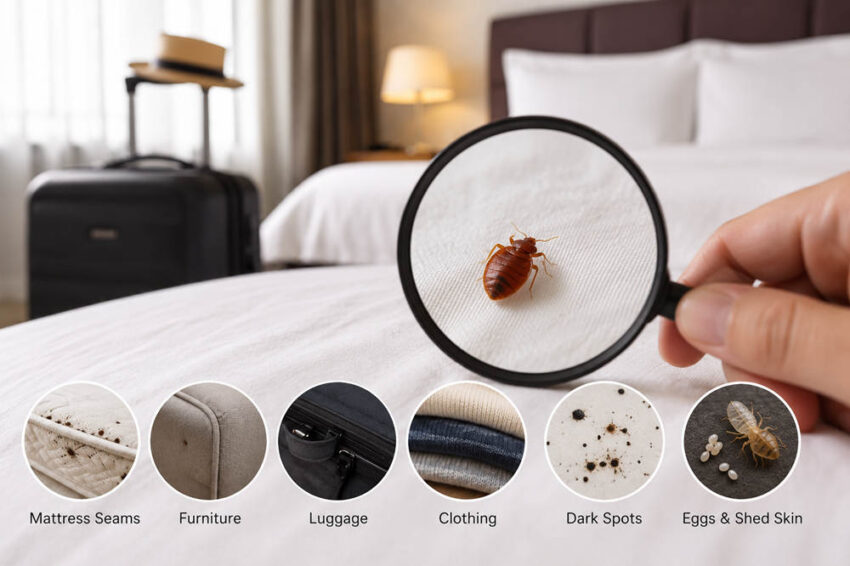
Most of the time, they spread through belongings. According to the CDC’s bed bug guidance, they can hide in luggage, overnight bags, folded clothing, bedding, furniture, and other small spaces where people may not notice them. Understanding that difference can make the problem feel less mysterious and easier to prevent.
How Bed Bugs Usually Spread
Bed bugs are often called hitchhikers because they move from place to place by hiding in items people carry or move. They do not need to stay on a person’s body to travel. A suitcase, backpack, purse, blanket, jacket, or upholstered chair can give them enough cover to move into a new home.
They are especially good at hiding in seams, folds, zippers, labels, cracks, and furniture joints. A bag left beside an infested bed or a jacket placed on an infested chair may give them a place to crawl into and stay hidden until the item is moved somewhere else.
Bed bugs do not fly or jump. They crawl, and they tend to stay close to places where people sleep or rest. That is why they are often found around mattresses, bed frames, headboards, sofas, recliners, and nearby furniture.
They are also not caused by dirt. A clean home, hotel, or apartment can still have bed bugs if the insects were carried in from another location. Clutter can make them harder to find because it creates more hiding places, but poor hygiene is not the reason they appear.
Can Bed Bugs Ride on Clothes You Are Wearing?
A bed bug can end up on clothing someone is wearing, especially if that person has been sitting or sleeping in an infested area. However, this is not the most common way bed bugs spread.
Bed bugs prefer dark, still, protected spaces. Clothing that is folded, packed, piled on the floor, left on a bed, or draped over a chair is more appealing than clothing on a person who is walking around. A coat placed on upholstered furniture, pajamas left near a bed, or laundry stored beside a suitcase may be more likely to pick up bed bugs than a shirt being actively worn.
That is why the practical focus should be on belongings rather than panic about the body. After possible exposure, it is usually more useful to inspect bags, shoes, coats, laundry, and soft travel items than to worry that bed bugs are living on your skin.
Where People Commonly Pick Up Bed Bugs
Hotels and vacation rentals are common concerns because many travelers use the same beds, rooms, luggage racks, and seating areas. Even a well-managed property can occasionally have bed bugs if a previous guest brought them in.
Dorm rooms, shared housing, shelters, and apartment buildings can also create opportunities for bed bugs to spread. In multi-unit buildings, they may be harder to control if an infestation is not handled early, especially when people share walls, laundry areas, or furniture.
Public spaces with upholstered seating can occasionally be involved, but brief contact is usually less risky than sleeping in an infested room. The larger concern is leaving coats, bags, or personal items on furniture where bed bugs may already be hiding.
Secondhand furniture also deserves caution. Used mattresses, sofas, recliners, headboards, and upholstered chairs can carry bed bugs even when they look clean from the outside. Before bringing used furniture indoors, check seams, tufts, cracks, undersides, screw holes, and fabric folds carefully.
Signs Bed Bugs May Have Traveled Home With You
Bed bugs are visible to the naked eye, but they are easy to miss because they hide well. Adult bed bugs are small, flat, oval insects that are usually reddish-brown. After feeding, they may look rounder and darker.
One of the clearest signs is seeing a live bug on a mattress seam, bed frame, suitcase, upholstered chair, or nearby wall. Other clues can include dark spots on sheets or mattress edges, tiny pale eggs, shed skins, or small blood marks on bedding.
Bites can happen, but bites alone do not prove that bed bugs are present. Some people develop itchy red marks, while others have little or no visible reaction. Mosquitoes, fleas, mites, and other insects can also leave similar-looking marks.
The CDC notes that bed bugs are not known to spread disease to people, but bites may cause itching, sleep loss, and sometimes allergic reactions. For that reason, physical evidence matters. If you suspect bed bugs, inspect the sleeping area, luggage, and nearby furniture instead of judging by skin marks alone.
What to Do After Possible Bed Bug Exposure
If you think you may have been around bed bugs, stay calm and handle your belongings carefully. The goal is to keep any hidden insects from reaching bedrooms, closets, sofas, or laundry piles.
Start by keeping bags away from beds and upholstered furniture when you get home. If possible, inspect them in a garage, bathroom, laundry room, or another area that is easy to clean. Look closely at seams, pockets, zippers, wheels, handles, and fabric folds.
Wash clothing when the fabric allows, then dry it on high heat if safe for the material. The EPA’s travel guidance for bed bugs recommends unpacking directly into a washing machine after returning home and drying items at high temperatures.
Items that cannot be washed right away can be sealed in plastic bags until they are inspected or treated. Shoes, outerwear, and bags should be checked carefully. Vacuuming suitcase seams and nearby areas may help remove visible insects, but the vacuum contents should be sealed and discarded right away.
Avoid using bug bombs or heavy pesticide sprays as a first reaction. Bed bugs hide in seams, cracks, furniture joints, and wall gaps, so quick treatments often miss the places where they are actually hiding. The EPA warns that foggers should not be used as the only method of bed bug control because the pesticide must reach the insects directly to work.
If you keep finding live bugs, dark spots, shed skins, or repeated signs around sleeping areas, a licensed pest control professional is usually the safer and more effective choice.
How to Reduce the Risk While Traveling
A few simple habits can lower the chance of bringing bed bugs home. Before unpacking in a hotel or rental, take a quick look around the bed. Check the mattress seams, headboard area, bed frame, and nearby furniture for live bugs, dark spots, or shed skins.
Keep suitcases off the bed and upholstered chairs. A luggage rack can help, but check the straps and joints before using it. Some travelers prefer to place luggage on a hard surface instead of carpet or fabric-covered furniture.
Try not to scatter clothes around the room. Keep clean clothing packed, zipped, or sealed in bags when possible. Dirty laundry should also be contained rather than left in piles near the bed or furniture.
Before leaving, check the outside and inside of your bags, especially seams and pockets. When you get home, unpack thoughtfully instead of carrying everything straight into the bedroom. These habits cannot guarantee that bed bugs will never travel with you, but they can reduce the risk.
Myths About Bed Bugs and People
One common myth is that bed bugs live on people like lice. They do not. Bed bugs feed on blood, but they usually hide near sleeping or resting areas before and after feeding.
Another myth is that bed bugs only appear in dirty homes. The EPA explains in its bed bug myths guidance that they are attracted to warmth, blood, and carbon dioxide, not dirt and grime. Clean spaces can still have bed bugs if the insects are carried in.
It is also not true that bed bugs jump or fly from person to person. They crawl and spread more often through objects that stay still long enough for them to hide inside.
Another misunderstanding is that bed bug bites mean disease. Bed bugs are upsetting and can affect sleep, comfort, and peace of mind, but they are not known to transmit disease to people. The bigger concerns are itching, scratching, stress, possible allergic reactions, and the difficulty of removing an infestation once it becomes established.
Finally, people sometimes assume they would notice bed bugs immediately. That is not always true. Early signs can be subtle, and bed bugs are very good at hiding. A small problem may be missed until there are repeated stains, sightings, or bite reactions.
Conclusion
Bed bugs can travel with people, but they usually do not travel on the body in the way many people imagine. They are far more likely to hide in bags, laundry, soft travel items, bedding, or furniture.
The best response is practical, not panicked. Keep luggage off beds, inspect sleeping areas while traveling, be careful with secondhand furniture, wash and heat-dry travel clothes when possible, and act quickly if you find clear signs. Bed bugs are frustrating, but knowing how they spread makes them easier to prevent and manage.