
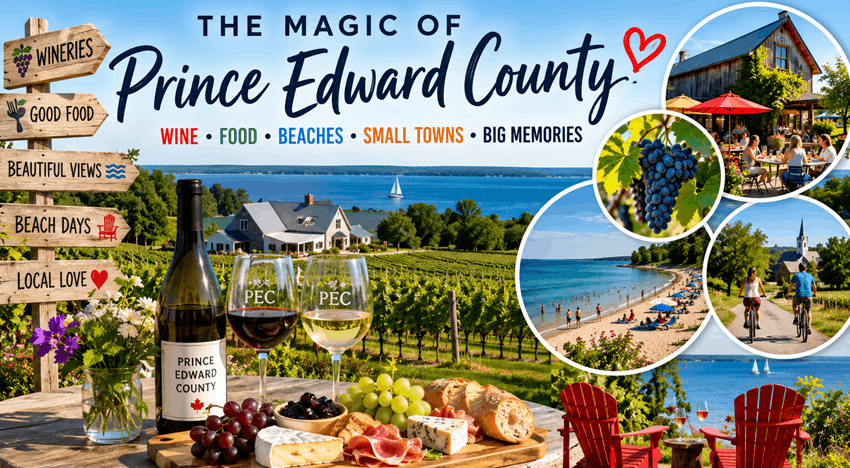
Prince Edward County has a way of making a weekend feel longer than it is. The roads are slower, the towns are smaller, the vineyards feel close to the lake, and almost every stop seems to come with something worth tasting. For wine lovers, food travellers, beach seekers, and anyone who likes a relaxed Ontario getaway, “The County” has become one of the province’s most rewarding places to explore.
It is not Niagara, and it should not be treated like a copy of Niagara. Prince Edward County has its own personality: rural, creative, lake-shaped, farm-driven, and a little more understated. The beauty of the region is that it does not need to shout. It invites you to slow down, sip carefully, eat well, and let the day unfold.
Why Prince Edward County Feels Different
Prince Edward County sits on the eastern end of Lake Ontario, east of Toronto and south of Belleville. It is close enough for a long weekend from several major Ontario cities, but it still feels like its own world once you arrive.
The County is known for sandy beaches, especially Sandbanks Provincial Park, but the food and wine scene has become just as important to its identity. What was once a quieter rural region has grown into one of Ontario’s most talked-about wine destinations, with wineries, cideries, restaurants, bakeries, farm stands, markets, art spaces, and boutique accommodations spread across its towns and back roads.
The appeal is not only in one famous stop. It is in the way the pieces connect. You might start the morning with coffee in Picton, visit a winery near Hillier, have lunch in Wellington, browse shops in Bloomfield, stop at a farm stand, and end the day near the water. Nothing has to feel rushed.
A Cool-Climate Wine Region With Character
Prince Edward County is one of Ontario’s most distinctive wine regions. Its vineyards are shaped by limestone, clay, lake influence, and a cool-climate growing season. Those conditions help produce wines with freshness, acidity, minerality, and structure.
The region is especially known for Chardonnay, Pinot Noir, sparkling wine, and crisp aromatic whites. These are wines that often feel bright rather than heavy. They pair well with food, and they suit the County’s relaxed but thoughtful dining style.
The County became an official Designated Viticultural Area in 2007, which helped confirm what local growers and winemakers had already been proving: this place has its own wine identity. It is not just another Ontario wine stop. It has a recognizable sense of place.
Start With the Wine, But Do Not Stop There
Wine may be the easiest reason to plan a Prince Edward County trip, but it should not be the only reason. The best County days mix tasting rooms with food, scenery, art, markets, beaches, and small-town wandering.
A good trip might include two or three winery stops, not seven. That gives you time to talk to people, sit outside, enjoy the setting, and understand what you are drinking. Tasting becomes more memorable when it is not treated like a checklist.
The same goes for food. Prince Edward County has strong farm roots, and the best meals often reflect that. Local produce, lake-country mood, seasonal menus, preserves, cheeses, baked goods, cider, and simple food done well are all part of the experience.
Karlo Estates
Karlo Estates remains one of the County’s memorable wine stops. Set in Hillier, it offers a relaxed but character-filled experience, with old-world winemaking inspiration, tastings, events, and a strong sense of place.
This is a good stop for people who like wineries with personality. Karlo Estates has long stood out for its rustic charm and creative approach, and its setting gives visitors that feeling of being tucked into the County rather than simply passing through it.
It is also a useful reminder that wine touring should be about mood as much as labels. Some wineries are polished and sleek. Others are warm, eccentric, and story-rich. Karlo fits beautifully into the second camp.
Norman Hardie Winery
Norman Hardie Winery is one of the names most strongly connected to Prince Edward County wine. Known for cool-climate Pinot Noir, Chardonnay, and low-intervention winemaking, it has become a serious stop for visitors who want to understand why the County earned its reputation.
The winery is also known for its tasting experience and wood-fired pizza, which makes it an easy place to build into a relaxed afternoon. A glass of County Chardonnay or Pinot Noir with pizza in a vineyard setting is exactly the kind of simple pleasure PEC does well.
For first-time visitors, Norman Hardie is worth considering because it connects the County’s wine identity with a casual, visitor-friendly experience.
Rosehall Run
Rosehall Run is another important County winery, known for terroir-driven wines and a long connection to the region’s development as a serious wine destination.
Rosehall Run is a strong stop for anyone who wants to taste wines that feel tied to the land. Chardonnay and Pinot Noir are often central to the conversation here, which makes sense given the County’s cool-climate strengths.
It is also the kind of winery that works well for visitors who want a more grounded tasting experience. You do not need to know everything about wine to enjoy it, but if you are curious about why PEC wine tastes the way it does, this is a useful place to start asking questions.
Huff Estates
Huff Estates brings several County travel pieces together in one place: winery, inn, art, food, and a broader destination feel. For visitors who want convenience, it is a smart stop because it offers more than a tasting bar.
The winery setting works well for people planning a full County weekend. You can taste wine, stay nearby, explore art, and use it as part of a larger route through Bloomfield, Wellington, and Hillier.
Huff Estates is also a reminder that PEC is not only about tiny hidden gems. Some places operate as complete hospitality destinations, making the region easier for new visitors to enjoy.
Closson Chase
Closson Chase is one of Prince Edward County’s recognizable pioneer wineries, known for Chardonnay, Pinot Noir, and its memorable barn setting.
This is a good stop for people who like wineries with visual character. The County has many pretty vineyards, but Closson Chase has a strong sense of identity. Its restored barn, vineyard focus, and long role in the region’s wine story make it more than just another tasting room.
For travellers who want to understand the earlier wave of PEC wine, Closson Chase belongs on the list.
Hinterland and Sparkling Wine
Prince Edward County has become especially interesting for sparkling wine, and Hinterland Wine Company helped make that part of the County’s identity clearer.
Sparkling wine fits the region well. Cool-climate acidity gives sparkling wines lift, energy, and food-friendly structure. That makes them perfect for County dining, whether paired with oysters, cheese, fried food, picnic snacks, or a simple celebration on a patio.
If you usually think of Ontario wine in terms of still whites and reds, a PEC sparkling stop can change your view quickly.
Waupoos and the Water Side of the County
Waupoos Estates Winery brings a different side of Prince Edward County into the trip. Located toward the eastern side of the County, it has long been associated with scenic water views, a relaxed destination feel, and a broader estate experience.
This is a good choice when you want the drive itself to feel like part of the day. Waupoos is not only about tasting wine. It is about seeing another side of the County, where lake views, quieter roads, and rural charm make the experience feel removed from busier towns.
For a slower itinerary, this side of PEC is worth making time for.
Sandbanks and the Classic County Day
Sandbanks Winery remains one of the County’s most visitor-friendly winery stops, especially for people pairing wine tasting with a visit to Sandbanks Provincial Park.
The combination is easy to understand. Spend part of the day near the beaches and dunes, then stop for wine before dinner or before heading back to your accommodation. It is simple, sunny, and very County.
Sandbanks also works well for newer wine drinkers because the experience feels approachable. Not every tasting has to be serious or technical. Sometimes a good stop is one that makes wine feel relaxed, social, and easy to enjoy.
Traynor Family Vineyard
Traynor Family Vineyard is a strong example of the County’s more experimental side. Known for creative, low-intervention, and often playful wines, it gives visitors a different kind of tasting experience from the more classic Chardonnay-and-Pinot route.
This is a good stop for people who already enjoy natural wine, orange wine, pét-nat, or less conventional bottles. It also adds useful contrast to a PEC itinerary. After tasting more traditional wines, a stop like Traynor can show how wide the region’s personality has become.
Food Is Half the Point
Prince Edward County’s wine scene makes the headlines, but food is what gives the trip its rhythm.
The County has farm stands, bakeries, seasonal restaurants, casual patios, chef-led dining, pizza stops, markets, and food shops that make it easy to build a day around eating well. That does not always mean formal dining. Sometimes the best County meal is bread, cheese, fruit, preserves, and a bottle you bought from a winery that afternoon.
Picton, Wellington, Bloomfield, Hillier, and Waupoos all offer different food and drink moods. Picton gives you more of a town-centre feel. Wellington has lake-country charm and strong dining options. Bloomfield is good for browsing, snacks, and shops. Hillier puts you close to many winery routes. Waupoos feels slower and more scenic.
The best approach is to plan one firm meal reservation, then leave room for discovery.
How to Plan a Wine Route Without Overdoing It
The biggest mistake visitors make in Prince Edward County is trying to do too much. The map can make everything look easy, and technically many stops are close together. But rushing from tasting to tasting misses the point.
Choose one area for the day. Hillier and Wellington work well for a classic wine route. Picton and Bloomfield are good for food, shopping, and accommodations. Waupoos is better for a scenic slower day. Sandbanks is ideal when the beach is part of the plan.
Two or three wineries, one good meal, one casual stop, and one scenic pause can make a better day than six rushed tastings. Prince Edward County rewards people who leave breathing room in the schedule.
What to Drink in Prince Edward County
If you are new to PEC wine, start with Chardonnay, Pinot Noir, and sparkling wine. Those categories give you a useful introduction to the region’s strengths.
Chardonnay from the County can be bright, textured, mineral, and food-friendly. Pinot Noir can be lighter-bodied, elegant, red-fruited, and earthy. Sparkling wines often show freshness and lift, making them easy to pair with food.
You will also find Riesling, Pinot Gris, rosé, Gamay, Cabernet Franc, cider, pét-nat, orange wine, and other creative small-batch bottles. That variety keeps the region interesting. The classics are important, but the fun often comes from trying something you did not expect.
Beyond the Wineries
A full Prince Edward County trip should include more than wine. Sandbanks Provincial Park is the obvious natural highlight, with beaches and dunes that feel almost surprising in Ontario. The Millennium Trail is useful for cycling and walking. Small towns offer shops, galleries, antiques, cafés, and bakeries.
The arts scene is also part of the County’s identity. Galleries, studios, markets, and creative businesses give PEC a lived-in cultural feel. It is not only a wine region built for visitors. It is also a place where farmers, artists, chefs, makers, and longtime residents shape the experience.
That mix is what gives the County its charm. It feels curated in places, but still rural and real when you get off the busiest roads.
Where to Stay
Prince Edward County has a wide range of places to stay, from inns and boutique hotels to cottages, farm stays, motels, vacation rentals, and winery-adjacent accommodations.
Book early if you are planning a summer trip. The County is popular, and the best weekends fill quickly. Fall can be a beautiful time to visit as well, especially if you prefer cooler weather, harvest energy, and a slightly calmer pace.
Winter and spring are quieter, but they can still be rewarding if you are more interested in food, wine, cozy stays, and small-town wandering than beach days.
A Smart Weekend Plan
For a first-time weekend, keep the plan simple.
On Friday, arrive, check in, and have a relaxed dinner in Picton, Bloomfield, or Wellington. Do not overplan the first night.
On Saturday, choose a wine route. Start with a classic stop such as Norman Hardie, Rosehall Run, Closson Chase, or Huff Estates. Add one more winery with a different feel, such as Karlo, Hinterland, Traynor, Waupoos, or Sandbanks. Build lunch into the route instead of treating it as an afterthought.
On Sunday, slow down. Visit a bakery, browse shops, walk near the water, stop at a farm stand, or spend time at Sandbanks if the weather is right. Pick up a few bottles or local food items before heading home.
That kind of weekend gives you a taste of the County without turning it into a marathon.
Why the County Still Feels Magical
The magic of Prince Edward County is not only in the wine. It is in the combination.
It is the way a country road opens onto a vineyard. It is the way a simple lunch tastes better after a beach walk. It is the way small towns keep pulling you into one more shop, one more bakery, one more tasting room. It is the way the lake seems to soften everything.
PEC has grown a lot since its early wine days, and that growth brings challenges. It is busier, more expensive, and more polished than it once was. But the core appeal is still there for travellers who approach it with the right pace.
Do not rush it. Do not treat it like a checklist. Let the County be what it is: a food-and-wine escape with beaches, farms, villages, lake air, and enough small discoveries to make you want to come back.
Final Thoughts
Prince Edward County is one of Ontario’s most rewarding food and wine destinations because it offers more than a tasting route. It offers a mood.
The wines are serious enough to impress people who know what they are drinking, but the region remains approachable enough for casual visitors. The food scene is strong without feeling stiff. The towns are charming without needing to be perfect. The beaches, roads, farms, galleries, and vineyards all work together.
That is why the County keeps drawing people in. You may arrive for Chardonnay, Pinot Noir, sparkling wine, or a weekend near Sandbanks. But the thing you remember is the feeling: slow roads, good food, lake light, and the sense that you found one of Ontario’s sweetest corners.