
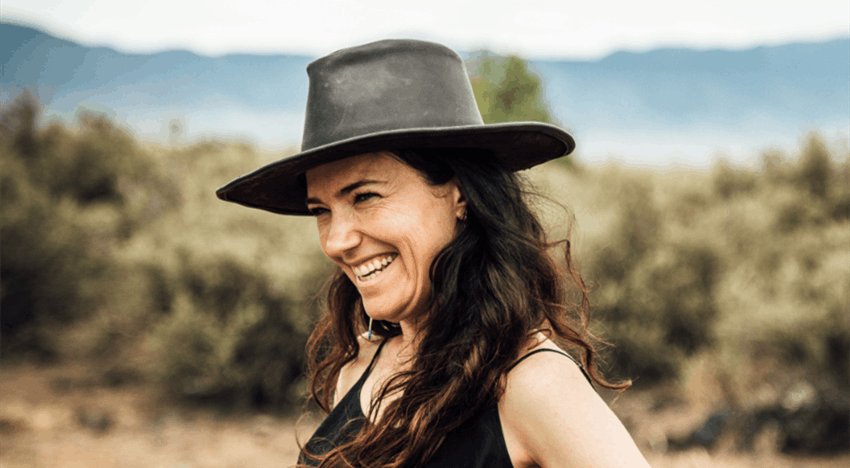
April Mullen has built the kind of screen career that does not fit neatly into one label. She is a director, producer, actor, and creative force with a body of work that moves across independent film, television, thrillers, science fiction, romance, and bold character-driven stories.
For Niagara, her story carries another layer. Mullen’s career is not only about credits and productions. It is also about what can grow from a place like Niagara Falls when talent, drive, local support, and creative risk all come together.
From Niagara Falls to the Screen
Mullen was brought up in Niagara Falls, Ontario, and that local connection has remained a meaningful part of her creative identity. Her path shows how a filmmaker can come from a regional community and still build a career that reaches national and international screens.
Before she became known for directing feature films and television episodes, Mullen studied performance and storytelling. That acting background matters because it shaped the way she works behind the camera. Directors who understand performance often bring a different kind of sensitivity to scenes. They know how to guide actors, how to read emotional beats, and how to build trust on set.
That mix of performer and director has helped define Mullen’s work. Her projects often carry strong visual choices, emotional tension, and a willingness to step into genres that require confidence.
The Wango Films Connection
A major part of Mullen’s career is tied to Wango Films, the production company she co-founded with Tim Doiron. The company became an important creative base for several of her early projects and helped establish her as a filmmaker willing to work outside the safest industry lanes.
Independent filmmaking is not easy. It requires resourcefulness, persistence, and a high tolerance for uncertainty. Budgets are tighter. Timelines can be intense. Every decision matters. For Mullen, that independent foundation seems to have become part of the skill set rather than a limitation.
Working through Wango Films allowed her to build experience across multiple roles. She was not simply waiting for permission from the industry. She was helping create the work, produce it, shape it, and direct it.
Why “Quadruple Threat” Still Fits
The older description of Mullen as a “quadruple threat” still works because her career has never been limited to one lane. She has acted, directed, produced, and helped build a production company. That kind of range is not just impressive on paper. It changes how a person sees the entire filmmaking process.
An actor thinks about character, rhythm, vulnerability, and truth. A director thinks about tone, pacing, framing, and performance. A producer thinks about money, logistics, schedules, crews, locations, and delivery. An entrepreneur thinks about long-term possibility.
Mullen’s career sits at the meeting point of all those roles. That is what makes her story especially useful for young creatives from Niagara and beyond. It shows that building a career in film is rarely one straight road. Sometimes you have to create the road yourself.
Breaking Ground With Dead Before Dawn 3D
One of Mullen’s early career milestones came with Dead Before Dawn 3D, a comedy-horror feature that helped establish her as a filmmaker willing to take on technical and genre challenges.
The film is often noted because Mullen became the first woman to direct a live-action, fully stereoscopic 3D feature film. That achievement stands out not only because of the technical demands of 3D filmmaking, but also because it came in an industry where women directors have historically had fewer chances to lead genre and effects-driven projects.
For Mullen, the project helped show that she could manage ambition, genre, and production pressure at the same time. It also made clear that she was not interested in being boxed into one kind of story.
A Bold Turn With Below Her Mouth
Mullen’s work on Below Her Mouth brought a different kind of attention. The film premiered at the Toronto International Film Festival and became widely discussed for its female-focused creative approach and all-female crew.
That choice mattered. It was not just a production detail. It shaped the way the film was talked about and understood. At a time when conversations about representation behind the camera were becoming more public, Below Her Mouth placed the female gaze at the center of the work.
The film was bold, intimate, and direct. It also showed another side of Mullen as a director. Instead of leaning on spectacle or genre energy alone, she focused on desire, identity, emotion, and the way people look at each other when something in their life is changing.
Moving Through Genre: Wander and Simulant
Mullen’s later feature work continued to show her comfort with genre storytelling. Wander, a conspiracy thriller starring Aaron Eckhart and Tommy Lee Jones, moved into paranoia, trauma, and mystery. It gave her a larger thriller canvas and a cast with major international recognition.
Then came Simulant, a science fiction thriller starring Robbie Amell, Jordana Brewster, Simu Liu, Alicia Sanz, and Sam Worthington. The film explores a near-future world shaped by artificial intelligence, human grief, machine consciousness, and control.
That subject feels especially current. As public conversations around AI have grown louder, Simulant fits into a larger cultural moment. It asks familiar sci-fi questions in a modern way: What happens when technology begins to feel human? Who controls artificial life? And how do grief, love, fear, and power shape the way people use machines?
For Mullen, Simulant added another major genre to her directing résumé and showed her continued interest in stories with emotional pressure beneath the surface.
Building a Television Career
Mullen has also become active in television, directing episodes across several well-known series. Her credits include work connected to shows such as The Rookie, Lethal Weapon, Wynonna Earp, Blood & Treasure, Tiny Pretty Things, The Spencer Sisters, Sullivan’s Crossing, and Ginny & Georgia.
Television directing requires a different kind of discipline. A director has to enter an existing world, understand the tone quickly, work with established characters, respect the showrunner’s vision, and still bring energy to the episode.
That is a valuable skill. In film, the director often shapes the whole world from the ground up. In television, the director must serve the larger series while still making strong choices within a limited window. Mullen’s TV credits show that she can move between both modes.
Why Her Niagara Story Matters
Niagara’s creative identity is often discussed through tourism, theatre, music, festivals, food, wine, and local arts. Film can sometimes feel like a larger-city industry, something tied to Toronto, Los Angeles, Vancouver, or New York.
Mullen’s career helps challenge that idea. Her Niagara connection matters because it gives the region a visible example of someone who moved from local roots into a wider screen career without losing the importance of where she came from.
She has also been recognized by the Niagara Falls Arts & Culture Wall of Fame, which celebrates people who have contributed to the cultural life and reputation of the city. That recognition places her not only in the film industry, but also in Niagara’s broader arts story.
A Career Built on Motion
One of the most interesting things about Mullen’s career is that it keeps moving. She has not stayed with one formula. Her work includes comedy, horror, noir, romance, thriller, science fiction, and television drama. That kind of movement can be risky, but it also keeps a filmmaker from becoming predictable.
There is a practical lesson in that. Creative careers are rarely built on one skill alone. Mullen’s path shows the value of range: learning performance, understanding production, taking on technical challenges, directing actors, building partnerships, and adapting to different formats.
That range is part of why her career still feels relevant. She is not only known for one early breakthrough. She continues to work, shift, and take on new material.
What Emerging Creatives Can Learn From April Mullen
For young filmmakers, actors, writers, and artists, Mullen’s story offers a few clear lessons.
First, starting outside a major entertainment capital does not mean staying small. Niagara may not be Hollywood, but local roots can become part of a creative identity rather than something to overcome.
Second, making your own work matters. Waiting for the perfect opportunity can keep talented people stuck. Mullen’s work with Wango Films shows the power of creating opportunities instead of only chasing them.
Third, range can be a strength. Acting, directing, producing, and building a company are different skills, but together they can create a deeper understanding of the industry.
Finally, bold choices are often what make a career memorable. Whether directing 3D horror-comedy, an intimate all-female-crew romance, a conspiracy thriller, or a sci-fi story about artificial intelligence, Mullen has shown a willingness to step into difficult creative spaces.
April Mullen Today
Today, April Mullen stands as one of Niagara’s most notable screen-industry figures. Her career connects independent Canadian filmmaking, international genre work, streaming-era television, and the ongoing conversation about women behind the camera.
She is also a reminder that local creative stories do not end at the city border. A person can be shaped by Niagara and still build work that travels far beyond it.
That is what makes Mullen’s story worth revisiting now. It is not only about looking back at early achievements. It is about seeing how a Niagara-born filmmaker has continued to evolve, direct, produce, and build a career across a changing entertainment industry.
Final Thoughts
April Mullen’s career has always been about more than one title. Director, producer, actor, entrepreneur — each part of that identity helps explain the larger picture.
Her work shows ambition, technical curiosity, emotional boldness, and a willingness to take creative risks. Her Niagara roots give the story local meaning, while her film and television credits show how far that story has travelled.
For Today Magazine, Mullen remains the kind of regional figure worth spotlighting: someone who reflects Niagara’s creative potential while continuing to build work on a much larger stage.
image source: imdb.com