
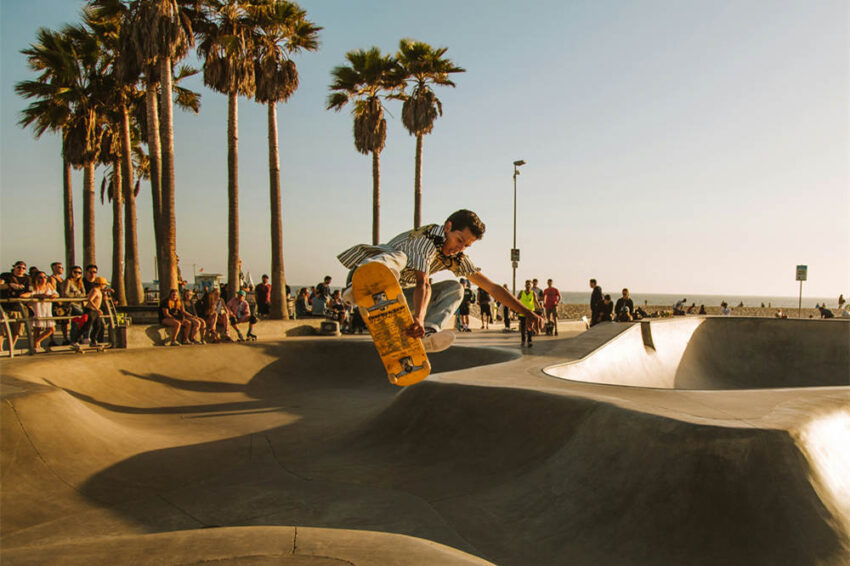
Skate clothing has always been shaped by movement. Long before skate style became part of mainstream fashion, skaters were choosing clothes that could handle pavement, long sessions, changing weather, and everyday life outside the park.
For the core skate community, lifestyle clothing is not only about oversized T-shirts, hoodies, baggy pants, and sneakers. Those pieces matter, but the real appeal comes from how they work. Good skate clothing feels comfortable, holds up through repeated use, and carries some trace of the shops, crews, videos, brands, and streets that shape the culture.
That is why skatewear still has a different feeling from ordinary casual clothing. It can look relaxed and effortless, but it usually comes from a practical place: clothes made to move, last, and feel lived in.
What “Core Skate Community” Really Means
The “core skate community” usually refers to people who are closely involved in skateboarding beyond the look itself. That can include local skaters, shop crews, filmers, photographers, artists, team riders, DIY spot builders, and people who help keep a local scene active.
In this world, clothing matters because it is part of daily skate life. A T-shirt might come from a neighborhood shop. A hoodie might be tied to a local event or video premiere. A pair of pants might become a favorite because it is comfortable enough for long sessions and tough enough to survive falls.
Local skate shops are especially important. They are places to buy boards and shoes, but they are also where skaters meet, hear about events, discover new videos, learn about local brands, and connect with people who care about the same culture. A good shop can feel like a meeting point as much as a store.
This is also why the community pays attention to where clothing comes from. A brand does not have to be small forever, but it helps when it supports skateboarding in a visible way: backing riders, working with shops, making videos, hosting events, or contributing to the scenes that keep skating alive.
Why Lifestyle Clothing Matters in Skateboarding
Skateboarding is hard on clothing. A normal day can include pushing across town, sitting on ledges, sweating through layers, sliding on concrete, and trying the same trick again and again. Clothes need to be comfortable, but they also need to survive rough use.
That is why skate lifestyle clothing usually blends casual style with function. Loose pants allow room to bend and move. Hoodies make sense for cooler sessions and late nights outside. Durable fabrics hold up better against grip tape, pavement, and repeated washing. Shoes need traction, support, and board feel.
The lifestyle side matters because skateboarding does not stay in one place. The same outfit might be worn at a skatepark, downtown spot, local shop, coffee run, concert, or casual night out. Skatewear works best when it does not feel overly styled. It should feel like something a person can actually live in.
The Key Pieces of Core Skate Lifestyle Clothing
There is no single skate uniform. Style changes by city, generation, music taste, weather, crew, and personal preference. Still, certain pieces keep showing up because they make sense for the way skaters move through the day.
Graphic T-Shirts
Graphic T-shirts are one of the clearest parts of skate clothing. They are easy to wear, easy to layer, and often full of personality. A skate tee might feature a shop logo, board graphic, video reference, local artist, inside joke, or brand design that means something to a particular scene.
The best ones often feel a little imperfect. Skate graphics can be strange, funny, rough, bold, or handmade-looking. That visual looseness is part of the charm. A shirt can quietly show what videos someone watched, what shop they support, or what kind of skate culture shaped them.
Fit depends on the skater. Some prefer oversized tees for comfort and movement. Others like a cleaner, more regular shape. The common point is ease. A skate tee should feel good while moving and still work after the session is over.
Hoodies and Crewnecks
Hoodies are central to skate style because they are useful almost everywhere. They add warmth, work well as a layer, and can be worn before, during, or after a session. Crewnecks offer a similar comfort with a slightly simpler shape.
For many skaters, the best hoodie is not the one that looks brand new forever. It is the one that softens over time, fits easily over a T-shirt, and can be thrown in a backpack without worry. Heavy cotton, roomy sleeves, and a relaxed cut all make sense because they give comfort without feeling fragile.
A hoodie from a local shop or independent skate brand can also carry a story. It may remind someone of a place, crew, trip, video, or season of skating. That personal connection often matters more than a large logo.
Baggy Pants, Cargos, and Workwear-Inspired Bottoms
Pants affect how comfortable skating feels. Many skaters choose relaxed jeans, loose chinos, cargo pants, carpenter pants, or workwear-inspired bottoms because they give the legs room to move. A wider fit can make it easier to crouch, flick, land, and absorb impact.
Durability matters too. Heavier denim, canvas, twill, and workwear-style fabrics can handle more wear than thin fashion pants. Cargos and carpenter pants also add useful pockets for keys, wax, tools, or small daily items.
Workwear blends naturally with skate style because both worlds value clothing that can take a beating. Fading, scuffs, and worn edges do not always ruin these pieces. In many cases, they make them look more natural.
Skate Shoes and Everyday Sneakers
Skate shoes are the most performance-driven part of the outfit. They are not just sneakers that happen to look good with loose pants. They connect directly to the board, so details like grip, sole construction, impact protection, and upper durability matter.
Modern skate shoes often build those needs into the design, with reinforced uppers, stronger grip, cushioning, and materials made to handle repeated abrasion. Vans, for example, describes skate shoes as purpose-built for reinforced wear, enhanced grip, impact cushioning, and durability compared with standard footwear.
Different skaters prefer different types of shoes. Vulcanized soles are often liked for flexibility and board feel, while cupsole designs can offer more structure and impact support. Suede remains popular because it tends to handle grip tape better than many lighter materials, although canvas can still work for cruising or casual wear.
Skate shoes also move easily into everyday style. They are practical, familiar, and usually not too polished. That crossover is one reason skate footwear has influenced streetwear for decades.
Beanies, Caps, Socks, and Small Details
Accessories are small, but they shape the overall look. Beanies, caps, tall socks, belts, and simple bags all show up often in skate lifestyle clothing because they are practical and easy to wear.
A beanie can be useful in cold weather or become part of someone’s everyday style. A cap can block the sun during a session. Socks add comfort and a small visual break between pants and shoes. A compact bag can carry wax, tools, water, or an extra layer.
The best accessories usually feel casual. They should look like they belong to the person wearing them, not like they were added only to complete a trend.
Function Comes Before Fashion
Skatewear became influential because it grew from use. Skaters adapted clothing to fit the demands of the board: roomier fits for movement, sturdy fabrics for pavement, flat shoes for control, and layers that work across long hours outside.
That practical foundation is still important. A piece can be stylish, but it should not get in the way. Pants that are too restrictive, shoes that are too delicate, or outerwear that feels impossible to fall in can make an outfit feel disconnected from skating.
That does not mean skaters ignore style. Skateboarding has always had a strong visual language, from board graphics and shop stickers to video titles, magazine photos, and hand-drawn logos. The difference is that the style often feels strongest when it looks used rather than untouched.
Worn shoes, faded tees, softened hoodies, and scuffed pants can all add character. In skateboarding, clothing often looks better when it shows that it has been outside, moving, and part of someone’s routine.
Authentic Skate Brands vs. Skate-Inspired Fashion
Skatewear’s influence on mainstream fashion has created a wide range of clothing that looks skate-inspired. Some of it comes from brands rooted in the culture. Some of it borrows the silhouette without much connection to skating itself.
A skate-rooted brand usually has a visible relationship with the scene. It may sponsor skaters, make boards or shoes, produce videos, support shops, host events, or come from people who skate. The clothing is part of a larger culture rather than a surface-level reference.
Skate-inspired fashion can still look good, but it does not always carry the same weight. Oversized tees, baggy pants, chunky shoes, and logo hoodies may suggest skate style, yet the connection feels thinner when there is no support for riders, shops, or local scenes.
Supreme’s official history shows how complex this can become. The brand opened on Lafayette Street in downtown Manhattan in 1994 and became tied to New York City skate culture, local artists, and downtown youth culture. Over time, it grew into a global streetwear name. That rise shows how powerful skate culture can be, but it also explains why conversations about hype, resale, and authenticity often follow major skate-linked brands.
For the core skate community, the question is rarely whether a brand becomes popular. The question is whether it still gives something back to skating once the larger fashion world starts paying attention.
How Skate Lifestyle Clothing Became Mainstream
Skate style moved into mainstream fashion because it was comfortable, visually strong, and connected to youth culture. Graphic tees, relaxed pants, hoodies, and skate shoes were easy to wear outside the skatepark, so the look naturally crossed into music, streetwear, sneaker culture, and casual menswear.
Skateboarding also has a deep design language. Board shapes, graphics, stickers, videos, zines, and shop logos all helped build a visual world around the sport. The Design Museum’s Skateboard exhibition framed skateboarding as a story of design, performance, and communities progressing together, which captures why its influence reaches beyond tricks alone.
High-fashion collaborations have pushed that visibility even further. Palace’s collaboration with Vivienne Westwood brought together clothing, accessories, jewelry, and skateboards, showing how a skate brand can move into fashion while still using the symbols and attitude of skate culture.
Mainstream attention can be exciting, especially when it gives skate-linked brands more room to experiment. It can also feel uncomfortable when the original culture is treated like a passing aesthetic. The strongest versions of skate fashion usually keep some respect for where the look came from: the sessions, shops, crews, videos, and street-level communities behind it.
What the Core Skate Community Looks for in Clothing
The core skate community usually looks for clothing that feels useful and honest. That does not always mean rare or expensive. Often, the most respected pieces are simple, durable, and easy to wear.
First, the clothing should be skateable. A T-shirt should move easily. Pants should not limit the legs. Shoes should grip the board. A hoodie should layer comfortably without feeling stiff or heavy in the wrong way.
Second, construction matters. Strong seams, heavier fabrics, reinforced shoes, and practical cuts often count for more than hype. A popular logo may get attention, but a piece that lasts through regular sessions earns a different kind of respect.
Third, local meaning matters. A shirt from a neighborhood skate shop may carry more personality than a more expensive piece from a global label. It can represent a place, a crew, or a specific period in someone’s skate life.
Finally, skate clothing leaves room for personal taste. Some skaters lean toward clean and minimal pieces. Others prefer loud graphics, thrifted layers, vintage workwear, bold colors, or music-inspired outfits. The point is not to make everyone dress the same. The point is to wear clothing that feels natural, functional, and personal.
How to Wear Skate Lifestyle Clothing Without Forcing It
Skate lifestyle clothing works best when it feels easy. The goal is not to dress like a stereotype. It is to understand the balance between comfort, movement, and cultural respect.
A simple starting point is a graphic tee, relaxed pants, a hoodie or crewneck, and skate shoes. These pieces are easy to wear and can be mixed with items already in your closet. Worn-in fabrics, practical fits, and simple color combinations often feel more natural than a full outfit built only around logos.
It is also worth avoiding the costume effect. Too many brand-new pieces, too much trend-chasing, or head-to-toe logo dressing can make the look feel forced. Skate style does not need to prove itself that loudly.
Supporting the culture matters more than copying every detail. Buying from a local skate shop, learning about the brands you wear, watching skate videos, or understanding why certain styles became popular gives the clothing more context.
The best approach is to choose pieces that fit your real life. If you skate, wear clothing that helps you move and holds up. If you simply like the style, wear it honestly and comfortably. Skatewear loses its appeal when it becomes a costume, but it stays strong when it feels personal.
Conclusion
Lifestyle clothing for the core skate community is rooted in comfort, movement, durability, and identity. It is shaped by the reality of skating, but it also belongs to the moments around skating: hanging at the shop, filming clips, meeting friends, going to shows, or moving through the city.
Skate style became influential because people actually lived in it. That is still what gives it power. The best pieces move well, last through use, and carry some trace of the sessions, shops, crews, and streets that shaped them.