
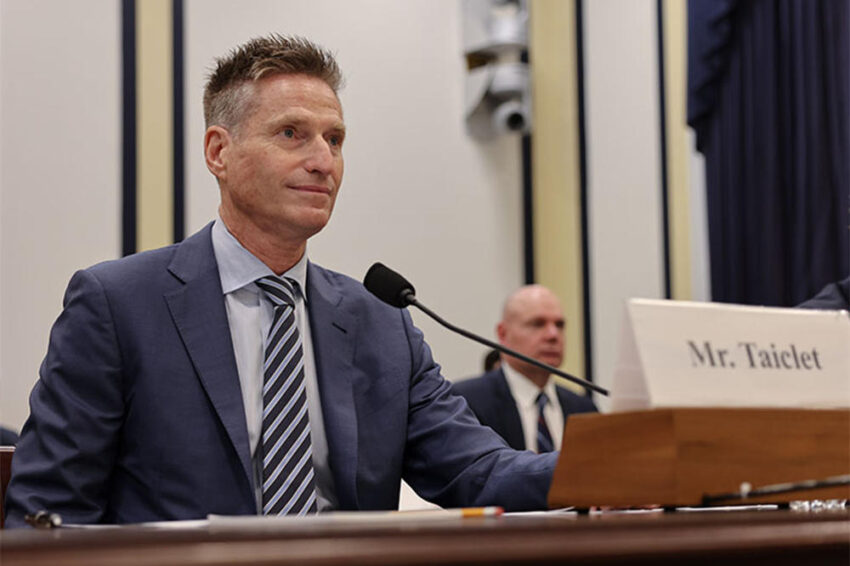
Jim Taiclet is not usually described as a Niagara public figure. He is better known as the chairman, president, and CEO of Lockheed Martin, one of the world’s major aerospace and defence companies. Still, his name can connect to Niagara in a practical way through Lockheed Martin’s listed presence in Niagara Falls, New York, and through the wider U.S.-Canada defence industry.
That makes this less of a personal-profile story and more of a regional business explainer. Niagara is famous for waterfalls, tourism, hotels, wineries, and border crossings, but it also sits in a cross-border economy shaped by trade, manufacturing, logistics, aerospace, and government procurement.
Who Is Jim Taiclet?
Jim Taiclet leads Lockheed Martin as chairman, president, and chief executive officer. His public role is closely tied to aerospace, defence technology, military modernization, and national security systems.
Before joining Lockheed Martin’s top leadership, Taiclet built a career that combined military service and business management. He served as a U.S. Air Force officer and pilot, then moved into senior corporate roles before becoming Lockheed Martin’s president and CEO in 2020. He later became chairman in 2021.
At Lockheed Martin, Taiclet has emphasized what the company calls its “21st Century Security” vision. In simple terms, that means connecting defence systems, aerospace platforms, digital networks, and newer technology so military and security partners can operate with more speed and coordination.
The Lockheed Martin Link in Niagara Falls, New York
The Niagara connection begins with Lockheed Martin itself. The Niagara USA Chamber lists Lockheed Martin as an engineering business at 2221 Niagara Falls Boulevard in Niagara Falls, New York.
That listing gives the topic a real local foothold, but it should be understood carefully. A business-directory listing confirms a Niagara Falls address, but it does not, by itself, explain the site’s current size, staffing, contracts, or specific day-to-day work.
Taiclet becomes relevant to this local connection because he leads the company behind that presence. His name may appear in broader discussions of Lockheed Martin’s strategy, defence programs, and aerospace work, even when the local Niagara story is mainly about the company rather than about Taiclet personally.
Why Niagara’s Border Location Matters
Niagara’s geography gives this story more context. Niagara Falls, New York, sits beside one of North America’s busiest international borders. Across the river, Niagara Falls, Ontario, connects into Southern Ontario’s larger economy, while nearby Buffalo links the region to Western New York’s industrial, logistics, and technology networks.
That border position matters because defence and aerospace work often spreads across many places. Large companies may rely on offices, engineering teams, suppliers, contractors, maintenance systems, training partnerships, and government relationships in different regions. A local listing is only one piece of a much larger map.
For Niagara readers, the point is not that every Lockheed Martin decision directly affects the region. It is that Niagara sits close to major U.S.-Canada business corridors, where aerospace, trade, manufacturing, and public-sector spending can overlap in ways that are easy to miss if the region is viewed only as a tourism destination.
Canada’s F-35 Program and Lockheed Martin
One of the clearest reasons Lockheed Martin matters to Canadian readers is Canada’s plan to purchase 88 advanced fighter aircraft through the Future Fighter Capability Project. The aircraft selected is the F-35, built by Lockheed Martin, with Pratt & Whitney involved through the engine program.
The Government of Canada’s Future Fighter Capability Project describes the purchase as part of Canada’s plan to replace its aging fighter fleet and support its NORAD and NATO commitments. Canada finalized the agreement with the United States government, Lockheed Martin, and Pratt & Whitney in January 2023.
The current project timeline stretches over many years. Canada says the first aircraft delivery in the United States is scheduled for 2026, the first aircraft arrival in Canada is expected in 2028, initial operational capability is planned for 2029 to 2030, and full operational capability is planned for 2032 to 2034.
This national procurement program is not a Niagara-specific project. Still, it helps explain why Lockheed Martin and its leadership matter to readers in a border region. Defence procurement can influence public spending, aerospace supply chains, skilled work, university and college training conversations, and broader discussions about Canada-U.S. security cooperation.
Canadian Aerospace and Supply Chain Context
The F-35 program also has an industrial side. Lockheed Martin’s F-35 materials describe Canadian participation in the aircraft’s supply chain, including companies that have contributed parts, technology, and expertise to the global program.
That supply-chain context is important because major aerospace projects rarely belong to one factory or one city. They often involve specialized companies across provinces, states, and countries. Canadian aerospace firms may contribute components, engineering, software, advanced manufacturing, or other specialized services depending on the program and contract.
Featured Image Source: lockheedmartin