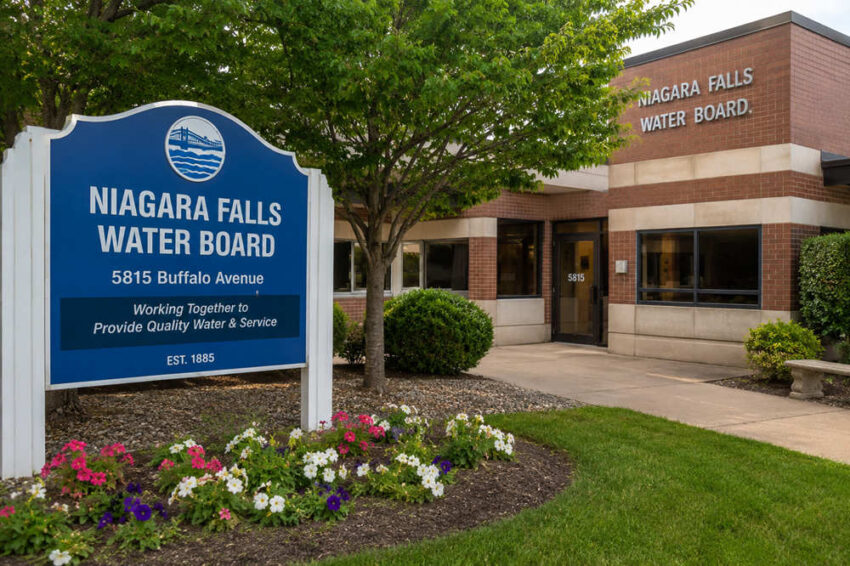
James S. Dean is a Niagara Falls public board member connected to one of the city’s most essential local services: water and wastewater oversight. He serves on the Niagara Falls Water Board, where his role places him close to decisions involving infrastructure, utility operations, governance, and long-term planning.
For most residents, water board work only becomes visible when there is a bill, service issue, repair project, or public meeting. Yet the board’s decisions can affect daily life across Niagara Falls, from drinking water and sewer systems to treatment facilities and capital improvements. Dean’s background in civil engineering and construction management makes his public role especially relevant to that work.
Quick Facts About James S. Dean
| Name | James S. Dean |
|---|---|
| Public Role | Vice Chairperson and Chair of the Governance Committee, Niagara Falls Water Board |
| Appointing Body | Niagara Falls City Council |
| Current Term | Ends December 31, 2028 |
| Education | Associate of Applied Science in Architectural Technologies, SUNY Delhi |
| Professional Background | More than 38 years of experience in civil engineering, project management, construction management, design, quality assurance, and cost estimating |
Who Is James S. Dean?
James S. Dean is listed by the Niagara Falls Water Board as Vice Chairperson and Chair of the Governance Committee. He was appointed by the Niagara Falls City Council, with his current term scheduled to run through December 31, 2028.
According to the Water Board’s public biographical information, Dean was first appointed on July 26, 2024, to fill a term ending December 31, 2025. He was later reappointed by City Council on December 19, 2025, to a new term ending December 31, 2028.
His public profile is not built around politics or celebrity. It is rooted in technical experience. Dean holds an Associate of Applied Science degree in Architectural Technologies from the State University of New York at Delhi and has spent more than 38 years working in civil engineering-related fields.
His Engineering and Construction Background
Dean’s professional background is one of the clearest reasons his Water Board role stands out. His biography notes experience in project management, construction management, design, quality assurance, and cost estimating. It also says he served during different periods of his career in the Project Management, Construction Management, and Design Branches of the United States Army Corps of Engineers, Buffalo District.
That kind of experience can matter in a utility setting. Water and sewer systems involve major physical assets, long maintenance timelines, construction contracts, regulatory expectations, and costly repair or replacement work. A board member with technical knowledge may be able to bring useful questions to discussions about budgets, capital projects, engineering timelines, and infrastructure priorities.
Dean’s listed experience also includes contract negotiation, hurricane disaster response work connected to FEMA and the U.S. Army Corps of Engineers, and familiarity with construction industry standards. Those details suggest a career shaped by practical infrastructure work rather than a purely administrative background.
What the Niagara Falls Water Board Does
The Niagara Falls Water Board owns, operates, and maintains the water, wastewater, and stormwater systems serving Niagara Falls, New York. The board’s own overview says it maintains hundreds of miles of water and sewer lines, along with water storage tanks, pumping stations, and treatment facilities.
That makes the Water Board an important part of everyday life in the city. Its work connects to drinking water, sewer service, wastewater treatment, infrastructure maintenance, system upgrades, and public utility billing. These services are not always visible, but they are essential to homes, businesses, tourism, and public health.
The scale of the system also explains why board oversight matters. According to the Water Board’s official overview, the organization maintains about 550 miles of water and sewer lines throughout its service district and operates with an annual budget supported by revenue from potable water and wastewater services.
Why His Role Matters Locally
Dean’s role as Vice Chairperson gives him a leadership position on the board. While daily operations are handled by staff and management, board members help guide policy, oversight, public accountability, and major organizational decisions.
His additional title as Chair of the Governance Committee also matters. Governance is the part of board work that deals with structure, procedure, responsibilities, and how a public body carries out its duties. It may not attract the same attention as a major repair project or rate discussion, but good governance helps a board function clearly and consistently.
The Niagara Falls Water Board notes that both its Finance and Audit Committee and Governance Committee are committees of the whole. That means these matters are handled through the broader board process rather than as separate small committees. For residents, that structure makes public meetings and posted materials especially important ways to understand what the board is considering.
The 2024 Water Board Leadership Change
Dean’s name entered local coverage in 2024 during a change in Niagara Falls Water Board leadership. Local reporting from CNHI noted that two newer members, Richard Sirianni and James Dean, replaced the previous chair and vice chair in officer roles. Sirianni became chairperson, while Dean became vice chairperson.
The change drew attention because it affected leadership at a public body responsible for major city utility services. For readers, the main takeaway is straightforward: Dean became part of a new leadership alignment at a time when the Water Board was under local scrutiny and going through organizational change.
It is important to keep that context measured. Water Board leadership changes can involve disagreements, policy differences, and public debate, but the lasting issue for residents is how the board manages infrastructure, service reliability, finances, and accountability.
How His Experience Fits the Board’s Work
Niagara Falls has practical infrastructure needs that require steady planning. Water and sewer systems age, treatment facilities need investment, and repairs can be expensive. The Water Board has also described major capital improvement planning for projects tied to treatment plants, water and sewer mains, technology, and regulatory requirements.
In that setting, Dean’s background in engineering and construction management is directly relevant. Public board members do not personally design or manage every project, but they can influence how questions are asked, how priorities are reviewed, and how technical information is weighed during decision-making.
A board member with cost-estimating and construction experience may be especially useful when public discussions involve project scope, budgets, contractor performance, timelines, risk, or long-term maintenance. Those are not abstract concerns. They can affect future rates, neighborhood service, emergency repairs, and public confidence in local utilities.
Why Residents May Want to Know His Name
Public utility boards are easy to overlook, but they are connected to services residents use every day. Knowing who sits on the board helps the public better understand who is involved in oversight and leadership.
James S. Dean’s role is worth noting because he is not simply a name on a public roster. He holds a leadership position on a board responsible for essential city infrastructure, and his professional background lines up with many of the technical issues the board must consider.
For Niagara Falls residents, that makes his work part of a larger local story about infrastructure, public service, and the practical systems that keep the city running.