
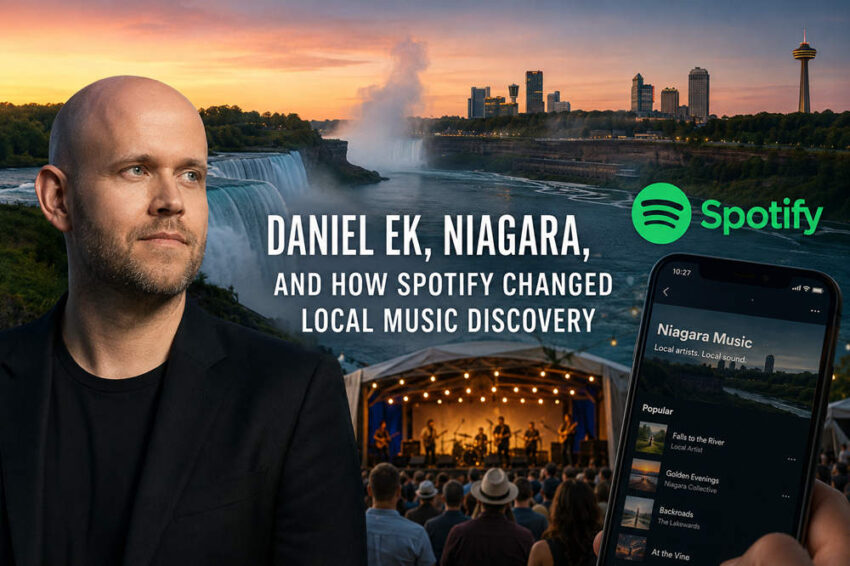
Daniel Ek Niagara may seem like an unusual search at first, but it opens the door to a timely local culture question: how has Spotify changed the way people discover music in Niagara? Ek is best known as Spotify’s founder, and the streaming platform he helped build has reshaped how artists release songs, how listeners find new music, and how local scenes connect with audiences beyond their own region. In Niagara, that shift matters because music discovery now moves between playlists, social media, live venues, festivals, and real community support.
Why the Daniel Ek Niagara Search Makes Sense
There does not appear to be a strong direct connection between Daniel Ek and Niagara. He is not a Niagara musician, venue owner, festival organizer, or local public figure. The more useful connection is Spotify itself.
Spotify has changed the listening habits of people almost everywhere, including in regional music communities like Niagara. A local artist no longer depends only on posters, radio mentions, word of mouth, or in-person shows to reach new listeners. Those old discovery paths still matter, but streaming has added another layer. A song can travel from a Niagara stage to a listener’s playlist, from a local release to a visitor’s phone, or from a small show to someone who finds the artist weeks later online.
That is why the keyword works best as a cultural bridge rather than a personal profile. The story is not “Daniel Ek in Niagara.” The story is how the streaming world associated with Spotify has affected Niagara’s artists, audiences, and live music spaces.
How Spotify Changed Local Music Discovery
Before streaming became part of everyday listening, discovering local music usually required more effort. People heard artists at live shows, bought recordings at merch tables, followed local radio, checked venue calendars, or learned about bands from friends. Those habits have not disappeared, but Spotify has made discovery faster and more casual.
Today, a listener can hear a Niagara artist once and find their music immediately. They can follow the artist, save a song, share it, add it to a playlist, or check whether a show is coming up. For independent musicians, that matters because the first point of contact is often digital now. A strong artist profile can act like a living introduction, giving new listeners a place to hear songs, learn the artist’s sound, and decide whether to keep paying attention.
Spotify also changed how people search for music. Many listeners do not begin with a specific artist name. They search by mood, genre, setting, activity, or recommendation. That can help local musicians whose work fits a particular atmosphere: acoustic wine-country afternoons, indie rock nights, jazz lounges, road trips through the region, relaxed Sunday listening, or Canadian folk and roots playlists.
For Niagara artists, the platform can also connect music with practical promotion. Through Spotify for Artists, musicians can manage their presence, list concert and festival dates, promote merchandise, and understand how listeners are engaging with their songs. Those tools do not replace a full music strategy, but they can help artists connect the online listening experience with the real-world work of building an audience.
What Streaming Means for Niagara Artists
For local artists, Spotify is useful because it makes music easier to access. A performer in St. Catharines can release a single before a show. A singer-songwriter in Niagara-on-the-Lake can point new fans to a profile after an intimate concert. A band playing Niagara Falls can be heard later by visitors who have already returned home.
That ability to stay with listeners after the live moment is important in a region like Niagara. The area serves locals, weekend visitors, wine-country travellers, theatre audiences, festivalgoers, and tourists who may only be in town for a short time. Streaming gives artists a way to keep that connection alive once the night is over.
At the same time, streaming should not be mistaken for easy success. Discovery is helpful, but it does not guarantee meaningful income, loyal fans, or full rooms at shows. The platform is crowded, and a song can easily disappear into the noise if it is not supported by strong live performances, local relationships, consistent releases, social media, press, and community presence.
The artists who benefit most are often the ones who treat streaming as one part of a larger ecosystem. They use Spotify to make their music accessible, then use live shows, collaborations, newsletters, social platforms, and local events to turn casual listeners into real supporters.
Why Niagara’s Live Music Scene Still Matters
Spotify can introduce someone to a song, but it cannot replace the feeling of hearing music in person. Niagara’s music culture is still shaped by venues, festivals, wineries, theatres, arts centres, restaurants, outdoor stages, and community rooms where people gather around sound together.
That live experience is especially important because Niagara is not just one music market. Niagara Falls has a large entertainment and nightlife identity, supported by visitor-focused venues, casino stages, theatre performances, and event listings such as Niagara Falls Music Live. St. Catharines has a strong arts presence, with spaces such as the FirstOntario Performing Arts Centre helping anchor the region’s performance culture. Niagara-on-the-Lake offers a different atmosphere, where concerts can connect with heritage settings, wineries, churches, and intimate festival spaces.
Local festivals add another layer. Music Niagara presents diverse concerts in Niagara-on-the-Lake, while the Niagara Jazz Festival brings jazz and world music into the region’s cultural calendar. These events show why local music discovery cannot be reduced to streaming numbers. A playlist may spark interest, but festivals and venues create the memories that make listeners feel connected to a place.
Community spaces matter as well. Organizations such as the Niagara Artists Centre support the broader creative environment where musicians, visual artists, performers, and audiences can overlap. That kind of local connection is difficult for any streaming platform to reproduce on its own.
How Niagara Listeners Find Music Now
For listeners, music discovery has become more layered. Someone might hear a performer at a winery, look them up on Spotify, follow them on Instagram, and later notice the same artist on a festival lineup. Another person might discover a Niagara musician through a Canadian indie playlist, then realize the artist is playing nearby.
This blended path fits Niagara well because the region attracts different types of listeners. Locals may be looking for weekend plans. Visitors may want a memorable night out after seeing the Falls. Food and wine travellers may want music that completes the atmosphere of a trip. Culture lovers may follow theatre, jazz, classical, folk, or singer-songwriter events. Younger audiences often move between streaming apps, short-form video, social feeds, and ticket pages before deciding where to go.
Streaming lowers the barrier to trying something new. A listener does not have to buy an album or commit to a full show before hearing a local artist. They can sample one track, save it, share it, and return later. For musicians, that first low-pressure listen can be valuable.
Local guidance still matters, though. Algorithms can recommend songs, but they do not always understand place. They may not know which Niagara venue has the right atmosphere, which festival is worth planning a weekend around, or which small room regularly books emerging artists. That is where local publications, tourism calendars, venue listings, arts organizations, and word of mouth continue to play an important role.
What This Means for Niagara’s Music Future
The future of Niagara music will likely depend on how well artists, venues, festivals, and listeners connect digital discovery with real-world support. Streaming can help people find a song, but local culture grows when people show up.
For artists, that means keeping music easy to find while staying active in the community. A polished Spotify profile is helpful, but so are strong performances, good visuals, clear show announcements, collaborations with other Niagara creatives, and relationships with local venues. Streaming may introduce the music, but community gives it depth.
For venues and festivals, streaming can make lineups more approachable. People are more likely to take a chance on a show when they can hear the artist first. A festival can encourage audiences to preview performers before buying tickets. A venue can use artist links to help people understand the sound of an upcoming night. That simple connection between listening and attending can make live events feel easier to explore.
For listeners, supporting local music can be simple. Follow Niagara artists when you hear them. Save their songs. Share tracks with friends. Buy tickets when they play nearby. Purchase merchandise when possible. Check official event listings before making plans, since dates, venues, and schedules can change.
The challenge is making sure Niagara’s music identity does not get flattened by global platforms. The region’s sound is shaped by more than an app. It comes from downtown St. Catharines, the visitor energy of Niagara Falls, the historic atmosphere of Niagara-on-the-Lake, the creativity of smaller communities, and the experience of living between major markets while still having a distinct regional voice.