
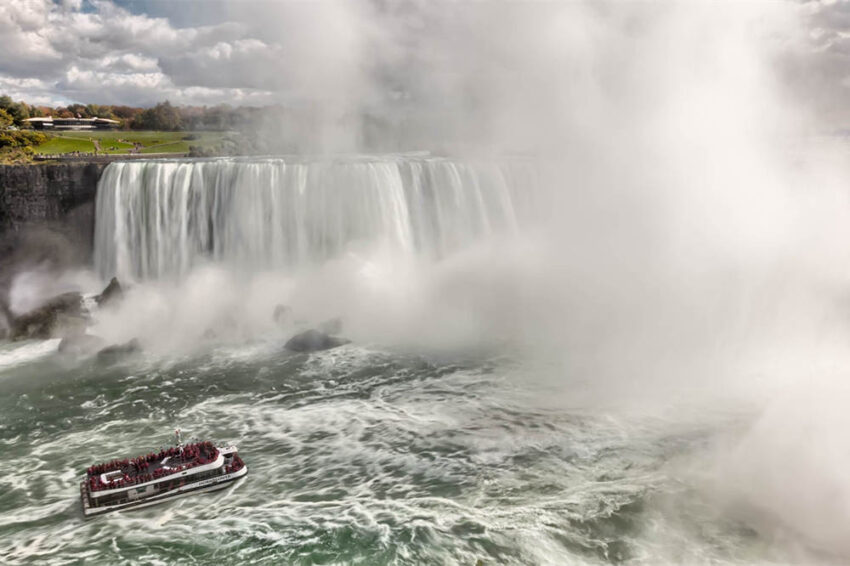
Niagara Falls, NY is more than a quick photo stop. The American side gives visitors close-up waterfall views, walkable park scenery, gorge trails, family attractions, local history, downtown dining, and easy side trips through Niagara County. Whether you have a few hours or a full weekend, the best visit combines the famous Falls experiences with quieter local stops that show more of the region.
1. Explore Niagara Falls State Park and Its Main Viewpoints
Niagara Falls State Park should be the first stop for most visitors. It brings together the major U.S.-side waterfall viewpoints, scenic walking paths, visitor services, dining, and several of the area’s signature attractions in one easy-to-navigate place.
For first-time visitors, the park is where the American side makes its strongest impression. Instead of seeing the Falls from one distant viewpoint, you can walk between overlooks, cross bridges, hear the river from different angles, and feel the mist shift with the wind.
Start at Prospect Point for a classic view of the American Falls and the surrounding gorge. The nearby Observation Tower adds a broader panorama and also connects visitors to the elevator access used for Maid of the Mist boarding.
From there, continue to Goat Island, one of the most rewarding areas of the park. Luna Island brings you close to the American Falls and Bridal Veil Falls, while Terrapin Point offers one of the best U.S.-side views toward Horseshoe Falls. If you only have a short visit, Prospect Point and Goat Island should be your priority.
2. Ride the Maid of the Mist
Maid of the Mist is one of the most iconic experiences in Niagara Falls, NY. The boat tour boards from the American side inside Niagara Falls State Park and takes visitors past the American Falls toward the basin of Horseshoe Falls.
The ride is popular for a reason. From the railings above, Niagara Falls looks powerful. From the boat, it feels enormous. The sound, spray, cliffs, and moving water create the kind of memory many travelers expect from a first Niagara trip.
This is a strong choice for families, couples, photographers, and first-time visitors who want the classic “into the mist” experience. Expect crowds during peak travel periods, and protect phones or cameras from spray.
Maid of the Mist is seasonal, and the schedule can change because of weather, river conditions, or operating updates. Check current ticket and schedule details before building your day around it.
3. Get Close to the Falls at Cave of the Winds
Cave of the Winds is the most dramatic close-up waterfall experience on the New York side. While Maid of the Mist approaches the Falls by boat, Cave of the Winds brings visitors down toward the base area near Bridal Veil Falls.
The experience is more physical than standing at an overlook. There are stairs, wet surfaces, mist, noise, and viewing decks that put you close to rushing water. For many visitors, this is the moment when the power of Niagara feels most immediate.
Expect to get wet, even with a poncho. Comfortable shoes matter, and anything that cannot handle moisture should be left behind or protected. The wettest areas may feel intense for young children or visitors sensitive to loud sound and heavy spray.
If you are choosing between Maid of the Mist and Cave of the Winds, think about the style of experience you want. Maid of the Mist is the classic boat ride. Cave of the Winds is the closer, wetter, more physical encounter.
4. See Niagara Falls at Night
Niagara Falls changes after dark. During the day, the focus is on water, cliffs, mist, and movement. At night, illumination gives the Falls a different mood as colored light moves across the water and mist rises through the glow.
Evening is also a smart way to extend a one-day visit. After the main sightseeing rush, you can have dinner downtown and return to the park for nighttime views. In season, fireworks may add another highlight to the evening.
Good U.S.-side viewing areas include Prospect Point, Goat Island, and Terrapin Point. Prospect Point is convenient if you are staying near downtown, while Goat Island can feel more atmospheric if you want a slightly quieter walk.
Before making evening plans, check the current Niagara Falls illumination and fireworks schedule. Fireworks are weather-dependent, and dates can change.
5. Explore the Niagara Gorge and Whirlpool State Park
After seeing the Falls, make time for the Niagara Gorge. This is where the trip begins to feel less like a checklist and more like an outdoor regional experience. The gorge shows what the Niagara River does after the waterfalls: it narrows, rushes, twists, and cuts through a dramatic landscape of cliffs and rapids.
Whirlpool State Park is one of the best nearby places to see this scenery. The upper level has overlooks with views of the Niagara River Whirlpool and rapids, while lower trails can be reached by stairs for visitors prepared for a more strenuous outing.
Casual visitors can enjoy the upper overlooks without committing to a major hike. This works well for families, older visitors, or anyone short on time. Lower gorge trails require more energy, better footwear, and a realistic sense of your ability.
The Niagara Gorge is beautiful, but it is not casual riverfront terrain. Stay on marked trails, respect barriers, and never approach the river’s edge. The currents and rapids are extremely dangerous.
6. Visit the Aquarium of Niagara and Great Lakes 360
The Aquarium of Niagara is a useful addition to a Niagara Falls, NY itinerary, especially for families, animal lovers, winter visitors, or anyone dealing with rainy weather. It is close enough to the state park area to fit into a half-day plan without feeling like a separate trip.
The aquarium features aquatic animals, educational programming, and exhibits that give visitors a break from mist, crowds, and outdoor walking. Its Great Lakes 360 expansion adds a regional angle with exhibits focused on the ecosystems of the Great Lakes.
This stop works well after a busy morning in the park. Families may appreciate the change of pace, while curious travelers can connect the visit to the larger freshwater story of Western New York and the Great Lakes region.
7. Learn Local History at the Underground Railroad Heritage Center
Niagara Falls has a deeper story than tourism alone. Because of its location near the Canadian border, the city held major significance in Underground Railroad history. For freedom seekers, crossing the Niagara River could mean reaching a different legal reality and a chance at liberty.
The Niagara Falls Underground Railroad Heritage Center shares stories connected to freedom seekers, abolitionists, and the local geography of the border. It is located in the historic U.S. Customs House attached to the Niagara Falls train station, which gives the museum a strong sense of place.
This is one of the most meaningful cultural stops in Niagara Falls, NY. It adds depth to a city many visitors know only through waterfalls and tourism, and it helps explain why the Niagara River mattered not only as a natural landmark but also as a borderland.
8. Add Science and Views at Niagara Power Vista
Niagara Power Vista is a worthwhile stop for families, curious travelers, and anyone interested in how the Niagara River became part of the region’s energy story. Located in Lewiston, the visitor center focuses on hydropower, electricity, and the Niagara Power Project.
Interactive exhibits make it especially useful for kids and STEM-minded visitors, but adults can enjoy it too. The broader value is that it connects the natural force of Niagara with innovation, engineering, and public power in Western New York.
Because it sits outside the immediate Falls viewing area, Niagara Power Vista usually fits best on a two-day itinerary or a slower afternoon route toward Lewiston, Old Fort Niagara, or the Niagara Wine Trail.
9. Walk Old Falls Street and Downtown Niagara Falls
Old Falls Street is the main pedestrian-friendly connector between Niagara Falls State Park, the Niagara Falls Convention Center, nearby hotels, restaurants, and downtown activity. It is a practical place to pause before or after visiting the park, especially if you want food, events, or an easy stroll.
The street often serves as a gathering place for seasonal programming, festivals, public events, and casual downtown activity. Even when there is no major event happening, it helps visitors move between the park and downtown without feeling completely car-dependent.
For dining and drinks, the Third Street area is one walkable downtown district to consider. Restaurant hours and menus can change, especially in the off-season, so check current details before heading out later in the evening.
10. Tour the Schoellkopf Power Station Ruins Site
The Schoellkopf Power Station Ruins Site adds a different kind of Niagara experience: industrial history inside the gorge landscape. The former hydroelectric power station was once one of the most important power sites connected to the Niagara River.
Today, the ruins help visitors understand how Niagara became not only a scenic wonder but also a place of engineering, industry, and energy development. It is a strong stop for travelers who like history, photography, architecture, or less obvious places within the Niagara Falls area.
This site pairs naturally with the Aquarium of Niagara, Niagara Gorge views, or a broader history-focused day. It also helps break up the article’s waterfall-heavy experiences with something more local and unexpected.
11. Plan a Side Trip to Lewiston or Old Fort Niagara
A good Niagara Falls, NY trip does not have to end at the edge of the park. If you have extra time, heading north along the river opens up a quieter side of Niagara County with villages, historic sites, river views, music, local dining, and Lake Ontario scenery.
Lewiston is an easy add-on from Niagara Falls. The village has a slower pace, restaurants, seasonal events, and access to riverfront scenery. Artpark adds a cultural angle with concerts, theater, public art, and views near the gorge.
For history lovers, Old Fort Niagara in Youngstown is one of the region’s most important sites. Located where the Niagara River meets Lake Ontario, the fort has more than 300 years of military history connected to France, Great Britain, and the United States.
This side trip works best when you have at least half a day. The route gives visitors a fuller sense of the Niagara region beyond the main waterfall viewpoints.
12. Visit Niagara Wine Trail Wineries
For adult travelers, couples, and weekend groups, the Niagara Wine Trail can be a relaxed way to extend a Niagara Falls visit. The trail includes wineries and attractions across Niagara, Orleans, and Monroe counties, with several stops within a reasonable drive of the Falls area.
This is not the same experience as the busier Niagara-on-the-Lake wine region across the border in Ontario. The New York trail has its own local feel, with rural roads, small wineries, and a slower pace that can pair nicely with a weekend getaway.
Choose a few wineries instead of trying to cover too many in one day. Confirm hours, tasting policies, reservation needs, and transportation before you go. If wine tasting is part of the plan, designate a driver, book a tour, or use another safe transportation option.
Suggested One-Day Niagara Falls, NY Itinerary
If you only have one day in Niagara Falls, NY, keep the plan focused. Start in Niagara Falls State Park in the morning, when crowds are usually easier to manage and the light can be beautiful around the water.
Begin at Prospect Point and the Observation Tower area, then continue to Goat Island, Luna Island, and Terrapin Point. For midday, choose one major paid attraction: Maid of the Mist for the classic boat ride or Cave of the Winds for the closest, wettest waterfall experience.
In the afternoon, add the Aquarium of Niagara, the Underground Railroad Heritage Center, the Schoellkopf Power Station Ruins Site, or Whirlpool State Park depending on your interests. Families may prefer the aquarium. History-focused visitors can combine the Heritage Center with Schoellkopf. Outdoor travelers may want the gorge views.
In the evening, head downtown for dinner, then return to the park for illumination and fireworks if they are scheduled.
Suggested Two-Day Niagara Falls, NY Itinerary
With two days, the trip becomes easier to balance. Use the first day for the classic Falls experience: Niagara Falls State Park, Prospect Point, Goat Island, Maid of the Mist, Cave of the Winds, and nighttime illumination.
On the second day, move beyond the main park. Start with Whirlpool State Park or another gorge overlook, then continue to Niagara Power Vista, Lewiston, Artpark, or Old Fort Niagara. If your group prefers a slower adult-focused day, replace some of the history stops with a short Niagara Wine Trail route.
This two-day approach gives the trip more texture. Day one delivers the famous waterfall moments. Day two shows the river, history, energy, towns, and countryside that make the Niagara region more than a single attraction.
Tips Before You Go
Wear comfortable shoes. Niagara Falls, NY looks compact on a map, but the best visit usually involves stairs, bridges, paths, wet surfaces, and more walking than expected.
Bring a light waterproof layer or phone pouch if you plan to ride Maid of the Mist, visit Cave of the Winds, or stand near mist-heavy viewpoints. Even outside paid attractions, wind can carry spray across the park.
Several of the best experiences are free or low-cost, including park overlooks, Goat Island walks, Whirlpool State Park viewpoints, Old Falls Street, and Niagara Power Vista. Paid attractions can add up, so mixing free scenic stops with one or two ticketed experiences is a smart way to plan.
Use transportation strategically. The Niagara Scenic Trolley helps visitors move around Niagara Falls State Park, while the Discover Niagara Shuttle is a seasonal service that connects broader Niagara County stops such as Niagara Falls, Lewiston, Youngstown, Lockport, Whirlpool State Park, Niagara Power Vista, and Old Fort Niagara depending on the current route.
Check current hours before you go, especially for seasonal attractions, fireworks, shuttles, wineries, and historic sites. Weather, construction, staffing, special events, and winter conditions can affect plans.
Do not overpack the itinerary. The Falls are best when you leave time to stand at the railings, watch the mist, cross Goat Island slowly, and enjoy the sound of the river.