
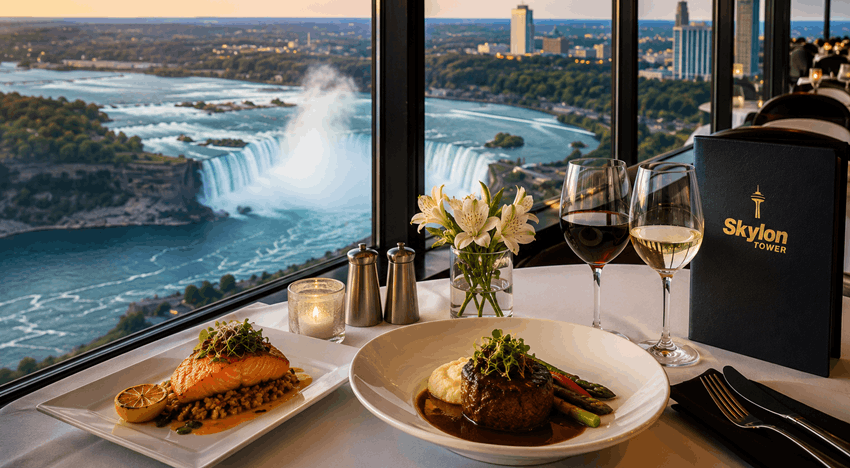
Cooking inside the Skylon Tower is not like cooking in an ordinary restaurant. The dining room sits high above Niagara Falls, where the view is already doing something dramatic before the first plate reaches the table. That creates a challenge for any chef: the food has to respect the setting without trying too hard to compete with it.
That is what made Chef Brett Cournoyea’s approach so interesting. His cooking philosophy was direct, disciplined, and refreshingly simple: use good ingredients, treat them properly, and let natural flavour lead the plate.
A Chef Shaped by Niagara Kitchens
Brett Cournoyea’s story is rooted in the Niagara restaurant world. Like many chefs, he did not begin at the top. He started young, worked his way through kitchens, learned the rhythm of service, and built his skill through repetition, pressure, and mentorship.
That kind of path matters. Restaurant kitchens are not shaped only by recipes. They are shaped by habits. A cook learns how to move, how to time dishes, how to stay calm, how to prep carefully, and how to recover when a night does not go exactly as planned.
For Cournoyea, the Skylon Tower became more than a workplace. It became a long-running part of his culinary identity. Working in a landmark restaurant above one of the world’s most famous natural attractions requires consistency. Guests may come for the view, but the kitchen still has to deliver.
Cooking Above the Falls
The Skylon Tower is one of Niagara Falls’ most recognizable landmarks. Its dining rooms sit high above the city, giving guests a sweeping view of Horseshoe Falls, American Falls, Bridal Veil Falls, the Niagara River, and the surrounding skyline.
That kind of room changes the mood of a meal. A guest is not only eating dinner. They are celebrating an anniversary, ending a vacation day, hosting family, proposing, marking a birthday, or taking in Niagara from a once-in-a-trip perspective.
For a chef, that means the food has to serve the moment. It should feel special, but not fussy. It should be polished, but not overbuilt. It should match the confidence of the room without becoming heavy or distracting.
The Power of Simple, Fresh Food
Cournoyea’s cooking philosophy can be summed up in a few words: simple, fresh, and focused.
That may sound easy, but it is not. Simple food leaves less room to hide. If a dish uses fewer ingredients, each one has to be chosen and handled well. A piece of fish has to be fresh. A sauce has to be balanced. Vegetables have to be cooked properly. Seasoning has to support the flavour, not bury it.
Many cooks are tempted to add more: more sauces, more garnishes, more spices, more textures, more ideas on one plate. Cournoyea’s approach moved in the opposite direction. He believed that the best cooking often comes from restraint.
That is a lesson worth remembering. Not every plate needs to announce how clever it is. Sometimes a dish is strongest when it is clear, clean, and confident.
Enhancing, Not Overpowering
One of the strongest ideas in Cournoyea’s philosophy was that seasoning should enhance natural flavour rather than overpower it.
This is especially important in a place like Niagara, where regional ingredients, seasonal produce, fresh fish, meats, and classic dining expectations all come together. Guests may want a memorable meal, but they also want food that feels satisfying and recognizable.
A good chef knows when to stop. A steak does not need to be buried. A piece of fish does not need to be disguised. A vegetable does not need to be turned into something unrecognizable to feel elevated.
The confidence to let food taste like itself is one of the marks of a mature cook.
The Discipline of a High-Volume Landmark Kitchen
Restaurant cooking is always demanding, but a landmark attraction brings its own pressures. The Skylon Tower serves tourists, locals, couples, families, tour groups, private events, and special-occasion diners. Some guests arrive relaxed. Others arrive with high expectations because the setting is part of a dream Niagara itinerary.
That kind of dining room needs organization. The kitchen must handle timing, volume, consistency, menu variety, dietary requests, and the natural rushes that come with tourism.
In that environment, simple food is not a shortcut. It is a smart system. The clearer the concept, the easier it is to execute well under pressure. A complicated dish may look impressive on paper, but if it cannot be repeated with consistency during service, it becomes a liability.
Cournoyea’s practical style fit the room. It respected the reality of cooking for many people while still keeping quality in view.
Mentorship and Learning the Hard Way
Every chef is shaped by mentors, and Cournoyea’s path included learning under Maurice Olaizola, a chef he described as demanding and highly trained. That kind of mentorship can be difficult, but it often leaves a lasting mark.
Strict kitchens teach discipline. They teach precision, timing, respect for technique, and the importance of standards. They also teach young cooks that food is not only creativity. It is work.
A chef who rises through that kind of environment usually carries the lessons forward: be prepared, keep learning, stay organized, and never assume experience means you are finished improving.
Why Attitude Matters in the Kitchen
Cournoyea also believed strongly in hiring for attitude. That is a practical idea, and any experienced restaurant leader understands why.
Skills can be taught. Knife work can improve. Recipes can be learned. But attitude affects the entire kitchen. A cook who is eager, reliable, humble, and willing to learn can grow into a strong team member. A skilled cook with a poor attitude can damage morale, slow service, and make pressure worse for everyone.
Restaurant kitchens depend on trust. People work close together, often under heat, noise, speed, and stress. A good team does not happen by accident. It is built through standards, training, patience, and the right personalities.
In that sense, Cournoyea’s approach to staffing was just as important as his approach to food.
The Beauty of Repetition
One of the more thoughtful parts of Cournoyea’s outlook was his view of repetition. In many jobs, doing the same thing every day can feel dull. In cooking, repetition can become a form of mastery.
A sauce made hundreds of times is never exactly the same if a chef is paying attention. The colour may shift. The texture may change. The heat may behave differently. The ingredients may respond in a slightly new way.
That kind of attention separates routine from craftsmanship. A careless cook gets bored. A serious cook notices more.
In a long-running kitchen, this matters deeply. Guests may order the same dishes year after year. The chef’s job is to make each plate feel cared for, even if the kitchen has made that dish countless times before.
Fresh Fish, Clean Flavour, and Personal Taste
Cournoyea spoke warmly about fresh fish, and that preference makes sense with his cooking philosophy. Fish rewards restraint. It does not need heavy handling when the quality is high. A light seasoning, a clean sauce, careful heat, and a thoughtful side can be enough.
His personal taste also leaned simple at home: grilled fish, salt and pepper, and a bright cabbage slaw with vinaigrette. That kind of meal says a lot about a chef. After spending long hours in a professional kitchen, many chefs do not want complicated food at home. They want freshness, balance, and comfort.
It is a reminder that good cooking does not always mean restaurant complexity. Sometimes the best meal is the one that gets the basics exactly right.
Dining Where the View Is Part of the Plate
At Skylon Tower, the kitchen is only one part of the experience. The view is always present. The dining room slowly rotates, giving guests a changing panorama of the Falls and city below. That movement adds a sense of theatre to the meal.
Food in that setting needs to support the emotion of the room. A guest may remember the exact dish. They may also remember the light over the Falls, the glass of wine, the person sitting across from them, and the feeling of the room turning quietly above Niagara.
That is why restaurants like Skylon are different. They are not judged only as places to eat. They are judged as experiences.
The Challenge of Tourist Dining
Tourist dining can be difficult because the audience is so broad. One table may include adventurous diners. Another may include children. Another may include international visitors. Another may include guests who want a classic steakhouse-style meal. Another may include people celebrating something deeply personal.
A chef in that environment has to balance familiarity with quality. The menu cannot become so experimental that it loses the average guest, but it also cannot become careless or generic.
Cournoyea’s style fit that balance. He valued fresh ingredients, clean execution, and food that people could understand. That is not boring. It is hospitality.
Niagara’s Food Scene Around the Tower
Niagara’s food identity has grown significantly over the years. The region is now known for wineries, farm markets, fruit, bakeries, craft beverages, chef-driven restaurants, and seasonal dining. Visitors come not only for the Falls, but also for the taste of the region.
Skylon Tower sits in a different lane from small farm-to-table restaurants or winery dining rooms. It is a landmark destination with its own kind of pressure and audience. But it still belongs to the Niagara food story because it has served generations of visitors looking for a memorable meal above the Falls.
That role matters. Not every important restaurant is small, trendy, or hidden. Some are famous because they become part of how people remember a place.
What Young Cooks Can Learn From Cournoyea
Cournoyea’s story offers several useful lessons for young cooks.
First, start where you can and keep learning. Many careers begin with small kitchen jobs, dish stations, prep work, or support roles.
Second, respect mentors, even demanding ones. Tough training can build habits that last for decades.
Third, do not confuse complicated food with good food. Strong ingredients and proper technique will always matter.
Fourth, attitude is part of skill. The way a cook works with others affects the whole kitchen.
Finally, stay curious. Even familiar tasks can teach something new when approached with attention.
A Profile in Practical Excellence
The lasting appeal of Brett Cournoyea’s chef profile is not that it presents him as flashy. It does the opposite. It shows a chef who valued directness, freshness, discipline, and steady improvement.
That kind of profile is worth revisiting because it reflects the side of cooking guests do not always see. Behind every dining room view, every plated entrée, and every special-occasion meal is a team working through timing, heat, prep, pressure, and service.
A good chef makes that work feel seamless.
Final Thoughts
Brett Cournoyea’s Skylon Tower story is a reminder that great restaurant experiences are built on more than scenery. The view may bring people into the room, but the kitchen has to give them a meal worthy of the moment.
His philosophy was never about overcomplicating the plate. It was about choosing fresh ingredients, seasoning with purpose, training good people, and staying attentive to the small details that make food work.
In a tower famous for its height, Cournoyea’s cooking ideas stayed grounded. That is what made them strong.
Above Niagara Falls, where the view can overwhelm almost anything, the best food does not need to shout. It only needs to be honest, well prepared, and served with care.