
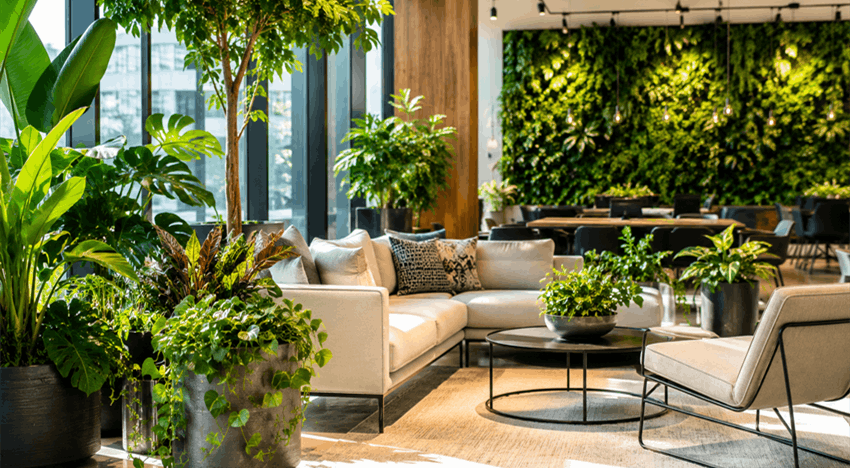
Interior plantscaping is more than placing a few potted plants in a corner and hoping they survive. Done well, it is the art of using living plants to make indoor spaces feel healthier, warmer, calmer, and more complete. It can improve the look of a home, soften the mood of an office, bring life to a hotel lobby, and make a business feel more welcoming the moment someone walks through the door.
As more people spend long hours indoors, the spaces around us matter. Lighting, air quality, noise, furniture, colour, layout, and nature all affect how we feel. Interior plantscaping brings one of the simplest and most powerful design elements indoors: living greenery.
What Is Interior Plantscaping?
Interior plantscaping is the planned design, placement, and care of plants inside buildings. It can be as simple as a few well-chosen plants in a home office or as large as a full hotel atrium, living wall, restaurant display, shopping centre installation, or corporate lobby design.
The key word is planned. Plantscaping is not just buying whatever looks nice at the garden centre. It means choosing plants that fit the light, temperature, humidity, traffic flow, design style, and maintenance needs of the space.
A plant that thrives near a bright window may struggle in a dim hallway. A delicate plant may not work in a busy lobby. A large palm may look impressive, but only if the room has enough height and light. Good plantscaping balances beauty with reality.
Why Indoor Greenery Matters
Indoor spaces can feel hard, flat, and artificial. Walls, desks, screens, floors, and furniture are useful, but they do not always create warmth. Plants change that immediately.
A room with greenery feels more alive. It feels softer. It gives the eye somewhere natural to rest. Even one healthy plant can make a room feel more cared for.
This is why plantscaping works in so many settings. In a home, plants add comfort. In an office, they reduce the coldness of desks and technology. In a restaurant, they create atmosphere. In a hotel or spa, they support relaxation. In a retail space, they make the environment feel more inviting and intentional.
Plants are not only decoration. They are part of how a space communicates.
The Wellness Side of Plants
There is a reason people instinctively like being around plants. Greenery can make indoor environments feel less stressful and more restorative. It adds a sense of calm that is hard to create with furniture alone.
In offices, plants can help break up visual monotony. They make workspaces feel more human and less sterile. For employees who spend much of the day at a desk, that matters. A workspace does not have to feel like a blank box to be productive.
Plants can also support a better emotional atmosphere. They suggest care, attention, and comfort. A business that invests in greenery often feels more welcoming to staff, clients, and visitors.
Plants and Productivity
One of the most interesting reasons businesses use interior plantscaping is the connection between greenery and workplace satisfaction. People tend to respond well to offices that feel pleasant, comfortable, and visually engaging.
A plain office may look efficient, but it can also feel lifeless. Adding plants can make the space feel more balanced. Greenery introduces colour, texture, and a sense of nature without requiring a full redesign.
This does not mean a plant on every desk will magically fix a stressful workplace. Plants are not a substitute for good management, fair workloads, decent lighting, or proper ventilation. But they can be one helpful part of a better environment.
When people feel better in a space, they are more likely to enjoy spending time there. That is valuable for offices, waiting rooms, lobbies, clinics, hotels, restaurants, and retail spaces.
A More Honest Look at Air Quality
For years, indoor plants were promoted as natural air purifiers. That idea became popular partly because of lab studies showing that certain plants could remove some pollutants in sealed test chambers.
The modern view is more careful. Plants can interact with indoor air, and they do release moisture through natural processes. But in a normal home or office, a few potted plants should not be treated as a replacement for proper ventilation, filtration, cleaning, or source control.
Good indoor air quality still depends on practical steps: bringing in fresh air when possible, maintaining HVAC systems, managing humidity, reducing harsh chemical products, controlling dust, fixing moisture problems, and using proper filtration when needed.
That does not make plants useless. It simply means their strongest benefits are usually comfort, mood, design, humidity, sound softening, and the human pleasure of being near nature. Plants can support a healthier-feeling space, but they should not be asked to do the job of an air purifier.
Humidity and Comfort
Plants can release moisture into the air, which may help a room feel less dry in some conditions. This can be especially welcome in colder climates where indoor heating often makes winter air feel dry.
That said, balance matters. Too little humidity can feel uncomfortable, but too much can encourage mold or other problems. The goal is not to turn an office into a greenhouse. The goal is to create a comfortable indoor environment where both people and plants can do well.
This is another reason professional plantscaping can be useful. The right plant choices and maintenance plan can help greenery thrive without creating moisture issues, pests, or messy conditions.
Plants Can Help Soften Noise
Open offices, restaurants, waiting rooms, and large lobbies can become noisy. Hard floors, glass walls, high ceilings, and open layouts often make sound bounce around.
Plants can help soften a space visually and, in some cases, acoustically. Large leafy plants, planters, green walls, and planted dividers can help break up open areas and reduce the harshness of sound. They will not replace proper acoustic design, but they can be part of a more comfortable room.
In busy commercial spaces, even small improvements matter. A space that sounds calmer often feels calmer.
Plants Make Businesses Feel More Welcoming
First impressions happen quickly. When someone walks into a lobby, reception area, restaurant, spa, showroom, or office, the space immediately tells them something.
A bare room can feel temporary or cold. A room with healthy, well-placed plants feels more cared for. It suggests that someone is paying attention to the experience of being there.
For businesses, this matters. Plants can help create a warmer customer experience without overwhelming the design. A few large planters near an entrance, a living wall behind reception, or fresh greenery in a waiting area can change the mood of the entire space.
Interior Plantscaping at Home
Homes benefit from plantscaping too. Houseplants can make a living room feel softer, a kitchen feel fresher, a bedroom feel calmer, and a home office feel less boxed in.
The most important step is matching the plant to the room. A bright south-facing window can support different plants than a low-light hallway. A busy household with pets or children may need sturdy, non-toxic plant choices. A person who travels often should avoid plants that need constant attention.
Good home plantscaping is not about owning the trendiest plant. It is about choosing plants that fit your life.
Best Places to Use Plants Indoors
Entryways are a natural place for plants because they create a welcoming first impression. A tall plant or pair of planters can make a front hall feel finished.
Living rooms often suit larger plants because they have more space and can handle a strong visual feature. A fiddle leaf fig, rubber plant, palm, bird of paradise, or large dracaena can act almost like a piece of furniture.
Bathrooms can work well for plants that like humidity, as long as there is enough light. Ferns, pothos, and certain tropical plants may do well in the right conditions.
Home offices benefit from small desk plants, shelf plants, or one larger floor plant. Greenery near a screen can help soften the workday.
Kitchens are good places for herbs, small trailing plants, or bright windowsill greenery. Just keep plants away from heat, grease, and crowded prep areas.
Plantscaping for Offices
Office plants need to be durable, attractive, and easy to maintain. The best choices are usually plants that tolerate indoor light conditions and irregular environments.
Common office-friendly plants include pothos, snake plants, ZZ plants, peace lilies, dracaena, philodendrons, aglaonema, palms, and rubber plants. These plants are popular because many of them can handle indoor conditions better than fussier species.
Placement matters. Plants should not block walkways, emergency exits, sight lines, or desk function. Large plants work well in corners, reception areas, meeting rooms, and open spaces. Smaller plants can work on shelves, counters, and shared tables.
A good office plantscape should look natural, not cluttered. Too many random plants can feel messy. A smaller number of healthy, well-scaled plants often looks better than a crowded collection of struggling ones.
Living Walls and Green Dividers
Living walls have become popular in hotels, restaurants, offices, spas, and high-end homes. They create a dramatic visual feature and can turn a plain wall into a living focal point.
Green dividers are another useful option. They can separate work areas, soften open layouts, create privacy, and add greenery without building permanent walls.
These installations need proper planning. Lighting, irrigation, drainage, plant selection, access for maintenance, and long-term care all matter. A living wall can look stunning, but only if it is designed to stay healthy.
The Importance of Maintenance
Healthy plants make a space feel better. Neglected plants do the opposite.
Yellow leaves, dry soil, pests, dust, dead stems, and overgrown planters can make a room feel uncared for. That is why maintenance is a core part of plantscaping.
Plants need the right watering schedule, light, pruning, cleaning, fertilizing, pest checks, and occasional replacement. In commercial settings, professional maintenance can be worth the cost because it keeps the plants looking fresh and prevents small problems from becoming visible eyesores.
The goal is not just to install greenery. The goal is to keep it thriving.
Choosing the Right Containers
The container matters almost as much as the plant. Planters should match the scale, style, and function of the room.
A modern office may call for simple matte containers in neutral colours. A hotel lobby may suit large statement planters. A cozy café may look better with ceramic pots, baskets, or warm natural textures. A home may need a mix of decorative pots that still feel connected.
Drainage is also important. A beautiful pot can create problems if it traps water, damages floors, or causes root rot. Practical design is still design.
Common Mistakes to Avoid
One common mistake is choosing plants based only on appearance. A plant that looks beautiful in a photo may not survive in your space.
Another mistake is overwatering. Many indoor plants suffer more from too much water than too little. Roots need air as well as moisture.
Poor placement is another issue. Plants placed in dark corners, near heating vents, in cold drafts, or directly beside busy walkways often struggle.
Finally, some people forget about scale. Tiny plants can disappear in a large lobby. Oversized plants can overwhelm a small room. The best plantscaping respects proportion.
Pet and Child Safety
Anyone designing with indoor plants should consider pets and children. Some common houseplants can be toxic if eaten. Others may have sharp leaves, irritating sap, or messy soil that curious kids or animals may disturb.
Homes, childcare spaces, clinics, and pet-friendly offices should choose plants carefully and place them safely. When in doubt, check reliable plant-toxicity resources or ask a knowledgeable nursery or plantscaping professional.
Why Professional Plantscaping Can Help
Some people enjoy caring for plants themselves, and that can be rewarding. But larger homes, offices, restaurants, hotels, and commercial buildings often benefit from professional help.
A plantscaping professional can assess light levels, recommend suitable plants, choose containers, plan layouts, install plants properly, and provide regular care. They can also replace plants when needed and adjust the design as seasons or building conditions change.
For businesses, this takes pressure off staff. Employees can enjoy the greenery without being responsible for watering schedules, pest control, pruning, and plant health.
Plants as Part of Better Design
Interior plantscaping works best when it is treated as part of the design, not an afterthought.
Plants can frame a doorway, soften a corner, add height to a room, guide movement, create privacy, highlight a seating area, or bring colour into a neutral space. They can also connect indoor spaces to outdoor views, gardens, patios, or natural materials.
When plants are chosen with intention, they do more than fill empty space. They help the room feel complete.
Final Thoughts
The benefits of interior plantscaping are both practical and emotional. Plants can make indoor spaces more beautiful, welcoming, comfortable, and human. They can soften noise, support a calmer mood, add humidity, improve visual interest, and help homes and businesses feel more alive.
They should not be oversold as a cure-all for indoor air quality, and they are not a replacement for ventilation, filtration, cleaning, or good building maintenance. But that does not reduce their value. It simply places them where they belong: as one important part of a healthier, happier indoor environment.
Whether you are adding a few plants to a home office or planning a full commercial plantscape, the goal is the same. Choose the right plants, put them in the right place, care for them well, and let nature do what it does best — make the space feel better.