
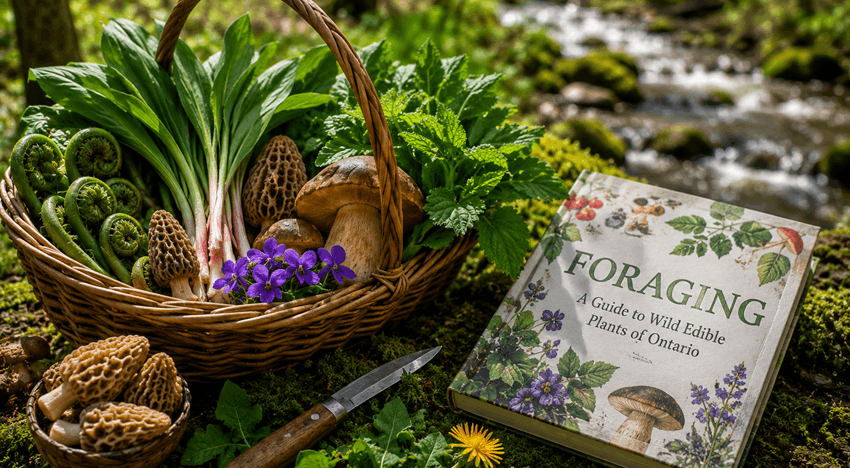
Foraging has moved from old family knowledge and chef curiosity into a wider food conversation. More people want to know where food comes from, how seasons shape flavour, and what grows beyond the grocery store. In Ontario, that curiosity can lead to wild berries, edible flowers, spring greens, mushrooms, nuts, herbs, and plants that many people walk past without noticing.
But foraging is not just a trend. It is a way of paying attention. It asks people to slow down, learn the land, respect the rules, and understand that food does not begin on a shelf. It begins in soil, shade, rain, sunlight, and season.
What Is Foraging?
Foraging means searching for and gathering food from wild sources. That might include plants, berries, mushrooms, nuts, seeds, flowers, or herbs. It can happen in forests, fields, meadows, shorelines, backyards, farms, or other natural areas where gathering is allowed.
At its best, foraging is not random picking. It is careful observation. A good forager learns how to identify species, where they grow, when they are ready, what parts are edible, how to harvest without damaging the plant, and how much to leave behind.
That last part matters. Foraging is not only about what we can take. It is about knowing when not to take.
Why Foraging Feels Fresh Again
Foraging feels modern because it answers a very old need: connection. Many people are tired of food that feels distant, packaged, and disconnected from place. Wild food offers the opposite. It is seasonal, local, specific, and often impossible to separate from the landscape where it grows.
A handful of wild raspberries tastes like summer. A spring green tastes like the first real thaw. A carefully gathered mushroom tastes like rain, leaves, and patience. These foods carry a sense of time and place that is hard to reproduce.
For chefs, wild ingredients can add flavour and story. For home cooks, foraging can turn a walk into a lesson. For families, it can help children understand that food is part of nature, not separate from it.
Ontario’s Wild Food Landscape
Ontario has a rich mix of forests, wetlands, meadows, farmland edges, riverbanks, and urban green spaces. That diversity creates many edible possibilities, but it also demands care.
Depending on the region and season, foragers may encounter wild leeks, fiddleheads, dandelion greens, nettles, berries, apples, crabapples, wild grapes, sumac, nuts, edible flowers, and many types of mushrooms. Some are common and beginner-friendly with proper guidance. Others require expert-level identification and should never be guessed.
The province’s variety is part of the appeal. Spring brings tender greens. Summer brings berries and flowers. Fall brings nuts, fruit, roots, and many fungi. Winter is quieter, but not empty for those who know what to look for.
Safety Comes First
The most important rule of foraging is simple: never eat anything unless you are completely certain what it is.
This is especially true with mushrooms. Some poisonous mushrooms can look very similar to edible ones. A photo, app, or quick online search is not enough. Even experienced foragers can be cautious with mushrooms because small mistakes can have serious consequences.
Plants can also be risky. Some edible plants have toxic look-alikes. Some are safe only at certain stages. Some require special preparation. Some should be avoided by pregnant people, children, pets, or people taking certain medications.
For beginners, the safest path is to learn from an experienced local guide, take a reputable in-person class, use multiple field guides, and start with a few easy-to-identify plants. Foraging rewards patience. Rushing is where trouble begins.
Know Where You Are Allowed to Forage
Foraging rules depend on where you are. Private land requires permission. Public land may have restrictions. Provincial parks do not allow visitors to collect plants or fungi. Conservation areas, trails, municipal parks, and protected lands often have their own rules.
This is where many beginners make mistakes. Just because something is growing in public does not mean it is available to take. Natural areas are often protected for wildlife, native plants, restoration work, and future visitors.
Before harvesting, check the rules for that exact location. If the rules are unclear, do not pick. It is better to leave a plant behind than damage a protected area or create problems for landowners and conservation groups.
Ethical Foraging Matters
Ethical foraging is about taking lightly. A plant may be edible, but that does not mean it should be stripped from the ground. Wildlife may depend on the same food. The plant may need leaves, flowers, or seeds to keep growing. Other foragers may come after you.
A responsible forager takes only a small amount, leaves healthy plants behind, avoids rare or threatened species, and never damages roots unless the plant is abundant and harvesting is allowed. With some species, picking leaves instead of bulbs can help the plant survive. With others, harvesting at all may be unwise.
Foraging should make people more respectful of nature, not more extractive. The goal is not to “get free food.” The goal is to build a better relationship with the land.
Start With Familiar Wild Foods
Beginners should start simple. Dandelions, wild berries, crabapples, sumac, garlic mustard, and certain common greens can be easier entry points when properly identified and gathered from clean, legal areas.
Dandelion leaves can be bitter but useful in salads or cooked greens. Flowers can be used in fritters, syrups, or teas. Wild berries can be wonderful, but only when identified with certainty. Sumac can be steeped for a tart, lemonade-like drink. Garlic mustard can be turned into pesto or used like a strong green herb.
Even with familiar plants, location matters. Avoid roadsides, sprayed lawns, industrial areas, contaminated soil, and places where pets may have fouled the ground. A plant can be edible and still unsafe because of where it grew.
The Garlic Mustard Question
Garlic mustard is one of the more interesting plants in the foraging conversation. It is edible and has a garlicky, mustard-like flavour, especially when young. It can be used in pesto, sauces, sautés, soups, and savoury dishes.
But it is also invasive. Garlic mustard spreads aggressively and can harm forest ecosystems by crowding out native plants and changing soil conditions.
That makes it a different kind of foraging target. Harvesting invasive edible plants can be useful when done correctly, but people still need to avoid spreading seeds, follow local rules, and dispose of plant material responsibly. Eating an invasive plant is not a complete solution, but it can be part of a more thoughtful relationship with local ecology.
Wild Leeks and the Problem of Overharvesting
Wild leeks, often called ramps, have become a favourite spring ingredient. Their flavour is wonderful: oniony, garlicky, green, and deeply seasonal. That popularity has also created problems.
When people pull whole bulbs, the plant population can decline quickly. Wild leeks grow slowly, and heavy harvesting can damage patches for years. This is why many responsible foragers avoid taking bulbs and harvest only a small number of leaves from abundant patches where harvesting is legal.
The lesson is bigger than one plant. A food can be delicious and still need protection. Sometimes the most respectful choice is to admire it and leave it growing.
Fiddleheads, Nettles, and Other Spring Foods
Spring is one of the most exciting foraging seasons because the first edible greens feel like a reward after winter. Fiddleheads and stinging nettles are two examples, but both require knowledge.
Fiddleheads must be correctly identified and properly cleaned and cooked. Not every fern is edible, and preparation matters. Nettles can sting when raw, but once cooked or dried, they can be used in soups, teas, pastas, and sautés.
These foods remind us that “wild” does not mean “eat straight from the ground.” Many traditional wild foods require handling, cleaning, cooking, or processing before they are safe and enjoyable.
Mushrooms Require Serious Respect
Mushrooms are often the most exciting and most dangerous part of foraging. Morels, chanterelles, chicken of the woods, puffballs, and other edible fungi attract many people, but beginners should be extremely cautious.
Mushroom identification can depend on details like gills, pores, stems, habitat, spore print, bruising, season, smell, and growth pattern. A quick glance is not enough. Some toxic species can resemble edible ones closely enough to fool inexperienced foragers.
Anyone interested in mushroom hunting should learn from a qualified local expert or mycological group. It is not an area for guesswork, shortcuts, or social media confidence.
Foraging and Chefs
Restaurants helped bring foraging back into popular food culture. Chefs began using wild ingredients to create menus that tasted more connected to place. A dish with spruce tips, wild leeks, sumac, mushrooms, or local berries can tell a more specific story than one built only from imported ingredients.
But professional kitchens also show why knowledge matters. Responsible chefs often work with experienced foragers, follow food-safety practices, and understand that availability changes from week to week. Wild food does not behave like a commercial supply chain.
That unpredictability is part of its charm. It is also why foraged food should be treated with respect.
Foraging at Home
You do not need a deep forest to start noticing wild food. Many people begin in their own yard or garden, where permission is clear and the history of the land is easier to know.
Dandelions, violets, clover, plantain, lamb’s quarters, purslane, and other common plants may appear in yards or garden edges. Some are edible, some are not ideal for everyone, and all require proper identification. The benefit of starting close to home is that it encourages observation.
Instead of seeing every wild plant as a weed, you begin asking better questions: What is this? Why is it growing here? Is it native or invasive? Does it feed pollinators? Can it be used safely? Should it be left alone?
Foraging as a Family Activity
Foraging can be a wonderful family activity when it is treated as learning first and eating second. Children enjoy searching, noticing, comparing leaves, smelling plants, and understanding that food can grow in unexpected places.
But adults need to set firm rules. Children should never eat wild plants or mushrooms without adult confirmation. They should learn early that some natural things are edible and others are dangerous. Curiosity is good. Unsupervised tasting is not.
A family foraging walk can simply be about identifying plants, taking photos, drawing leaves, or making a seasonal nature journal. Not every walk needs to end with a harvest.
How to Build a Beginner Foraging Kit
A simple foraging kit might include a local field guide, notebook, pencil, phone for photos, small scissors, gloves, paper bags, a basket, water, and a map or GPS tool. Avoid plastic bags for delicate greens and mushrooms because they can trap moisture and cause spoilage.
A notebook is especially useful. Write down where plants were found, the date, the habitat, what they looked like, and whether you harvested anything. Over time, this builds local knowledge.
Good foraging is not only about collecting. It is about remembering.
Cooking With Wild Ingredients
Wild ingredients often taste stronger than cultivated ones, so a little can go a long way. Garlic mustard can overpower a dish if used heavily. Sumac is tart and bright. Wild greens may be bitter. Mushrooms can be earthy and rich. Berries may be more intense or more delicate than store-bought fruit.
The best way to cook with foraged food is to keep it simple. Add wild greens to eggs, soups, pasta, or sautés. Use berries in sauces or desserts. Make a small batch of pesto. Steep herbs or sumac into drinks. Pair wild flavours with familiar ingredients so they can shine without overwhelming the dish.
Start with small amounts, especially if you have never eaten that plant before. Even edible foods can bother some people.
Foraging Teaches Seasonality
One of the best things about foraging is that it teaches real seasonality. Grocery stores make many foods feel available all the time. Foraging reminds us that nature works differently.
Wild leeks are brief. Berries come and go. Mushrooms appear when conditions are right, not when your schedule is convenient. Nuts drop when they are ready. Flowers bloom on their own time.
That unpredictability can be frustrating, but it is also beautiful. Foraging encourages people to enjoy food when it arrives, not when they demand it.
A Slower Way to Eat
Foraging is not efficient in the modern sense. It takes time to learn. It takes time to walk. It takes time to identify, clean, prepare, and cook. That is part of the point.
In a fast food culture, foraging slows the process down. It turns food into a relationship instead of a transaction. It makes you think about rain, soil, land ownership, plant life cycles, wildlife, and your own responsibility as a gatherer.
That makes even a small meal feel different.
Final Thoughts
Foraging food in Ontario is exciting because it opens a door to the hidden edible world around us. It can connect people to seasons, local landscapes, traditional knowledge, and flavours that do not always appear in stores.
But it must be done carefully. Safe identification, legal access, ethical harvesting, clean locations, and respect for ecosystems are not optional. They are the foundation of responsible foraging.
The best foragers are not the people who take the most. They are the people who notice the most. They learn slowly, harvest lightly, and understand that wild food is a gift, not an entitlement.
When done with care, foraging can change the way we eat. More importantly, it can change the way we see the land beneath our feet.