
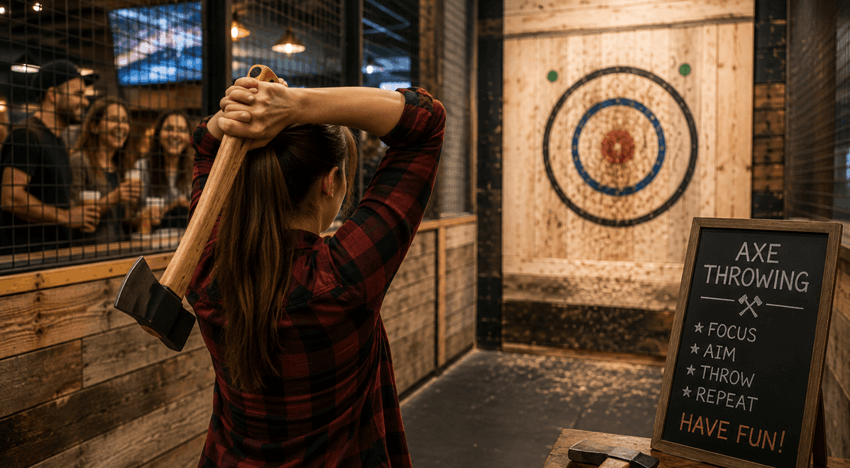
Axe throwing sounds like the kind of thing that should belong in the woods, not in a city entertainment venue. Yet over the last decade, it has become one of the most surprising social activities in Canada and beyond. What started as a backyard-style pastime has grown into a coached, indoor, league-friendly sport where friends, co-workers, couples, and first-timers can test their aim one throw at a time.
In Niagara, recreational axe throwing fits naturally into the region’s mix of tourism, group outings, nightlife, and local entertainment. It is physical without being too intense, competitive without needing experience, and just unusual enough to make a night out feel memorable.
From Backyard Pastime to Indoor Entertainment
The appeal of axe throwing is easy to understand once you try it. You stand in a lane, focus on the wooden target, release the axe, and wait for that satisfying moment when it sticks. The sound, the motion, and the instant feedback all make the sport feel more exciting than it looks from the sidelines.
Recreational axe throwing grew because it turned something rugged and old-fashioned into something social and accessible. You do not need to be a lumberjack. You do not need special athletic training. You do not even need to be especially strong. With the right coaching, most people can learn the basic throw fairly quickly.
That is one reason axe throwing has lasted beyond novelty status. The first throw may be about curiosity. The second throw is about getting better. By the third or fourth, people are usually hooked.
Why It Works So Well for Groups
Axe throwing is one of those rare activities that works for many kinds of groups. It can fit a birthday party, bachelor or bachelorette outing, date night, corporate event, team-building session, family gathering, or casual Friday night with friends.
The reason is simple: everyone can participate, but nobody has to be perfect. A group can laugh at bad throws, cheer for bullseyes, and slowly improve together. It creates a shared experience without forcing people into awkward small talk.
For corporate groups, that is especially useful. Many team-building activities feel artificial. Axe throwing feels more natural because the activity gives people something to focus on. Co-workers who may not normally socialize can compete, encourage each other, and relax in a setting that feels more like a game than a workshop.
Safety Is the Real Foundation
To someone who has never been, indoor axe throwing can sound dangerous. That reaction is fair. Axes are sharp tools, and safety has to come first.
Modern axe throwing venues are built around controlled lanes, clear rules, trained coaches, proper spacing, and supervised play. A good venue does not simply hand people axes and hope for the best. Staff explain how to stand, how to grip, how to throw, when to retrieve the axe, and how to stay aware of the lane.
The sport works because the environment is structured. Players throw one at a time or according to venue rules. People stay behind safety lines. Coaches watch for unsafe habits. Targets are designed for the activity. The whole experience depends on respect for the rules.
That structure is what turns a risky-sounding idea into a controlled recreational sport.
The Role of Coaching
Good coaching makes a huge difference. Many first-timers assume axe throwing is about power, but it is usually more about rhythm, distance, release, and consistency.
A coach can adjust a beginner’s stance, show them how far to stand from the target, help correct over-rotation or under-rotation, and explain why the axe is bouncing off instead of sticking. Those little changes matter.
That is also what makes the sport more inclusive. A smaller person can outthrow a stronger person if their form is better. A quiet first-timer can become the surprise champion of the group. Someone who misses badly at first can improve quickly once the throw starts to click.
That quick learning curve is part of the fun. Axe throwing gives people a real sense of progress within one session.
How a Basic Axe Throwing Game Works
Most recreational axe throwing is built around a simple target system. Players throw at a wooden target with scoring rings, similar in spirit to darts or archery. The closer the axe lands to the centre, the more points the throw earns.
Under World Axe Throwing League rules, players throw in lanes and score based on where the axe sticks in the target. A standard match uses a set number of throws, and the higher score wins.
Casual venues may adjust formats for parties, group events, or beginners. Some run round-robin tournaments, some offer drop-in play, and others run weekly leagues for people who want a more regular competitive experience.
The scoring is easy enough for beginners to follow, but there is enough skill involved to keep returning players interested.
From Casual Throwing to League Play
One of the biggest reasons axe throwing has grown is that it gives people a path from casual fun to organized competition.
A first visit might be a one-time night out. But once someone enjoys the activity, leagues create a reason to keep coming back. Weekly league play adds structure, friendly rivalries, standings, and a sense of community.
The World Axe Throwing League has helped organize the sport internationally by creating standardized rules, competition formats, safety expectations, and championship pathways. That has allowed axe throwing to move beyond local entertainment and into a more serious sport for players who want to compete.
For most people, though, the heart of the activity remains recreational. They are not chasing a world title. They just want a fun night, a clean throw, and maybe a bullseye worth bragging about.
Axe Throwing in Niagara
Niagara is a strong fit for recreational axe throwing because the region already welcomes visitors looking for memorable experiences. People come for the Falls, wineries, restaurants, casinos, theatres, trails, and group-friendly attractions. Axe throwing adds something active and social to that mix.
BATL Niagara Falls is one local option offering axe throwing leagues and coached sessions, with no experience required. The idea is not only to compete, but to give people a reason to gather, learn, and enjoy a different kind of outing.
Other Niagara-area venues have also helped make axe throwing part of the local entertainment landscape. For residents, it offers a fun alternative to the usual dinner-and-drinks plan. For tourists, it can be a good group activity before or after other Niagara attractions.
Why the Sport Feels So Satisfying
The satisfaction of axe throwing is hard to explain until you hear the axe stick into the target. It is immediate. It is physical. It feels earned.
Many modern activities happen through screens. Axe throwing is the opposite. You use your body. You make an adjustment. You see the result right away. That simple feedback loop is refreshing.
There is also a stress-relief element. Throwing an axe at a target can feel like a harmless way to shake off a long week, especially when it is done in a safe, controlled space. It gives people a little adrenaline without requiring extreme athletic commitment.
Not Just for One Type of Person
One of the better surprises about axe throwing is how broad the audience can be. It attracts competitive people, casual groups, couples, tourists, co-workers, and people who would never describe themselves as sporty.
The sport can look intimidating from the outside, but it becomes less so once the rules are explained. The axe is not thrown wildly. The target is clear. The coach helps. The lane creates boundaries. Everyone gets a turn.
That structure helps different ages, body types, and skill levels participate together. It is not about being the strongest person in the room. It is about control.
What First-Timers Should Know
First-time axe throwers should arrive ready to listen. The safety briefing matters, and the coaching will make the experience better.
Closed-toe shoes are usually required or strongly recommended. Comfortable clothing helps because you need to move your arms freely. It is also smart to check the venue’s age rules, booking requirements, food and drink policies, and group options before going.
Do not worry too much if the axe does not stick right away. That happens to almost everyone. Small changes in distance, release, or rotation can make a big difference. The fun is in figuring it out.
Why It Makes a Good Date Night
Axe throwing works surprisingly well for a date because it gives both people something to do. It removes some of the pressure of sitting across a table trying to keep a conversation going.
There is room to laugh. There is room to cheer each other on. There is room for friendly competition. Even if both people are terrible at first, that can make the night better, not worse.
It is also memorable. A standard dinner may blur into other dinners. A night of learning to throw axes is harder to forget.
Why It Works for Corporate Events
Corporate groups often need activities that are easy to explain, social, and not too physically demanding. Axe throwing checks those boxes.
It allows people to compete without requiring athletic experience. It also naturally creates conversation between throws. Teams can cheer for each other, compare scores, and enjoy a relaxed setting outside the workplace.
That makes it useful for staff outings, client events, holiday parties, and team-building days. The activity has enough novelty to feel special, but enough structure to keep the group focused.
The Difference Between Fun and Reckless
Axe throwing should never be treated casually in the wrong way. The fun comes from the challenge, not from ignoring rules.
A good venue will take safety seriously, and guests should do the same. That means following coach instructions, staying out of active lanes, handling axes properly, avoiding careless horseplay, and respecting the staff.
The sport is enjoyable because everyone agrees to play within the system. Recklessness ruins the experience for the whole group.
What Keeps People Coming Back
The first reason people try axe throwing is usually curiosity. The reason they come back is improvement.
Once someone learns how to stick the axe, they want to do it again. Once they hit the centre, they want another bullseye. Once they beat a friend, they want a rematch. That progression keeps the activity fresh.
Leagues add even more motivation. Regular players start caring about scores, form, consistency, and strategy. They learn how small differences in grip, stance, and release can change everything.
That is when axe throwing stops being only a night out and starts becoming a hobby.
A Modern Game With Old Roots
Part of the charm of axe throwing is that it feels old and new at the same time. Axes are ancient tools, but indoor recreational axe throwing is a modern social sport. It combines a rustic image with urban entertainment.
That mix gives it personality. The activity feels rugged, but the venue is controlled. It feels competitive, but still casual. It feels unusual, but the scoring is familiar enough for anyone who has played darts, bowling, or target games.
That balance is why axe throwing has found a lasting place in entertainment culture.
Final Thoughts
Recreational axe throwing has lasted because it delivers something simple: a good challenge, a little adrenaline, and a strong reason to gather with other people.
In Niagara, it fits neatly alongside the region’s broader entertainment scene. It gives locals and visitors a way to try something active, social, and different from the usual night out. With trained coaches, controlled lanes, and clear rules, it is far more approachable than it first sounds.
The magic is in the moment the axe sticks. It is quick, loud, satisfying, and just competitive enough to make you want another throw.
That is why the world of recreational axe throwing still hits the mark.