
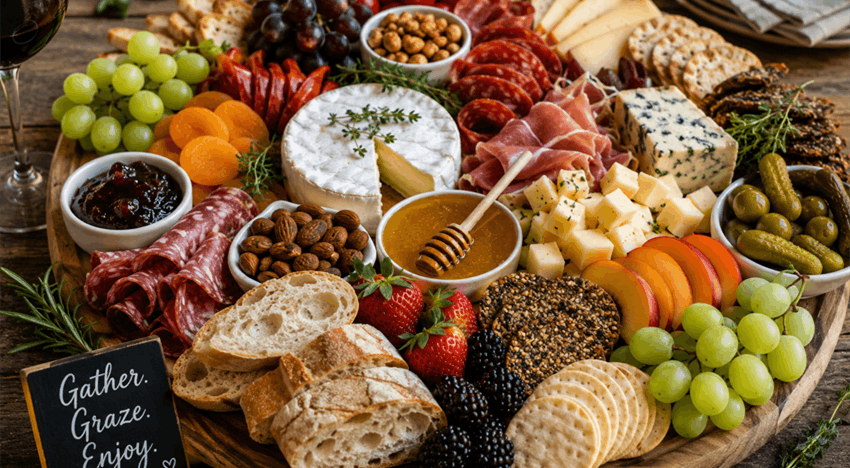
The grazing board deserves a little more respect. Somewhere along the way, it got treated like a trendy party shortcut or a social media photo prop. But a good grazing board is much more than a pile of cheese, crackers, and cured meat. Done well, it is casual dining at its best: relaxed, generous, flexible, and built for conversation.
It does not need to be fussy. It does not need to be perfect. It does not even need to follow strict rules. That is part of the beauty. A grazing board gives people permission to slow down, taste a little of everything, and enjoy food without the pressure of a formal meal.
What Makes a Grazing Board Different?
A grazing board is often confused with a charcuterie board, but they are not exactly the same thing.
A traditional charcuterie board focuses mostly on cured meats, sometimes with a few extras like mustard, pickles, bread, or olives. A grazing board is wider and more playful. It can include meats, cheeses, fruit, vegetables, dips, nuts, preserves, crackers, bread, sweets, and small bites that do not fit neatly into one category.
In other words, a charcuterie board has a narrower purpose. A grazing board has more freedom.
That freedom is what makes it so useful. You can build one for a wine night, a picnic, a holiday table, a bridal shower, a book club, a backyard dinner, a game night, or a quiet evening with two people. It can be elegant or rustic, expensive or budget-friendly, local and seasonal or pulled together from what is already in the fridge.
Why Grazing Boards Still Work
The best thing about a grazing board is that it removes some of the stiffness from hosting. Nobody has to wait for a plated course. Nobody has to ask for seconds. Nobody has to pretend they are hungry for something they do not want.
People can take what they like, skip what they do not, and come back later for another bite. That small freedom changes the mood of a gathering. A grazing board makes food feel social instead of structured.
It also creates movement. Guests lean in, reach for something, ask what a cheese is, pass a bowl of olives, compare jams, or discover that a sharp cheddar with honey and apple is better than expected. The food becomes part of the conversation instead of sitting quietly on the side.
A Board Is Not Just Food. It Is Balance.
A strong grazing board is not about having the most items. It is about balance.
You want something salty, something creamy, something crunchy, something fresh, something sweet, and something acidic. When those pieces are all there, the board feels complete.
Salty foods bring depth. Cured meats, aged cheese, olives, roasted nuts, and savoury spreads all help anchor the board.
Creamy foods make it feel generous. Brie, goat cheese, soft cheese spreads, whipped feta, hummus, or a mild blue cheese can give the board richness.
Crunchy foods keep everything from feeling too heavy. Crackers, crostini, breadsticks, raw vegetables, apple chips, pickles, and nuts all add texture.
Fresh foods brighten the board. Grapes, apple slices, pear, berries, figs, cucumber, cherry tomatoes, radishes, or seasonal Niagara fruit can make the whole platter feel alive.
Sweet foods add contrast. Honey, jam, chutney, dried apricots, dates, chocolate, or candied nuts can soften salty and sharp flavours.
Acidic foods are the quiet heroes. Pickled onions, cornichons, kimchi, marinated mushrooms, olives, mustard, and citrusy spreads cut through rich cheeses and meats.
When people say a board feels “too much,” it usually means it is missing contrast. Too much cheese feels heavy. Too much meat feels salty. Too many crackers feel dry. The board works when the flavours keep waking each other up.
Start With Cheese
Cheese is usually the easiest place to begin. Choose two or three kinds rather than trying to cover every possible style.
A simple mix could include one soft cheese, one firm cheese, and one stronger cheese. For example, you might use brie, aged cheddar, and blue cheese. Or goat cheese, gouda, and a firm sheep’s milk cheese. The exact choices matter less than the variety.
For a Niagara-inspired board, local cheese is a natural fit. A regional cheese, paired with local fruit, honey, or preserves, gives the board a stronger sense of place.
Leave some cheeses whole or partly whole instead of cutting everything into cubes. Whole wedges look better, stay fresher longer, and let people serve themselves in the amount they want. Pre-cut cubes can be useful for casual gatherings, but they rarely feel as inviting as a board with texture and shape.
Add Meat, But Do Not Let It Take Over
Cured meats can be wonderful on a grazing board, but they should not dominate it. A little goes a long way.
Prosciutto, salami, soppressata, speck, chorizo, smoked sausage, or thinly sliced ham can all work. Choose two options if the board is small, or three if you are serving a larger group.
The key is to think about texture and flavour. Pair something delicate with something more robust. Fold or loosely pile thin slices instead of laying everything flat. That makes the board look fuller and easier to serve.
For guests who do not eat meat, keep part of the board meat-free or create a separate vegetarian board. A plant-forward grazing board can be just as satisfying with cheese, dips, roasted vegetables, marinated beans, nuts, fruit, olives, and good bread.
Bring in Niagara Flavour
A grazing board is a perfect place to show off local food without turning dinner into a formal tasting menu.
Niagara has the right ingredients for this style of eating: tender fruit, farm markets, bakeries, honey, preserves, wine-country cheeses, small food producers, fresh vegetables, and plenty of local food shops. A board can become a small edible map of the region.
Fresh peaches, cherries, plums, nectarines, apples, pears, grapes, berries, and seasonal vegetables can all work depending on the time of year. Add local honey, fruit preserves, mustard, pickled vegetables, or a loaf from a neighbourhood bakery, and suddenly the board feels connected to where it is being served.
That is the difference between a generic board and a memorable one. The generic version looks copied. The local version feels personal.
Bread and Crackers Matter More Than People Think
Bread and crackers are not just filler. They are the foundation that carries everything else.
Choose a few options, but do not overcomplicate it. A sliced baguette, one plain cracker, and one crisp bread or breadstick is often enough. Too many flavoured crackers can compete with the cheese and spreads.
Keep the bread simple if the board already has strong cheeses, meats, pickles, and dips. The goal is support, not distraction.
If you are serving soft cheese or spreads, include bread that can hold them without breaking. If you are serving firm cheeses and cured meats, crisp crackers work well. If the board is being served outside, choose sturdy options that will not go stale too quickly in the open air.
Do Not Forget the Small Bowls
Small bowls make a grazing board easier to use and better to look at. They also help control messy items.
Use bowls for olives, nuts, honey, mustard, jam, pickles, dips, marinated vegetables, or anything with liquid. This keeps the board from turning soggy and gives the layout some height.
Small spoons, spreaders, and tongs are not just decorative. They make the board cleaner and more comfortable for guests. Nobody wants to dig into jam with a cheese knife already covered in blue cheese.
How to Make the Board Look Effortless
The secret to a beautiful grazing board is not perfection. It is controlled abundance.
Start with the largest items first: cheeses, bowls, bread, and bigger clusters of fruit. Then add meats, crackers, vegetables, and smaller items around them. Fill empty spaces with nuts, dried fruit, grapes, herbs, or small crackers.
Use contrast. Put pale cheese beside dark grapes. Place bright fruit near earthy bread. Add green herbs beside cured meat. Use a mix of round, sliced, folded, and whole shapes.
A board looks better when it has movement. Avoid straight lines unless you are going for a very formal look. Let the food feel gathered, not arranged by a ruler.
Build for the Occasion
A grazing board should fit the moment.
For a casual wine night, focus on cheese, crackers, fruit, nuts, and one or two spreads. For a heartier gathering, add cured meat, dips, vegetables, bread, and something sweet. For brunch, use croissants, fruit, soft cheese, smoked salmon, boiled eggs, jam, and mini pastries. For a family-friendly board, add mild cheese, sliced fruit, crackers, veggies, hummus, and small sandwiches.
The best boards are not copied from a template. They are built around who is eating, where they are gathering, and what kind of mood you want to create.
Keep It Safe
A grazing board should feel relaxed, but food safety still matters.
Perishable foods like soft cheese, meats, dips, and cut produce should not sit out for too long. If the board will be out for an extended gathering, serve smaller amounts and refresh the board from the fridge instead of placing everything out at once.
Keep cold items chilled until close to serving time. Use clean utensils. Separate raw foods from ready-to-eat foods. If the gathering is outdoors or the weather is warm, be extra careful with dairy, meat, seafood, and creamy dips.
A beautiful board is not worth making anyone sick. The smart approach is simple: put out what people can enjoy within a reasonable time, then replenish as needed.
The Case for Grazing
The grazing board works because it is generous without being formal. It lets people eat at their own pace. It makes room for different tastes. It can be simple or dramatic. It can support a bottle of wine, a pot of tea, a patio evening, or a full celebration.
It also gives hosts a little breathing room. Instead of juggling courses, timing hot dishes, or worrying about plating, you can build one beautiful spread and let people enjoy it naturally.
That does not make it lazy. It makes it smart.
Final Thoughts
In defense of the grazing board, it may be one of the most human ways to eat. It is shared, flexible, colourful, and full of small choices. It invites people to linger rather than rush.
A good grazing board is not about showing off. It is about creating a table people want to gather around. It lets food do what food does best: bring people closer, start conversation, and turn an ordinary afternoon or evening into something that feels a little more special.
So yes, defend the grazing board. Build it with care. Keep it balanced. Add something local when you can. Serve it safely. Then let everyone graze, talk, laugh, and come back for one more bite.