
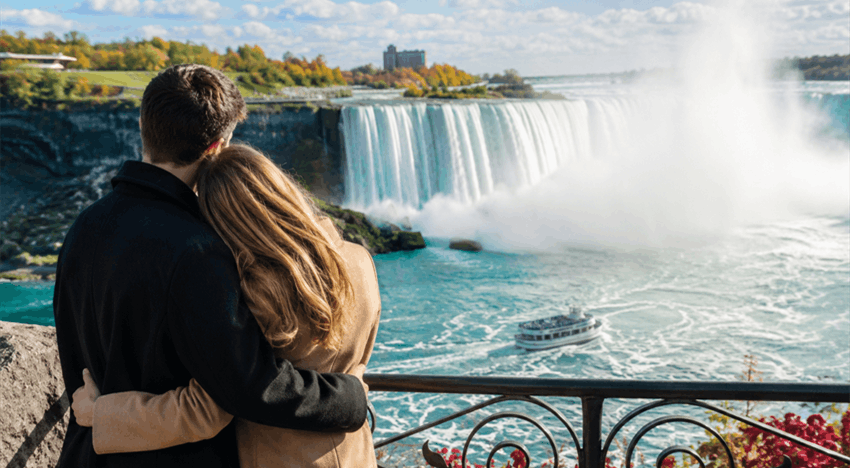
Niagara Falls has been called the Honeymoon Capital of the World for generations, and the name still carries a certain magic. Long before couples had endless resort options, luxury cruises, tropical packages, and quick flights around the world, Niagara Falls offered something rare: drama, beauty, adventure, and romance in one unforgettable place.
It was not just a pretty backdrop. Niagara Falls became a symbol of new beginnings. For newlyweds, the roar of the water, the mist in the air, the grand hotels, the scenic walks, and the feeling of standing beside something powerful made the destination feel larger than everyday life.
A Romantic Reputation That Started Early
The honeymoon story of Niagara Falls reaches back to the early 1800s. At that time, travel was slower, harder, and far less comfortable than it is today. A trip to Niagara was not a casual weekend getaway. It was an event.
One of the earliest famous honeymoon stories connected to Niagara Falls involved Theodosia Burr, daughter of Aaron Burr, and her husband, Joseph Alston. Their 1801 bridal journey helped shape Niagara’s image as a romantic destination for wealthy and well-connected couples.
A few years later, Jérôme Bonaparte, the younger brother of Napoleon Bonaparte, and his wife, Elizabeth Patterson, also visited Niagara Falls. Stories like these gave the destination a sense of glamour and social importance. If powerful families and famous couples were making the journey, the Falls became more than a natural wonder. They became a place to mark love, status, and a new life together.
Why Niagara Felt So Special
Part of Niagara’s early appeal was the sheer force of the Falls. Even today, visitors can stand near the brink and feel small in the best possible way. The water does not politely trickle over the edge. It crashes, roars, and throws mist into the air. For couples seeing it for the first time, the experience can feel emotional and cinematic.
That mattered in the 19th century. Romantic travel was often tied to nature, beauty, and powerful landscapes. Niagara Falls offered all three. The destination felt wild, grand, and unforgettable.
For newlyweds, that made it a perfect place to begin married life. The Falls were beautiful enough for reflection, dramatic enough for memory, and famous enough to feel like a meaningful journey.
From Elite Travel to Popular Honeymoon Destination
At first, Niagara travel was mostly for people with money, time, and social position. Roads were rough, travel could be exhausting, and long-distance trips required planning. Early honeymooners were not booking a quick online package. They were making a serious journey.
That changed as transportation improved. The Erie Canal, railways, and later better roads helped make Niagara Falls easier to reach. What had once been a destination for wealthy travelers became more available to middle-class couples.
This shift helped Niagara’s honeymoon reputation grow. More newlyweds could make the trip. Hotels, restaurants, guides, photographers, and attractions began serving visitors who came not only to see the Falls, but to celebrate romance.
By the time Niagara Falls was widely known as the Honeymoon Capital of the World, the idea had already taken deep root. Couples came because other couples had come before them. The tradition fed itself.
The Power of a Name
“Honeymoon Capital of the World” is a big title, and part of its strength comes from how easy it is to understand. It tells a story in a few words.
The phrase connects Niagara Falls with love, marriage, travel, and memory. It also gives the destination a clear identity. Many places are scenic. Many places have hotels. Many places offer romantic dinners. But few places have a romantic nickname that has lasted for so long.
That name became part of Niagara’s tourism personality. It appeared in travel writing, postcards, advertisements, hotel promotions, and local storytelling. It helped turn a natural landmark into a shared cultural idea.
What Couples Found in Niagara
Couples did not visit Niagara only to look at the water and leave. The destination built layers of experience around the Falls.
There were scenic viewpoints, boat rides, parks, gardens, restaurants, souvenir shops, photography spots, theaters, hotels, and later casinos, spas, wineries, and modern attractions. The Falls were the main event, but the surrounding city gave couples ways to fill a full trip.
For honeymooners, that combination worked. They could have quiet moments by the water, then enjoy dinner, entertainment, shopping, or a scenic drive. They could dress up for a night out or keep the trip simple and focused on the view.
Niagara became flexible. It could be luxurious, playful, sentimental, touristy, peaceful, or adventurous depending on the couple.
The Falls as a Symbol of New Beginnings
There is a reason natural wonders often become romantic places. They remind people that life is bigger than routine.
For newlyweds, Niagara Falls offered a powerful symbol. The water is constant but always moving. The landscape feels ancient but alive. The mist changes by the minute. The sound fills the air.
Standing there together can feel like a pause between one life chapter and the next. That feeling is part of why Niagara worked so well as a honeymoon destination. It gave couples a place to step away from family, work, wedding stress, and ordinary schedules. It gave them a memory that felt separate from daily life.
How the Honeymoon Image Changed Over Time
Like every travel destination, Niagara Falls changed with the times. In earlier decades, the city leaned into its honeymoon image with hotels, suites, attractions, and romantic marketing. The image became so strong that Niagara was sometimes associated with heart-shaped tubs, souvenir photos, and classic honeymoon clichés.
Some of that old-fashioned image still lingers, and honestly, that is part of the charm. Niagara has always had a little sparkle, a little kitsch, and a little drama. That mix is hard to separate from its personality.
But the modern romantic side of Niagara is broader. Couples now visit for weekend escapes, anniversaries, engagements, proposals, winery trips, spa days, fine dining, scenic walks, and quiet luxury stays. The honeymoon label remains, but the experience has grown.
Modern Romance in Niagara Falls
Today, couples can build a Niagara trip around many different moods. Some want a classic Falls-view hotel room and dinner near the water. Others want wine country, boutique inns, gardens, and slow afternoons in Niagara-on-the-Lake. Some want bright lights, entertainment, and tourist energy. Others prefer trails, parks, history, and quieter views.
That range is one reason Niagara still works as a romantic destination. It does not have to be one thing.
A couple can start the day near the Horseshoe Falls, visit Journey Behind the Falls, take a boat tour in season, walk through Queen Victoria Park, enjoy a winery stop, and end the evening with dinner overlooking the water. Another couple might skip the major attractions and focus on a quiet spa, a scenic drive, and a cozy restaurant.
Romance looks different for different people, and Niagara has enough variety to support that.
Beyond the Wedding Trip
Although Niagara is famous for honeymoons, it is not only for newlyweds. Many couples return for anniversaries, vow renewals, birthdays, proposals, or simple weekend getaways.
That return factor matters. A destination becomes meaningful when people want to revisit it. Niagara’s romantic identity is not only about first trips after a wedding. It is also about couples coming back years later and remembering who they were when they first stood near the Falls.
For some, Niagara is a tradition. For others, it is a once-in-a-lifetime stop. Both kinds of visits keep the romantic reputation alive.
Why Niagara Still Holds the Title
The world has changed. Couples can honeymoon almost anywhere now. Tropical islands, European cities, mountain resorts, cruises, desert retreats, and faraway beaches are all easier to reach than they once were.
So why does Niagara Falls still hold onto the title?
Because the title is not only about luxury or exclusivity. It is about history, feeling, and recognition. Niagara was one of North America’s original romantic travel icons. It welcomed honeymooners before modern tourism became what it is today. It built a story that lasted more than two centuries.
Many places can offer romance. Niagara offers romance with a history behind it.
A Destination With Two Sides
One of the most interesting things about Niagara Falls is how it balances natural wonder with tourism energy. The Falls themselves are timeless. The city around them is always changing.
That contrast is part of the experience. You can stand in the mist and feel the power of nature, then walk a short distance to restaurants, hotels, attractions, lights, and entertainment. Some visitors love that mix. Others prefer the quieter parks and scenic routes. Either way, Niagara gives couples choices.
The Honeymoon Capital of the World is not just one viewpoint or one hotel package. It is the larger feeling of being somewhere memorable together.
Planning a Romantic Niagara Visit Today
For couples planning a modern Niagara getaway, the best trip starts with the kind of romance they actually enjoy.
If you want classic Niagara, choose a room with a Falls view, book dinner near the water, and spend time at the main viewpoints. If you want a slower trip, add Niagara-on-the-Lake, wineries, gardens, and scenic drives. If you want fun, explore Clifton Hill, live entertainment, casinos, and tourist attractions. If you want quiet, look for parks, trails, spas, and less crowded times of day.
Season also changes the mood. Summer brings energy, crowds, patios, boat tours, and long days. Fall adds colour, harvest season, wine country charm, and cooler walks. Winter can feel dramatic and peaceful, especially when ice forms near the Falls. Spring brings flowers, softer weather, and a fresh-start feeling that fits the romance theme well.
The Enduring Romance of Niagara Falls
Niagara Falls became the Honeymoon Capital of the World because it had the right mix at the right time: powerful natural beauty, famous early visitors, improving transportation, strong tourism promotion, and a setting that made couples feel like their trip mattered.
But it stayed the Honeymoon Capital because people kept believing in the feeling. Couples came, remembered it, talked about it, returned to it, and passed the idea along.
That is the real strength of Niagara’s romantic identity. It is not just a slogan. It is a story built by generations of travelers who chose the Falls as the backdrop for love, celebration, and new beginnings.
Today, Niagara Falls may look different than it did in the 1800s, but the emotional pull remains. The water still roars. The mist still rises. Couples still pause at the railings, take photos, hold hands, and feel like they are standing somewhere special.
That is why Niagara Falls remains one of the world’s great romantic destinations — not because it is frozen in the past, but because it keeps giving new couples a place to begin their own story.